Buy the pieces you will wear again in hallmarked gold, rent or buy imitation for the big showpieces you will wear once, and skip anything whose purity you cannot verify. In practice that usually means gold for the mangalsutra, bangles, a chain and earrings, and imitation or a rental for the heavy haar, maang tikka and hair ornaments.
This guide explains what gold, imitation, polki and kundan actually are, which regional bridal sets are worth knowing, how to check a hallmark and HUID, how making charges and GST add up on a worked example, and what to do about renting, insurance and storage on the wedding day. We do not quote today's gold rate, because it changes daily. Check it on the day you buy.
What is the difference between gold, imitation, polki and kundan?
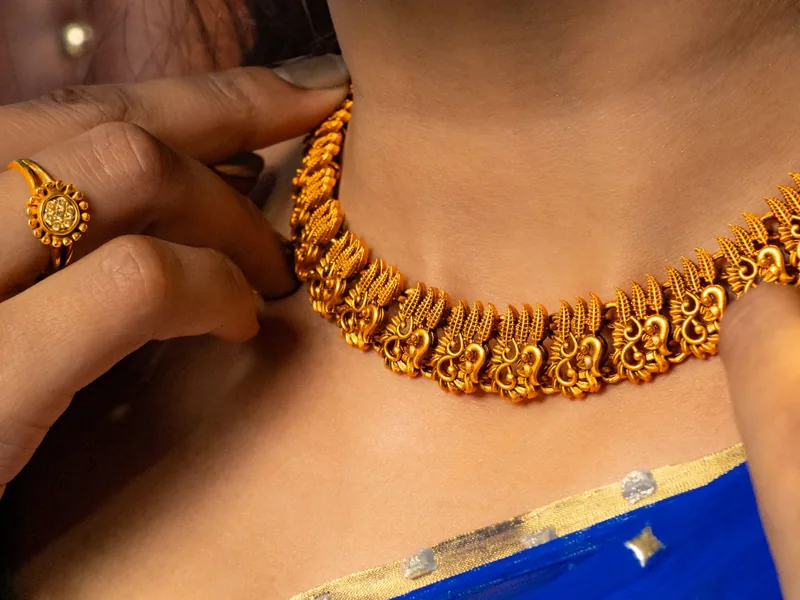
Gold and polki carry real material value, imitation does not, and kundan depends on what is underneath. The table sets out what each one is, so you know what a price is really paying for.
| Type | What it is | Does it hold value? | Best use |
|---|---|---|---|
| Gold (22K916 is the common hallmark) | A gold alloy, priced on gold weight plus making charges | You get back the gold value, but not the making charges or GST | Pieces you will wear again, and ritual or family pieces |
| Imitation (artificial) | Brass or alloy with a gold-tone finish and glass or synthetic stones | No gold value, so resale is little or none | Large statement pieces and one-off functions |
| Kundan | A setting style in which glass or gemstones are pressed into a gold framework with gold foil; it can also be made on a gold-plated base | Depends on the base and the stones | The bridal look, but check what is underneath |
| Polki | Uncut natural diamonds set in gold | Has stone and gold value, and usually costs more than kundan | Heirloom bridal sets |
| Jadau | The wider craft of setting stones into gold, which includes both kundan and polki | Depends on the stones and the gold | Traditional bridal sets |
The word kundan is used loosely. A necklace sold as kundan may be gold with real stones or an imitation piece with glass, and the price difference is large. Ask which one it is, and get the answer written on the bill.
What should I buy in gold, and what in imitation?
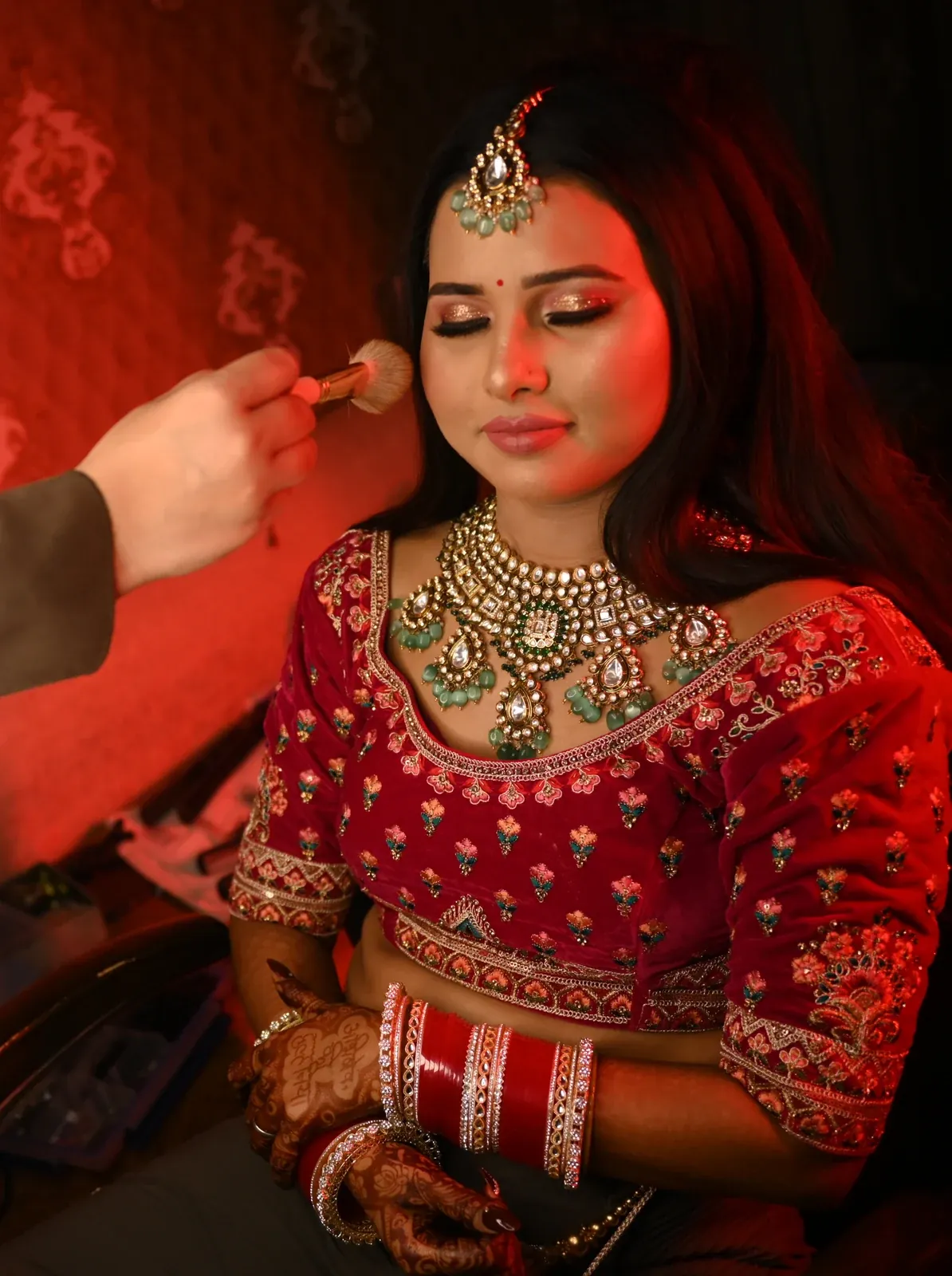
Buy gold where the piece will be worn for years, and buy imitation where the look matters more than the metal. A simple test is whether you will wear it on an ordinary Tuesday after the wedding.
- Buy in gold: the mangalsutra or the piece your family tradition requires, bangles, a chain, everyday earrings, a nose pin and a ring. These are worn often, and you can find lightweight designs. See our guide to gold earrings for daily use and the mangalsutra designs guide.
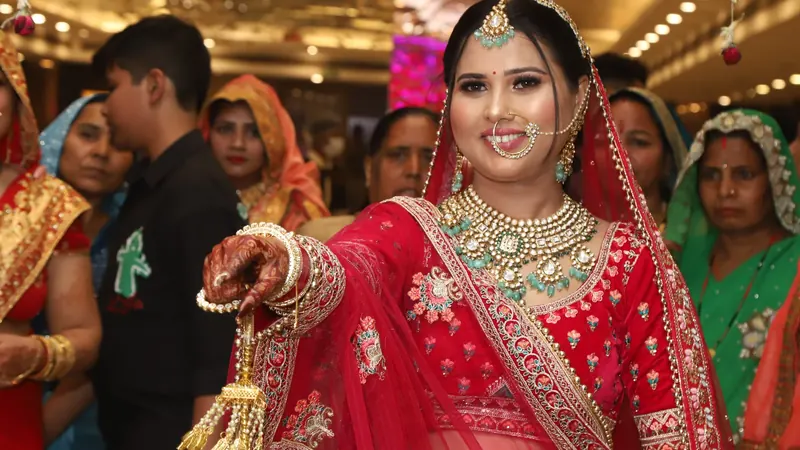
- Buy in imitation, or rent: the heavy haar, a matha patti, a waist belt, hair ornaments, and the sets for the haldi, mehndi and sangeet outfits. Check kundan-style bridal sets on Amazon
- Think twice about heavy gold sets. A heavy gold set means a large making charge that you never get back, and it may spend most of its life in a locker.
Our stance: a bride is better off with a modest gold set she will wear and a rented or imitation showpiece than with one huge gold set she dreads wearing. The photographs will not show the difference, but your bank balance will.
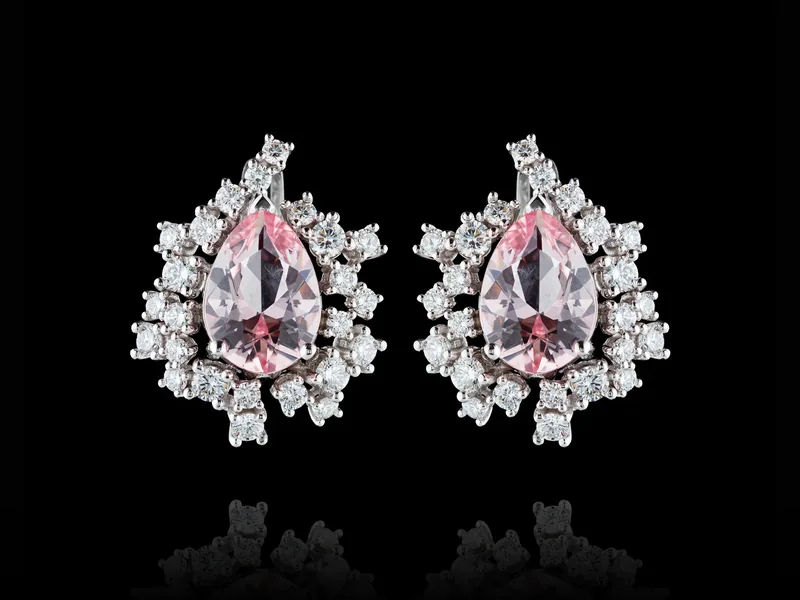
What are the main regional bridal sets?
Bridal jewellery differs between communities and families, so the list below is a short orientation and not a rulebook. The descriptions come mainly from jewellers' guides, so ask your family which pieces matter.
- Bengal: shakha-pola. The shakha is a white conch-shell bangle, and the pola is a red bangle that most sources describe as coral. Some also describe a third iron bangle, called loha or noa, often gold-plated. The set is usually given by the family and worn in a ritual after the wedding, so ask the family before buying.
- Maharashtra: the nath. The Maharashtrian nath is a large nose ring, often set with pearls. Other traditional pieces are the mundavalya, pearl strings worn at the forehead, and the tanmani, a multi-strand pearl necklace.
- Rajasthan: the borla. A round, ball-shaped maang tikka worn at the centre of the forehead, often set with kundan, meenakari or polki. The rakhdi is a related headpiece, and some sources use the two names interchangeably.
- South India: temple jewellery. Gold pieces with deity motifs, such as the Lakshmi haram, a long necklace with a pendant of the goddess Lakshmi, and the vaddanam or oddiyanam, a waist belt that is also worn to hold the saree in place.
Many of these pieces exist in lighter or imitation versions, which can be a smart choice for the functions around the wedding.
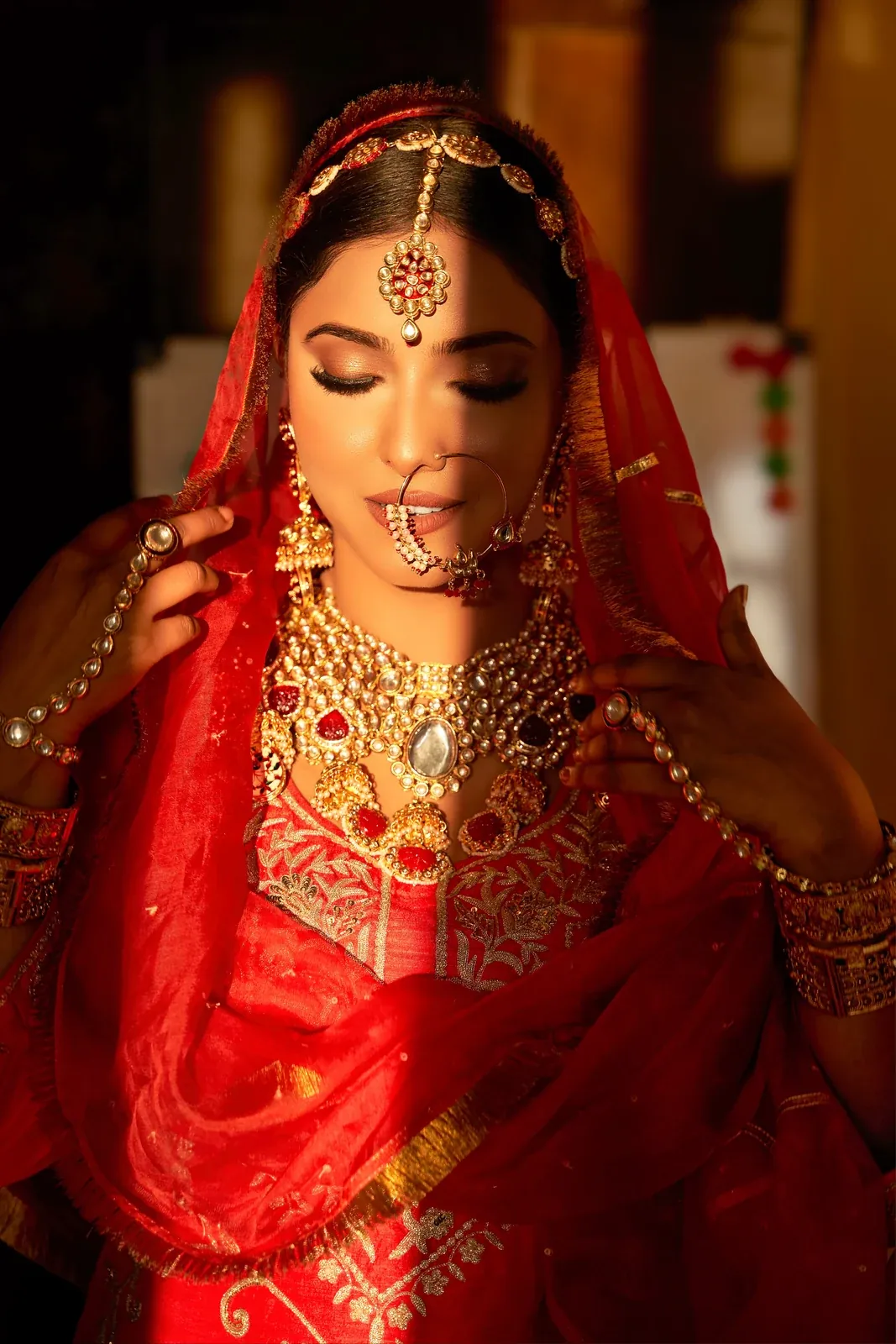
How do I check the hallmark and HUID before I pay?
Look for three marks on every gold piece: the BIS logo, the purity mark (such as 22K916 or 18K750) and a 6-character alphanumeric HUID, and then verify the HUID in the BIS Care app. It takes two minutes at the counter, and it is the one check you should never skip.
- Find the marks. The HUID sits beside the BIS logo and the purity mark, often on the inside of a ring or bangle or near a clasp. A magnifying glass helps.
- Open the BIS Care app (check that the publisher is the Bureau of Indian Standards) and choose "Verify HUID".
- Type in the six characters.
- Compare the result with your bill: the jeweller's name, the purity, the type of article and the hallmarking centre should match.
BIS raised the gold hallmarking fee to ₹75 per article plus taxes in September 2026 (some BIS pages still show the older ₹45); the jeweller pays it, so ask for it as its own line, and check the current fee.
A line item far above that is worth a question. If a hallmarked piece fails a purity test, BIS says the buyer is entitled to two times the money value of the shortfall in purity for the weight sold, plus the testing charges.
One caution: hallmarking is not yet compulsory everywhere. Mandatory hallmarking applies in the districts BIS has notified: 380 from 2 March 2026, extended by later orders (a Third Amendment Order of 3 August 2026 took coverage to 392 districts, according to Business Standard), so check the current BIS list for your district.
It also has exemptions: jewellers with a turnover up to ₹40 lakh, pieces under 2 grams, and kundan, polki and jadau jewellery. So for those pieces, ask for the purity, the net gold weight and the stone details in writing on the bill.
Our guide to how to check HUID and hallmark walks through it step by step, and bis.gov.in has the official details.
How do making charges and GST add up? A worked example
For finished gold jewellery, GST is 3 percent on the whole bill, including the making charge. If you bring your own gold, GST is extra on the making charge: ask the goldsmith for the rate and get it on the bill.
The figures below are an example only. They are not today's gold rate, and your jeweller's making charge may be lower or higher.
| Line | Example amount |
|---|---|
| Value of the gold in the piece (example) | ₹4,00,000 |
| Making charge at 12 percent (example) | ₹48,000 |
| Subtotal | ₹4,48,000 |
| GST at 3 percent on the subtotal | ₹13,440 |
| Total you pay | ₹4,61,440 |
In this example, the making charge and GST add up to ₹61,440 that you do not get back as gold. That is why a heavy bridal set is such an expensive way to carry value. Make sure the bill separates the gross weight, the stone weight, the net gold weight and the price of stones, and ask whether the making charge is calculated on net weight or gross weight.
Our guides to making charges and to how to calculate the gold price have calculators and the full formula.
Should I rent bridal jewellery?
Renting makes sense for imitation or polki-look sets you will wear once, and for the extra functions. It makes little sense for pieces you will wear again. Before you pay, check these points:
- Is the set real or imitation, and what exactly is it made of?
- How much is the deposit, and what damage or loss will you be charged for?
- Ask for dated photographs of the set before it leaves the shop, and take your own on return.
- Try the set with your outfit before the final fitting, not on the morning of the wedding.
- Check the pick-up and return dates against your wedding schedule, including a day for delay.
Our view is simple. If the rental fee comes to more than half the price of an imitation set you would rewear, buy the imitation set. If you are renting genuine gold or diamond pieces, get the shop's insurance terms and your own liability in writing.
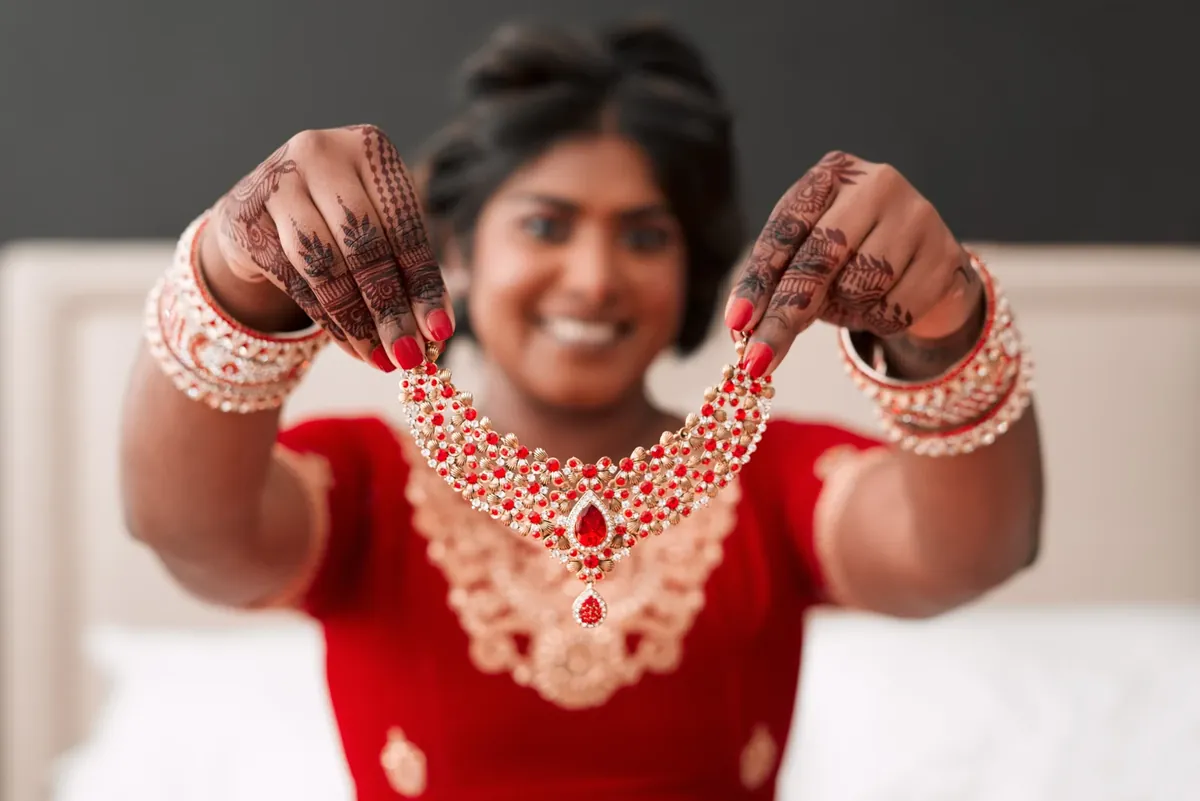
How do I insure and protect the jewellery on the day?
List it, insure it if the value justifies it, and put one trusted person in charge of it on the day.
- Make an inventory. Photograph each piece, note the weight, the HUID and the bill, and keep the list on your phone and with a relative.
- Ask your insurer. Home insurance policies often cover jewellery that you have declared. Some insurers also sell wedding insurance that can cover jewellery as an add-on. Cover is usually conditional, so compare how theft is defined, the limit per item and whether theft from the venue counts, and get the answer in writing.
- Know what a locker does. Under the Reserve Bank of India's revised locker rules, effective 1 January 2022, a bank's liability is limited to 100 times the annual locker rent in cases such as fire, theft, building collapse or employee fraud, and the bank is not required to insure the contents. A locker protects, but it does not replace insurance.
- Appoint a keeper. One named person holds the jewellery bag, counts the pieces out and counts them back in.
- Wear the heaviest set for the ceremony and photographs only. Change into lighter pieces for dinner.
- Do not leave jewellery in a hotel room, on a dressing table or in a car.
Keep each set in its own pouch so that the stones do not scratch each other. Check jewellery organisers and anti-tarnish pouches on Amazon
What should I skip?
Skip anything that adds cost or risk without adding to the day.
- Skip a heavy gold set you will never wear again just to match one outfit.
- Skip unhallmarked gold where hallmarking is mandatory. Elsewhere, ask for the purity in writing.
- Skip a bill that says only "jewellery". It should name the gold or gold-plated metal, the purity, the weights and the stones.
- Skip verbal promises on buyback and exchange. Get the terms in writing before you pay.
- Skip buying in a rush. Many families buy gold on Dhanteras, which falls on Friday 6 November 2026 (check your local panchang), but the best time to buy is when you have compared two or three bills. Our Dhanteras guide explains what to buy.
- Skip a first try-on on the wedding morning. Do a full dress rehearsal with the outfit and the jewellery together.
Frequently asked questions
Which bridal jewellery should I buy in gold?
Buy the pieces you will wear again: the mangalsutra or ritual piece, bangles, a chain and everyday earrings. Rent or buy imitation for the heavy haar, headpieces and sets for the other functions, because making charges on heavy gold sets are not recovered.
Is polki or kundan jewellery hallmarked?
Kundan, polki and jadau jewellery are exempt from mandatory hallmarking, so a piece may not carry a HUID. Ask for the gold purity, the net weight and the stone details in writing on the bill.
What is a HUID and how do I check it?
HUID is a 6-character alphanumeric code marked beside the BIS logo and purity mark. Enter it in the BIS Care app under "Verify HUID" and compare the result with your bill.
Is it safe to rent bridal jewellery?
It can be, if you check the deposit, the damage terms and the return date, photograph the set before and after, and try it with your outfit early. Get the shop's insurance terms in writing if the set is real gold or diamonds.
How much GST is charged on gold jewellery?
For finished gold jewellery, GST is 3 percent on the total value, including the making charge. If you bring your own gold, GST is extra on the making charge: ask the goldsmith for the rate and get it on the bill.
Your next step is to write two lists, one for pieces to buy in gold and one for pieces to rent or buy in imitation, then compare two bills and verify each HUID in the BIS Care app before you pay. For the dress that the jewellery has to match, see the bridal lehenga guide and the wedding saree guide, and for the gold itself, read about 22K versus 24K gold.
We may earn a commission if you buy through links on this page, at no extra cost to you. As an Amazon Associate I earn from qualifying purchases. How we earn