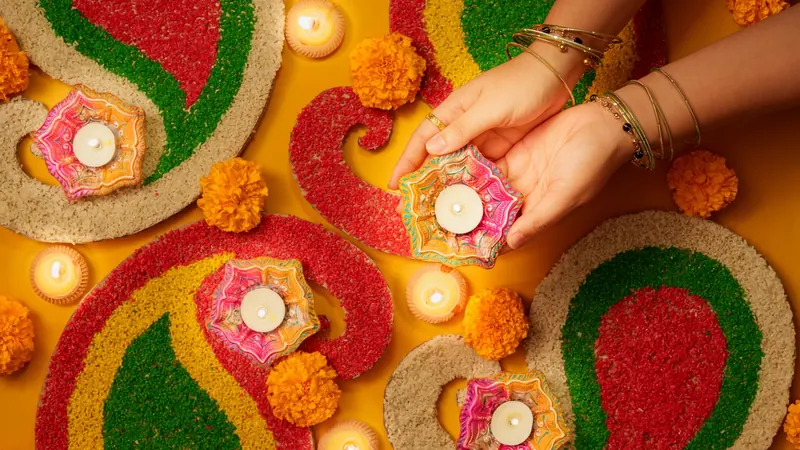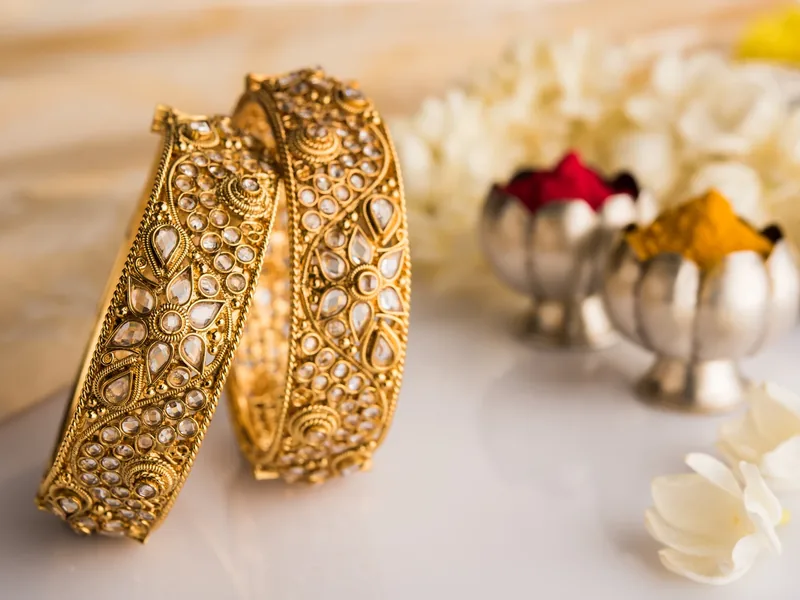
For garba and dandiya, most women wear a chaniya choli: a flared skirt, a blouse and a dupatta. The outfit that works best is the one that lets you spin, bend and dance for hours: a skirt with plenty of flare but a hem that clears your feet, a breathable fabric, a dupatta that stays put, and flat footwear you can move in.
Navratri 2026 began on 11 October, so you may already have an event this week or this weekend. This guide covers outfit styles, how to choose a fabric and fit that survive the dance floor, jewellery and makeup that stay put, which colour to pick for which night, and the practical bits that most outfit lists forget, like safety pins and what to carry.
What do women wear for garba and dandiya?
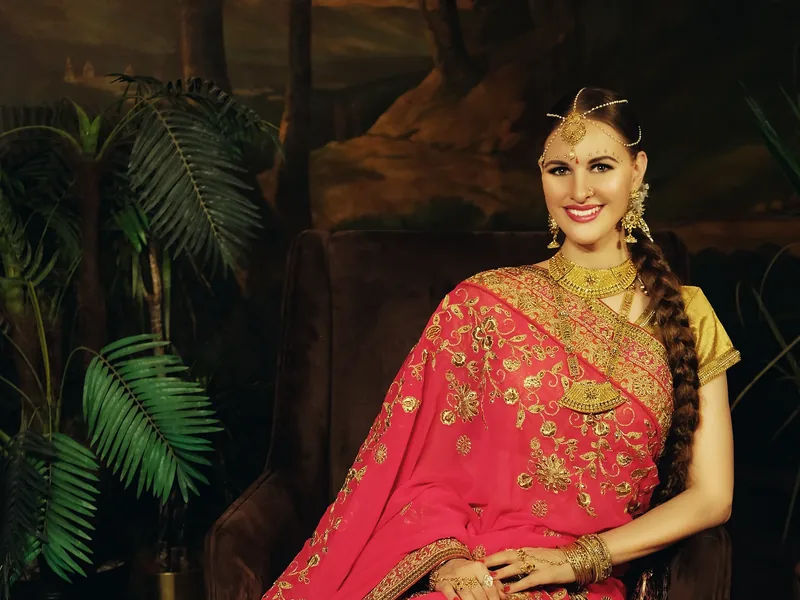
The classic is the three-piece chaniya choli, made up of a skirt (chaniya), blouse (choli) and dupatta. It is usually heavily embroidered or mirror-worked and cut with a very wide flare, so it swirls when you turn. Many people wear the same piece for several nights with different dupattas and jewellery.
The other common choices are a lehenga with a lighter dupatta, an Indo-western set with a long skirt and a crop top or short jacket, and a simple kurta set for people who prefer something less heavy. At some events you will also see sarees, though a pleated saree needs more care when you are moving fast.
Pick the style that fits the venue, the weather and how long you plan to dance.
A word on the dance itself. Garba is a ritual and devotional dance performed during Navratri to honour the goddess, and UNESCO inscribed "Garba of Gujarat" on its list of Intangible Cultural Heritage in December 2023. Dancers move in circles around a lamp or an image of the goddess, which is why the outfit is meant to be joyful and comfortable, not just decorative.
Dandiya raas, danced with sticks, is the livelier cousin, and sources differ on its origin: some link the sticks to the goddess's swords, others to Krishna and the gopis.
Which outfit style should you choose?
Traditional chaniya choli
Best if you want the full garba look. Check the weight of the skirt before you buy, because heavy embroidery with a wide flare gets tiring fast once you add a lining and a can-can. Mirror work is a signature feature of the style, and a Garba choreographer quoted in one article said mirrors help to ward off the evil eye by reflecting it away. That is a popular belief, not a ritual rule.
Lehenga with a light dupatta
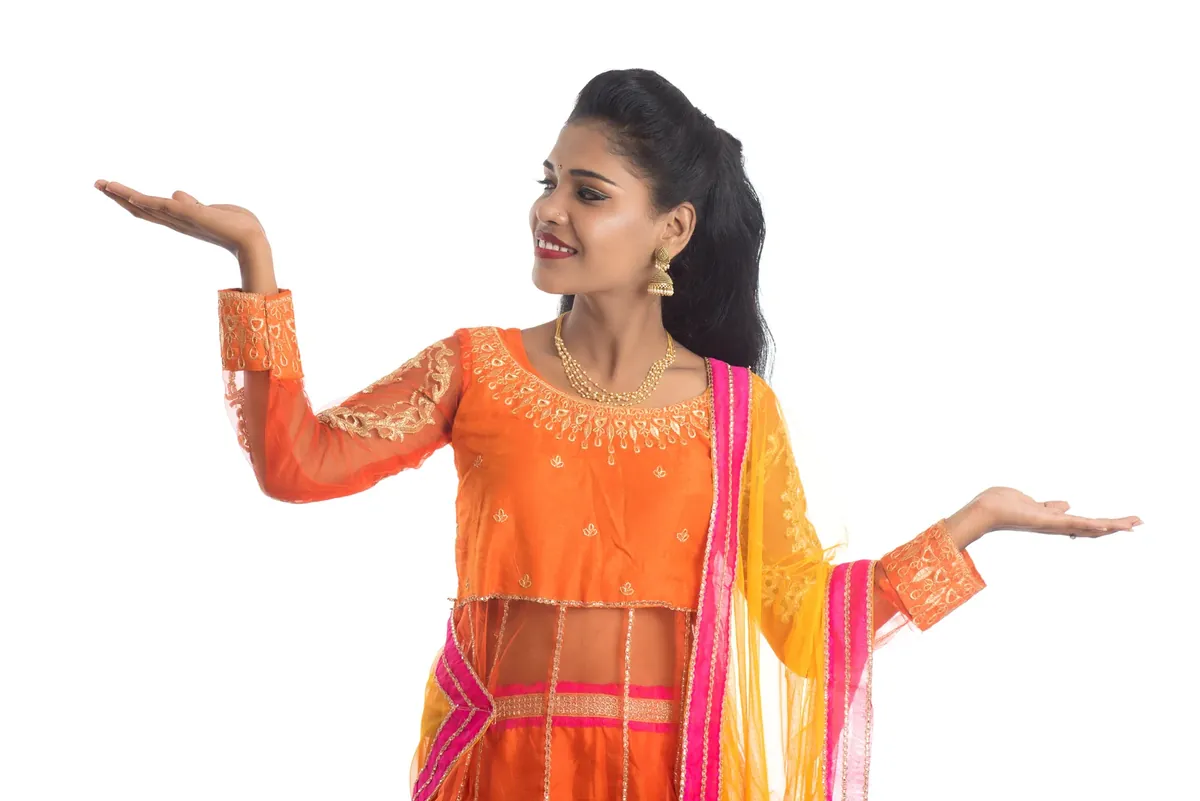
A more modern option with less weight at the waist. Look for a lining that does not itch and a skirt that falls to the ankle but does not trail on the floor.
Indo-western set
A flared skirt with a crop top or jacket suits women who do not want to wear a full choli. It lets you pick a skirt in a lighter fabric and wear a top you already own. Check that the top does not ride up when you raise your arms, because garba has a lot of arm movement.
Kurta and palazzo or churidar
The most comfortable option, and a good choice for women who are keeping a Navratri fast and want to dance without a heavy outfit. Add a bright dupatta to keep it festive.
How do you stay comfortable while dancing for hours?
Comfort is the thing that makes or breaks a garba night. These are the common problems and what usually solves them.
| Problem | What helps |
|---|---|
| Skirt too heavy | Choose a lighter fabric such as cotton or cotton silk, with embroidery in the border rather than all over |
| Tripping on the hem | Have the hem ironed and pinned to clear your toes, and avoid very long skirts if you are wearing flat shoes |
| Dupatta slipping | Pin it at the shoulder with a safety pin or brooch, or drape it across and tie it at the waist |
| Blouse itching or riding up | Choose a lined blouse with a stretch or hook back, and test raising your arms before you leave |
| Sweating | Cotton or breathable linings, a light powder, and carry a small hand towel or tissues |
| Skirt flying up | Wear fitted shorts or a petticoat underneath so you can move without worrying |
| Tired feet | Flat, closed-back footwear, with a cushioned insole if the floor is hard (check your venue's footwear rules) |
Whichever outfit you wear, do a trial. Put it on at home, spin around, raise your arms, sit down and walk up stairs. You will find out in five minutes what would otherwise bother you at ten o'clock at night.
What to buy for garba and dandiya
If you are short of pieces, these are the ones that make the biggest difference. We list product types and what to check. Prices change, so look at the current listing before you buy.
- Chaniya choli set. Check the full flare in metres if the listing gives it, the lining, the size chart for the blouse and whether the dupatta is included. Order early, so you have time to check the fit and exchange if needed.
- Oxidised jewellery set. Choose light pieces such as jhumkas, a choker and a few bangles. Check the weight and whether the clasp is secure.
- Dandiya sticks. A pair of wooden sticks, often decorated. Check the length and that the ends are smooth, because splinters hurt.
- Kamarbandh (waist belt). It holds the skirt or saree in place and adds a finishing touch. Check that it is adjustable.
- Mojari or comfortable flat footwear. Look for cushioning and a closed back.
- Small crossbody or potli bag. For your phone, keys and a few essentials, so your hands stay free.
See ideas on Amazon.in
Which jewellery, hair and makeup survive the dance floor?
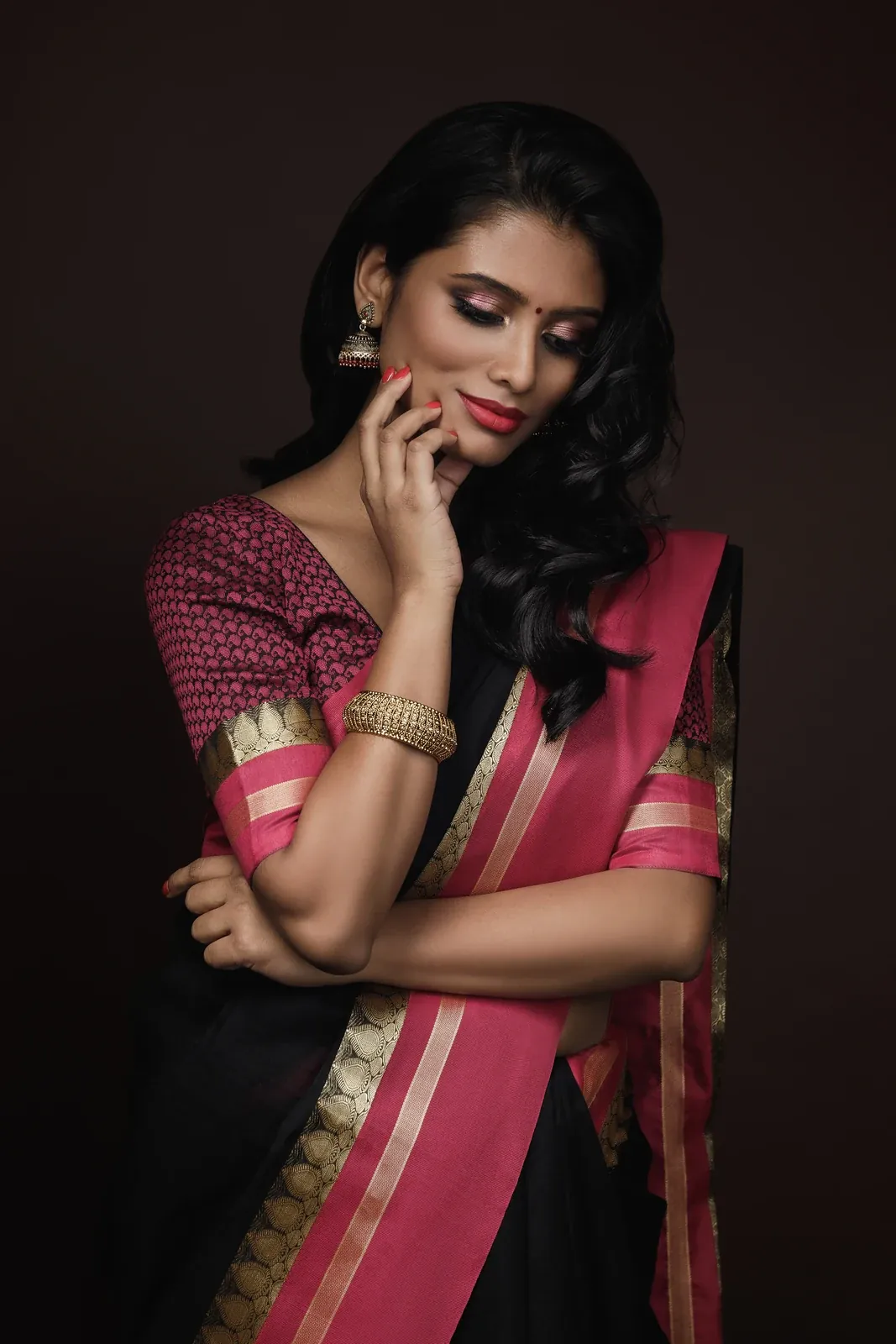
Pick fewer, lighter pieces. Oxidised silver-look jewellery is popular because it is light and goes with nearly every colour. Long dangling earrings are lovely until they catch in your hair or dupatta, so try them before the event. Heavy necklaces are best skipped if you will be dancing for more than an hour.
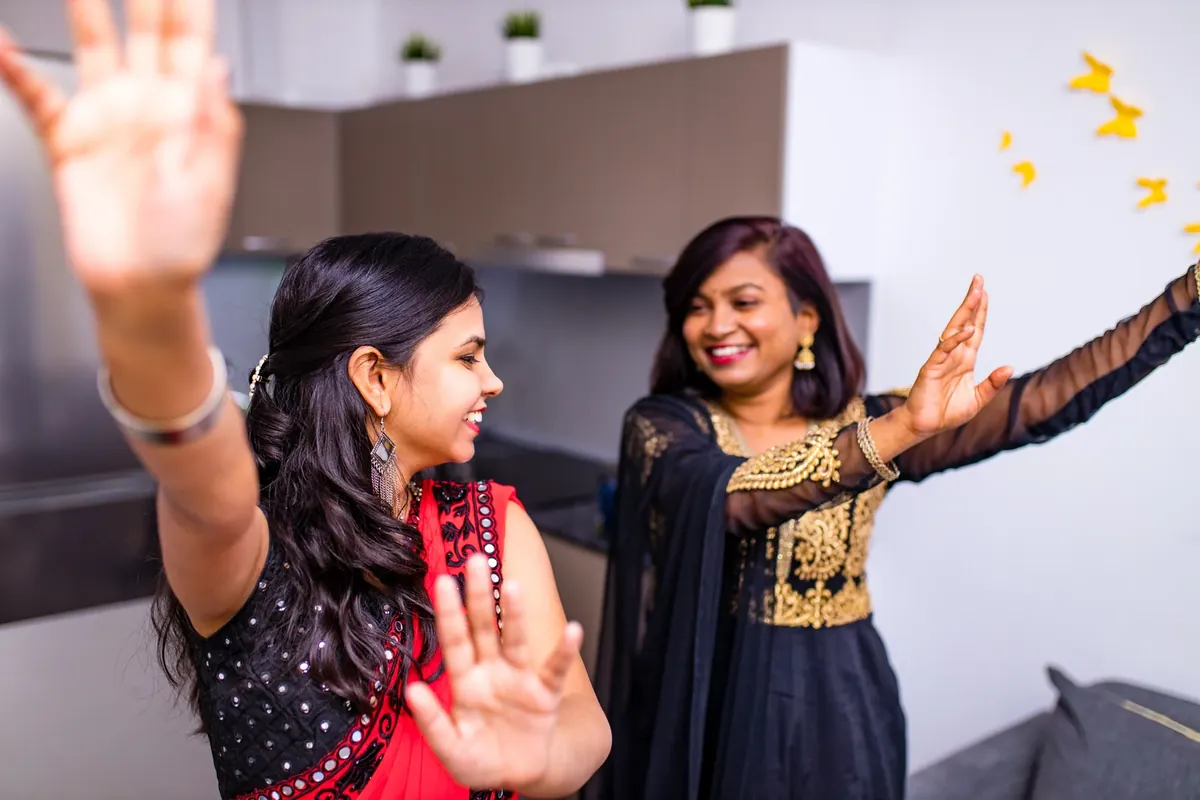
For hair, a plait, a braid or a bun with a few extra pins lasts better than loose hair. A flower or a small clip adds colour without weight. For makeup, go for a matte or long-wear base, a sweat-proof eyeliner and a lip colour that does not transfer. A setting spray helps and a small mirror in your bag is useful.
Which colours should you wear on which night?
If you follow the Navratri colour of the day, the nine-day list for 2026 is orange (11 October), white (12), red (13), royal blue (14), yellow (15), green (16) and grey (17), then purple, pink or peacock green on days 8 and 9.
It is a modern custom, not a requirement, so many people simply wear what looks best at the venue. Our Navratri 2026 colour guide has the full list and styling ideas for each day.
A practical way to wear a lot of colours without buying a lot of outfits: pick two or three chaniya cholis in different base shades, then change the dupatta, blouse or jewellery for each night.
What should you carry to a garba night?
Here is a sensible packing list:
- Safety pins, extra bobby pins and a small sewing kit for a loose hook or hem
- A small towel, tissues and a deodorant or light powder
- Water, because dancing is thirsty work, and a snack if you are fasting
- A phone with a charged battery and a power bank, which fits in a potli
- A change of footwear or socks for the ride home
- Cash or a UPI app, for food stalls and parking
If you are fasting during Navratri, plan your meals around the evening. Our Navratri vrat food list has ideas for what to eat before you dance. People with diabetes, pregnancy or any medical condition should check with their doctor about fasting and about dancing for long periods.
Frequently asked questions
What should a woman wear for garba?
Most women wear a chaniya choli or a lehenga with a dupatta. Choose a light, flared skirt, a fitted and comfortable blouse and a dupatta that you can pin in place.
What is the difference between garba and dandiya?
Garba is a devotional circle dance, usually danced with claps around a lamp or an image of the goddess. Dandiya raas is danced with a pair of sticks. Many events include both in the same evening.
What footwear is best for garba?
Flat, comfortable footwear. Some venues have their own rules about footwear on the dance floor, so check with the organisers beforehand.
Do I have to wear the Navratri colour of the day to garba?
No. The colour of the day is a popular custom, not a rule. Many people wear whatever they like, so wear it if it is easy and skip it if it is not.
How do I keep my dupatta from slipping while dancing?
Pin it at the shoulder with a safety pin or brooch, or drape it across and tie or tuck it at the waist. Test it by spinning at home.
Your next step: pick your outfit for the first event, do a spin and sit-down test at home, and pack the safety pins. If you are also keeping the nine-day fast, plan your food with the Navratri vrat food list, and look ahead to the end of the festival in Dussehra 2026: date, puja vidhi and how to celebrate at home.
We may earn a commission if you buy through links on this page, at no extra cost to you. As an Amazon Associate I earn from qualifying purchases. How we earn