During a Navratri fast, most families eat fruit, milk and milk products, potatoes and other vrat-friendly vegetables, and flours or grains that are not true cereals: kuttu (buckwheat), singhara (water chestnut), rajgira (amaranth), samak (barnyard millet) and sabudana. Everything is cooked with sendha namak (rock salt), and onion, garlic, wheat, rice and regular salt are left out.
Customs vary by family and region, so use this list as the common core and ask your elders about the rest. Navratri 2026 runs from Sunday 11 October, and many people are already on day 2. Below you will find the full allowed and avoided list, a pantry shopping list, a simple nine-day meal plan, and the safety and health points worth knowing before you fast.
What can you eat during Navratri fasting?
The most common style is phalahar, meaning a fast of fruit, milk and special flours cooked with rock salt. Here is what most vrat lists allow, grouped so it is easy to scan.
| Group | Commonly eaten | Check with your family |
|---|---|---|
| Flours and grains | Kuttu, singhara, rajgira, samak, sabudana | Make sure packs are pure, with no wheat added |
| Vegetables | Potato, sweet potato, arbi, raw banana, pumpkin, bottle gourd, cucumber | Tomato is allowed in some homes and not in others |
| Fruit | Any fresh fruit, such as banana, apple, papaya, pomegranate, dates | Usually no restrictions |
| Dairy | Milk, curd, buttermilk, paneer, ghee, khoya | Practice differs, so ask your elders |
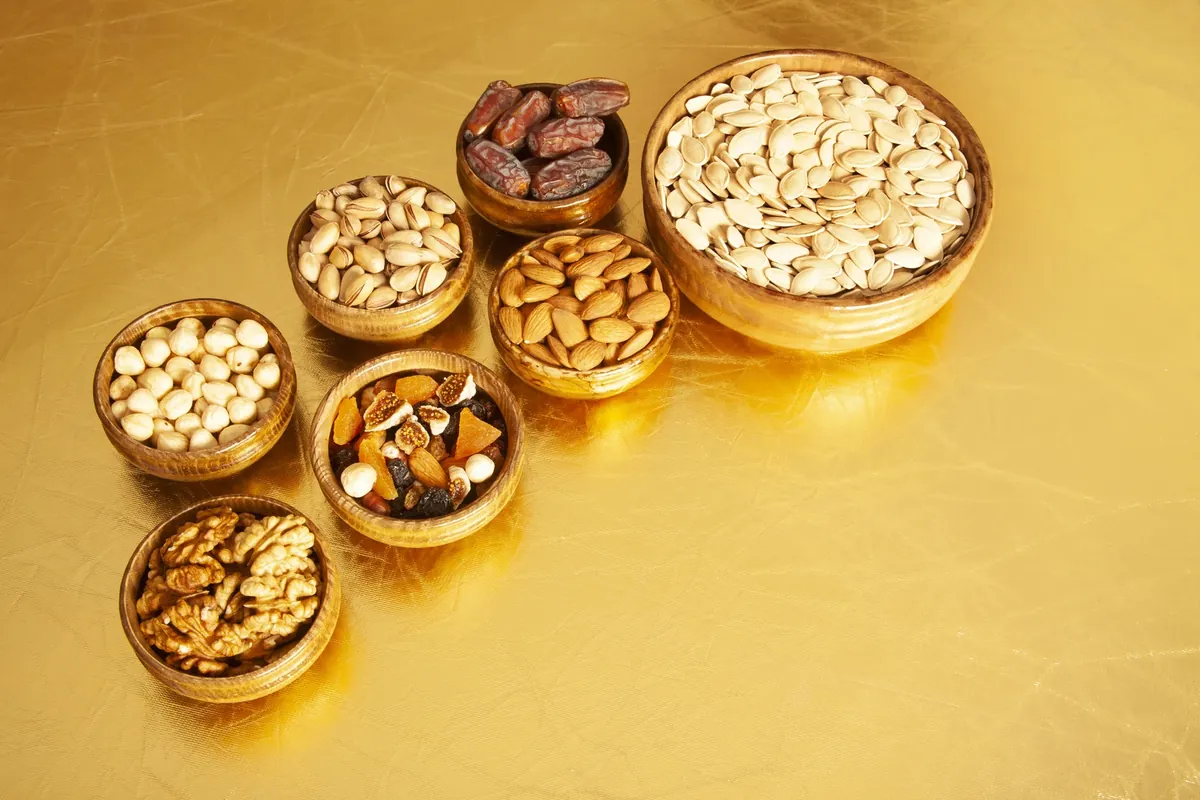
| Nuts and seeds | Almonds, cashews, walnuts, raisins, makhana | Peanuts are allowed in many homes, not all |
| Spices | Cumin, black pepper, green chilli, ginger | Turmeric, mustard seeds and hing are skipped by some families |
| Sweeteners | Jaggery, sugar, honey | Usually no restrictions |
Not eaten in a typical vrat: wheat, rice, semolina, maida, corn flour, dal and besan; onion and garlic; regular table salt; and meat, fish and eggs. Alcohol and tobacco are avoided as well.
Which kind of Navratri fast are you keeping?
There is no single Navratri fast. Some people eat only fruit and milk, which is the strictest common style. Others have one meal a day, usually vegetarian and sattvic. Some follow a partial fast, where they avoid grains and onion and garlic but eat a normal number of meals. Many families fast for all nine days, while others fast only on selected days.
Gujarat, Bengal and the south follow different habits too. Many devotees in Gujarat fast while dancing garba and eat farali snacks. In Bengal, some households eat fish and meat during Durga Puja, and some devotees fast on Ashtami morning only.
In South India, Navaratri centres on Golu, Saraswati and Ayudha Puja, with sundal offered each evening, and full-day fasts are less usual. In many southern households, rice and semolina are acceptable on regular meals. None of these is wrong, and the right one is the one your family follows.
What should you stock in the kitchen before you start?
If you are on day 2 and your cupboard is not ready, this is the shopping list that covers almost every vrat recipe. Buy small packs first, because many of these flours do not keep well for months. We name product types and what to check, and prices change, so look at the current listing.
- Kuttu atta (buckwheat flour). For rotis, puris and pakoras. Buy sealed packs with a clear manufacturing date and use them within a short time.
- Singhare ka atta (water chestnut flour). Good for rotis and halwa. Check the label says pure singhara with nothing added.
- Samak rice (barnyard millet). Often sold as vrat ke chawal or sanwa. It cooks like rice and works for pulao and khichdi. Check the pack says barnyard millet.
- Sabudana. Used for khichdi, vada and kheer. It needs soaking, so plan ahead. Pick medium-sized pearls and check there is no dust or grit.
- Sendha namak (rock salt). The only salt used in a vrat.
- Makhana (fox nuts). Roasted as a snack or cooked in kheer. Look for large, white, fresh pieces.
Beyond this list, you only need fresh vegetables, fruit, curd, milk, ghee, jaggery, nuts and dried dates. A small bottle of ghee and a bag of peanuts or almonds cover the in-between snack hours.
See ideas on Amazon.in
What does a nine-day Navratri meal plan look like?
Here is a simple plan you can adapt. It is not a medical diet, and nothing in it is tied to a particular goddess or day, because the practice differs by family. The idea is to rotate between flour, millet, fruit and dairy so you are not eating the same fried potato nine days in a row.
| Day (2026) | Main meal idea | Lighter option |
|---|---|---|
| Day 1, 11 October | Sabudana khichdi with peanuts and a bowl of curd | Fruit and milk |
| Day 2, 12 October | Samak rice pulao with cucumber raita | Roasted makhana and buttermilk |
| Day 3, 13 October | Kuttu roti with aloo sabzi cooked in rock salt | Banana and a handful of nuts |
| Day 4, 14 October | Bottle gourd sabzi with kuttu roti, and singhare ka halwa for dessert | Fruit chaat |
| Day 5, 15 October | Rajgira paratha with curd | Sweet potato chaat |
| Day 6, 16 October | Samak rice khichdi with pumpkin | Lassi and dates |
| Day 7, 17 October | Sabudana vada, baked or shallow-fried, with chutney | Papaya and a glass of milk |
| Day 8, 18 October | Paneer and potato sabzi with kuttu puri | Makhana kheer |
| Day 9, 19 October | Halwa, puri and chana for Kanya Pujan where your family does it, otherwise a light thali | Fruit and curd |
Ashtami and Navami are the common days for Kanya Pujan, and dates vary by panchang and by city. In India, Drik Panchang lists Ashtami on Monday 19 October for both New Delhi and Kolkata, so Kanya Pujan is on day 9 of the table above, with Navami starting late that morning. In the UK, the US and Canada, Drik lists Ashtami on Sunday 18 October. Check your local calendar.
Which vrat sweets can you eat?
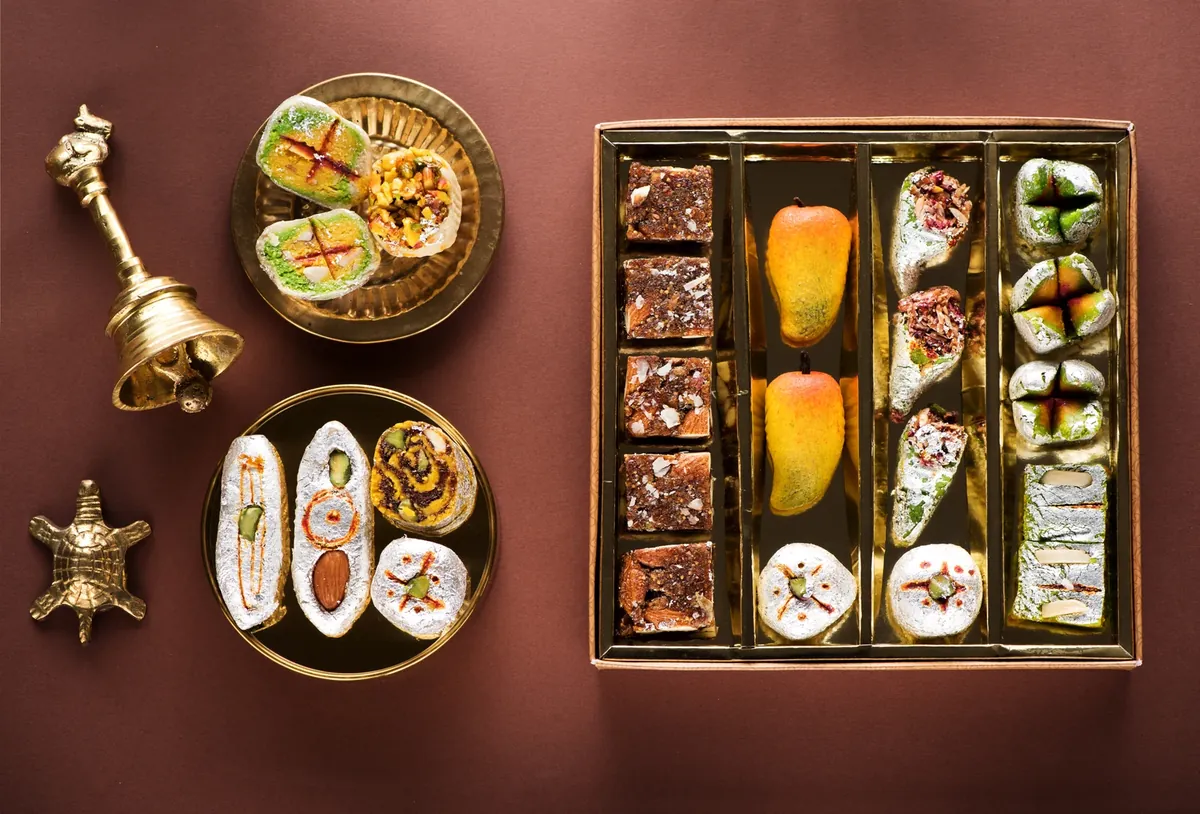
Some, and they are worth planning, because a sweet craving is the thing that sends people back to the fridge. Vrat-friendly sweets are those made with permitted ingredients: sabudana or makhana kheer, singhare ka halwa, rajgira ladoo with jaggery, and fruit with honey. Ordinary mithai from a shop usually contains maida, semolina, besan or table salt, so check the ingredients before you eat it during a fast.
Is kuttu atta safe? What to check before you buy
Kuttu atta is the best-known vrat flour and also the one that has made the news. In October 2024, more than 120 people in Bijnor, Uttar Pradesh, were hospitalised after eating food made from kuttu atta. In September 2025, around 200 people in Delhi fell ill after eating food made with the flour.
In both reports, samples were sent for testing, and the cause was still being investigated, so we cannot say what went wrong. What we can say is that these cases involved flour sold in local markets.
A sensible habit is to buy it in a sealed, branded pack with a manufacturing and expiry date, and to check the smell. As a general food-safety rule, a sour or musty smell is a reason to throw flour away.
Use it within a short time of opening, store it dry, and make only what you will eat. If you or anyone at home feels unwell after a vrat meal, do not wait it out. See a doctor.
How can you fast without feeling drained?
Fasting can leave you tired or headachy, usually from too little food, too little water or too much fried food. A few habits help.
- Drink plenty of water. Buttermilk, coconut water and lemon water count. Some health guides suggest 2 to 3 litres a day, though your needs may differ.
- Eat small meals at regular intervals, not one huge meal in the evening.
- Add protein. Curd, paneer, milk, makhana, peanuts and almonds all help.
- Go easy on deep-frying. Daily fried vrat food feels heavy, so balance it with fruit, curd and roasted makhana.
- Keep exercise light. Short walks and stretching are enough.
Tea and coffee are allowed in many homes and not in others. If you drink them, drink water as well.
This is general information, not medical advice. If you are pregnant, breastfeeding or diabetic, have blood pressure, heart, kidney or digestive conditions, or take regular medication, talk to your doctor before you fast. Elderly people should not skip regular meals unless their doctor agrees. If you feel dizzy, eat something and rest, because a fast should never make you ill.
How and when do you break the fast?
Many families break the fast on Ashtami or Navami after Kanya Pujan, when young girls are fed halwa, puri and chana. Others end it on Dussehra, which is Tuesday 20 October 2026. So 20 October is one common option, not the only one. Follow your family's custom and your local panchang.
Whichever day you choose, break the fast with prasad and a light meal, not a heavy feast. Start with fruit, a glass of water or milk, then simple food. The body takes time to get used to normal meals again.
Frequently asked questions
Can I eat potatoes during Navratri fasting?
Yes, potatoes and sweet potatoes are among the most common vrat vegetables, usually cooked with rock salt and without onion and garlic.
Can I drink tea or coffee while fasting in Navratri?
It depends on the family. Many allow tea, coffee and milk in a phalahar fast, while others allow water only. Ask your elders.
Can I eat rice or wheat during Navratri?
In a typical North and West Indian vrat, no. Samak rice is used instead of rice, and kuttu or singhara flour instead of wheat. In some southern households, rice and semolina are acceptable at regular meals.
What salt should I use during Navratri fasting?
Sendha namak, or rock salt. Check the label of ready-made vrat snacks, because some contain regular salt or wheat.
When should I break my Navratri fast in 2026?
Many families break it on Ashtami or Navami after Kanya Pujan, and others on Dussehra, 20 October 2026. Check your local panchang and family custom.
Your next step: write down your family's version of the allowed list tonight, so you buy the right flours tomorrow. For what to wear while you fast and celebrate, see the Navratri 2026 colours list, and for the end of the festival, read Dussehra 2026: date, puja vidhi and how to celebrate at home. If you also keep a fast for Karwa Chauth, our Karwa Chauth 2026 guide has the rules.
We may earn a commission if you buy through links on this page, at no extra cost to you. As an Amazon Associate I earn from qualifying purchases. How we earn