Dussehra (Vijayadashami) in 2026 falls on Tuesday 20 October, the tenth day of Sharad Navratri. The day is kept for Aparajita puja, Shami puja, Ayudha (tools and books) puja and, in North India, Ravan Dahan in the evening, and the best time for the rituals is the afternoon (aparahna) window on your local panchang.
Calendars differ by city and tradition, so check your local panchang, or Drik Panchang for your city, for the exact timings. We have deliberately not quoted puja times, because they shift between cities and between sources. Below you will find what the day means, how different regions keep it, a simple puja vidhi you can do at home, a samagri checklist, and ideas for celebrating with children and elders.
When is Dussehra in 2026?
Dussehra is on Tuesday 20 October 2026, according to the main 2026 calendars. Sharad Navratri runs from Sunday 11 October, and Durga Ashtami and Maha Navami fall on different dates depending on where you live. In India, Drik Panchang (New Delhi and Kolkata) lists Durga Ashtami on Monday 19 October, with Maha Navami also on 19 October because Navami begins late that morning.
Its schedules for the UK, the US and Canada list Ashtami on Sunday 18 October and Maha Navami on Monday 19 October.
A few related dates are worth knowing. Drik Panchang lists Durga Visarjan on Tuesday 20 October for New Delhi and Kolkata (Wednesday 21 October on its London page). Its Kolkata page lists Bengal's Vijayadashami on Wednesday 21 October, and Karnataka's schedule puts Mysuru's Jamboo Savari procession on 21 October as well.
Ayudha Puja is Tuesday 20 October in India, according to Drik Panchang, though some families observe it on Maha Navami (Drik lists Ayudha Puja on 19 October for the UK, the US and Canada). Saraswati Puja during Navratri is a separate date: Drik lists Saraswati Avahan on Friday 16 October and Saraswati Puja on Saturday 17 October, while South Indian Saraswati Puja is listed with Ayudha Puja on 20 October.
Navratri parana, the breaking of the nine-day fast, is listed for 20 October by Drik Panchang, though many families break it earlier, on Ashtami or Navami.
What does Dussehra celebrate?
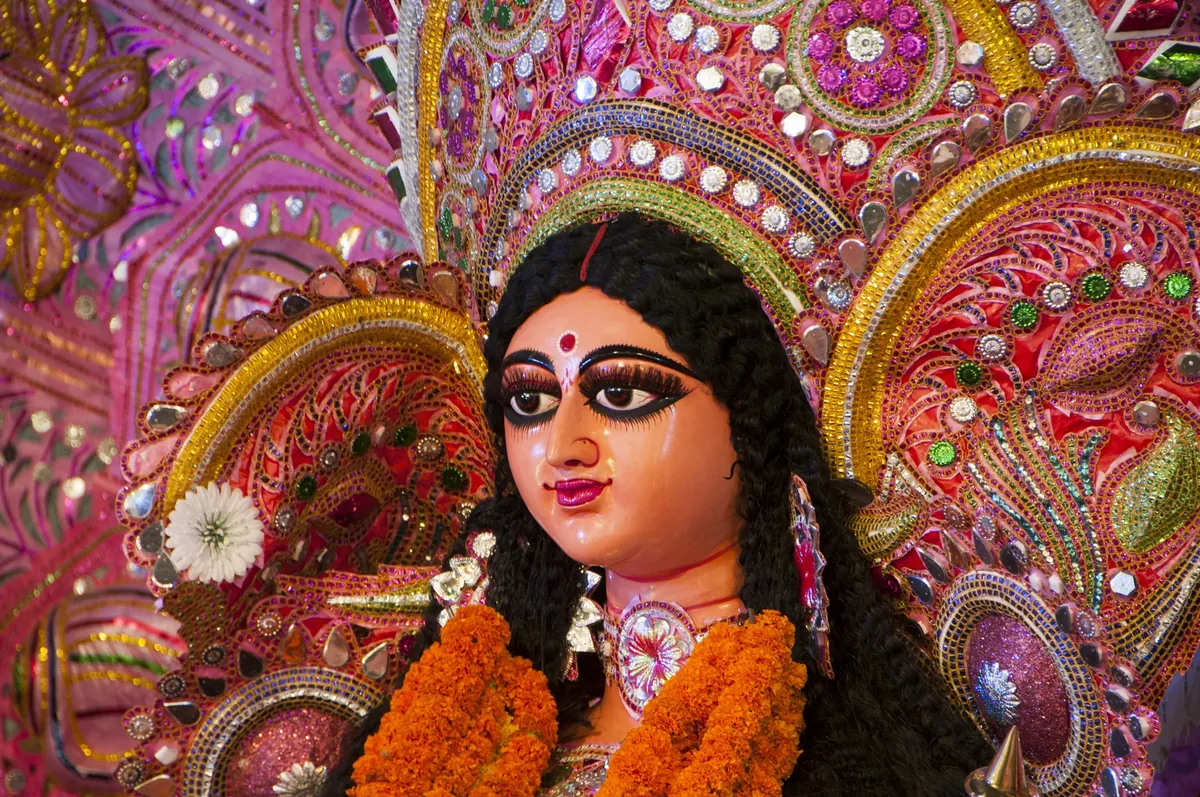
Dussehra celebrates the victory of good over evil, and two legends sit behind it. In the first, Rama defeats the ten-headed Ravana of Lanka and rescues Sita. This is the story behind the Ramlila performances and Ravan Dahan in North India. In the second, Goddess Durga slays the buffalo demon Mahishasura on the tenth day after a nine-day battle. This is central to Durga Puja, especially in eastern India.
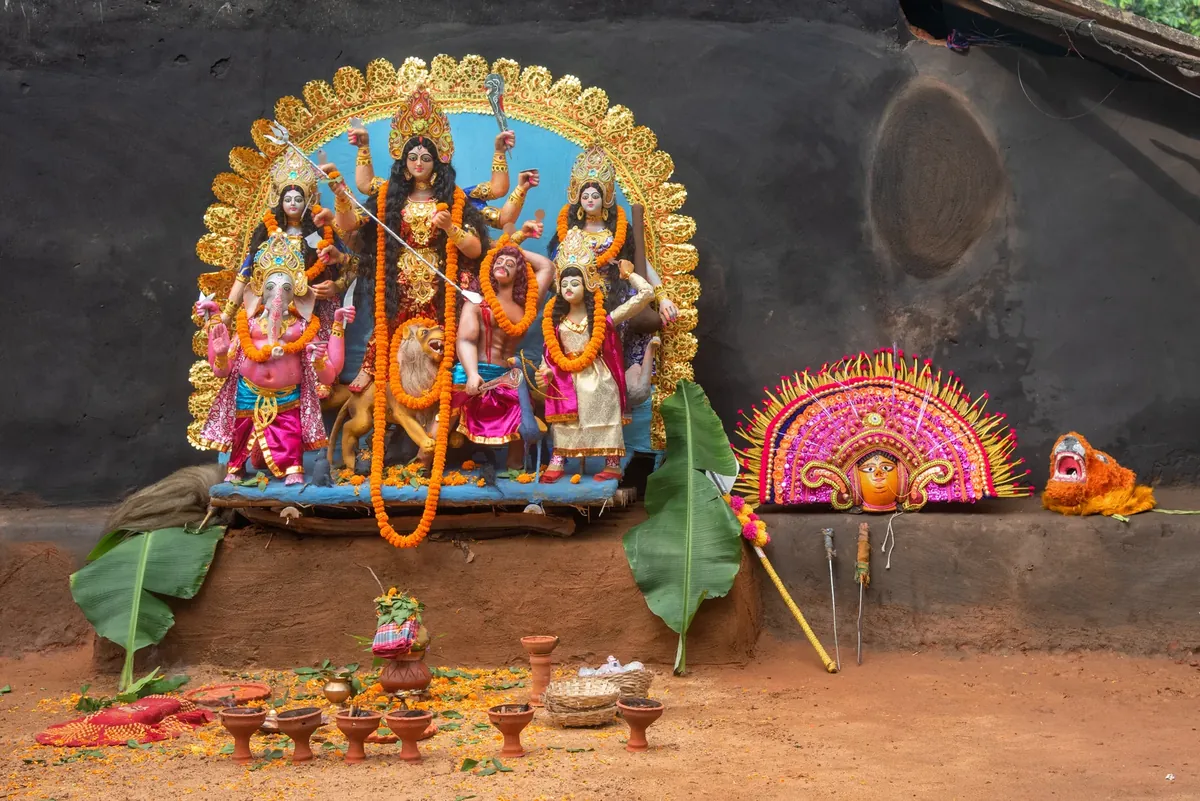
These two stories are not in competition. Both are told on the same day in different regions, and many families know both. If you are explaining it to children, a simple line is enough: this is the day we remember that courage, honesty and devotion beat arrogance and ego.
How is Dussehra celebrated across India?
The festival looks quite different from state to state.
- North India: Ramlila performances build up to the day, and on Vijayadashami evening large effigies of Ravana, Kumbhakarna and Meghnad are burned. The burning is said to symbolise the destruction of ego, evil and ignorance.
- West Bengal and eastern India: Durga Puja ends with the immersion of the idol (Durga Visarjan) and the greetings of Bijoya Dashami. Drik Panchang for Kolkata lists Durga Visarjan on 20 October and Bengal's Vijayadashami on 21 October, so check your local committee's schedule.
- Karnataka: Mysuru Dasara is a centuries-old tradition, around 400 years according to festival guides, with the illuminated Mysore Palace and the Jamboo Savari elephant procession.
- South India more widely: Ayudha Puja, where tools, instruments, books and vehicles are cleaned and worshipped, and Saraswati Puja. Children may begin their education on this day in a ritual called Vidyarambham. Many homes display Golu, a tiered arrangement of dolls, and exchange tamboolam.
- Telangana and Andhra Pradesh: The Shami (Jammi) tree is worshipped, recalling the Pandavas retrieving their weapons from it, and the leaves are exchanged as "gold".
What is the Dussehra puja vidhi at home?
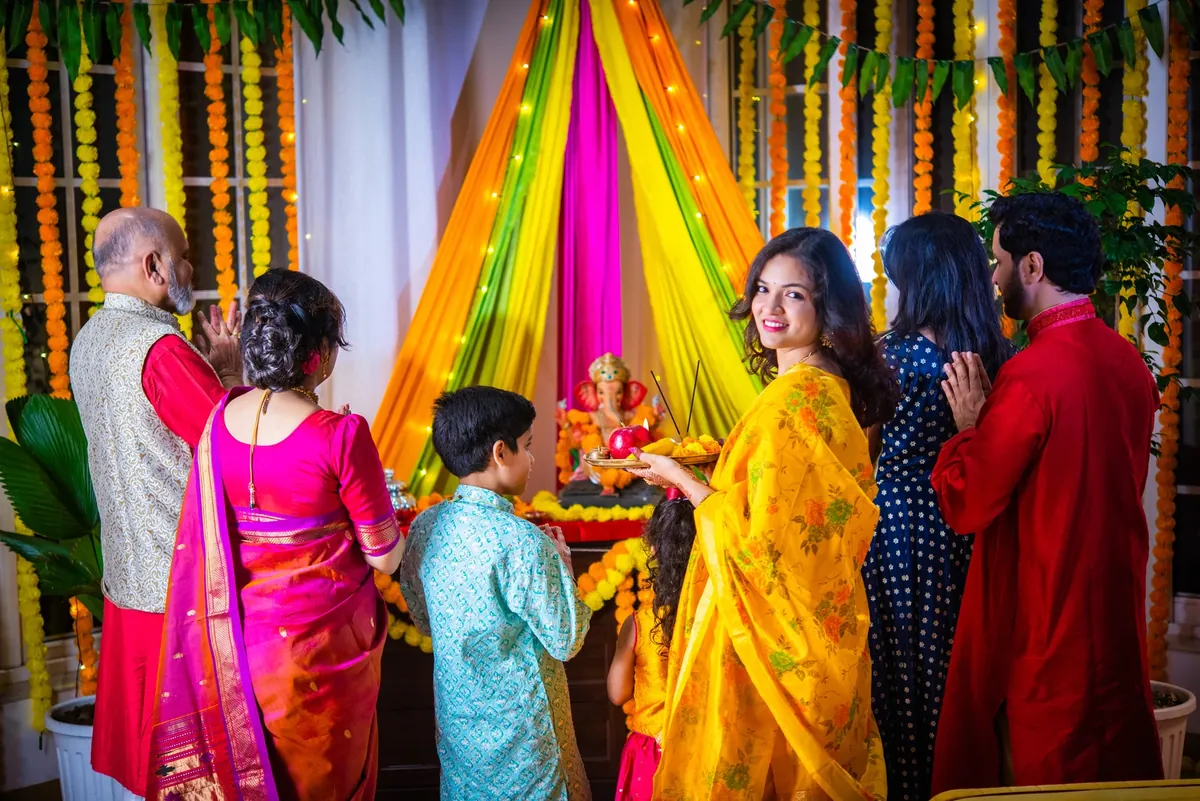
Here is a simple order of puja for a home. Families and priests differ, so use it as a framework and follow your own tradition where it differs.
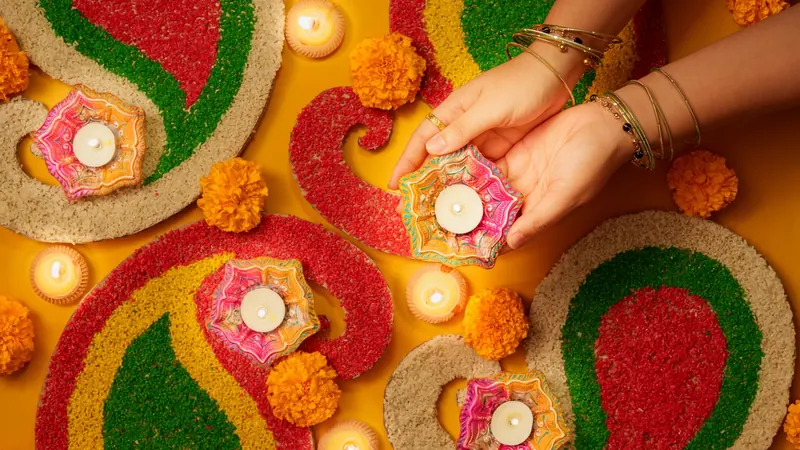
- Clean and prepare. Clean the puja space and the home, put up a toran and make a small rangoli. Wear clean clothes.
- Light the lamp and invoke your deity. Light a diya, offer flowers and incense, and begin with a prayer to Ganesha and your family deity.
- Ayudha (Shastra) puja. Clean your tools, books, laptops and vehicle keys. Apply sandal paste and kumkum dots, offer flowers and pray for success in work and study.
- Aparajita puja. Worship Goddess Aparajita in the aparahna (afternoon) period, for victory in your ventures. Offer blue Aparajita flowers if you can find them.
- Shami puja. Worship the Shami tree and light a lamp under it. Offering Shami leaves to elders is a custom in some families. If there is no Shami tree near you, ask your family priest what is acceptable instead.
- Aarti and prasad. Finish with aarti, share prasad, and take the blessings of elders.
- Evening. Ravan Dahan, if you attend a community event, or a quiet evening aarti at home.
Where the puja falls in the day matters to many families. The aparahna period is traditionally considered auspicious for Vijayadashami rituals, and Shami puja, Aparajita puja and Seema Avalanghan (crossing the village boundary) are ideally done then. The exact window depends on your city, so use a local panchang.
What puja samagri do you need for Dussehra?
You do not need much, and most of it is probably already in your puja cupboard. Here is a practical checklist. If something is missing, a nearby shop usually stocks it, and the online options below cover the items people most often have to order. Prices change, so check the current listing.
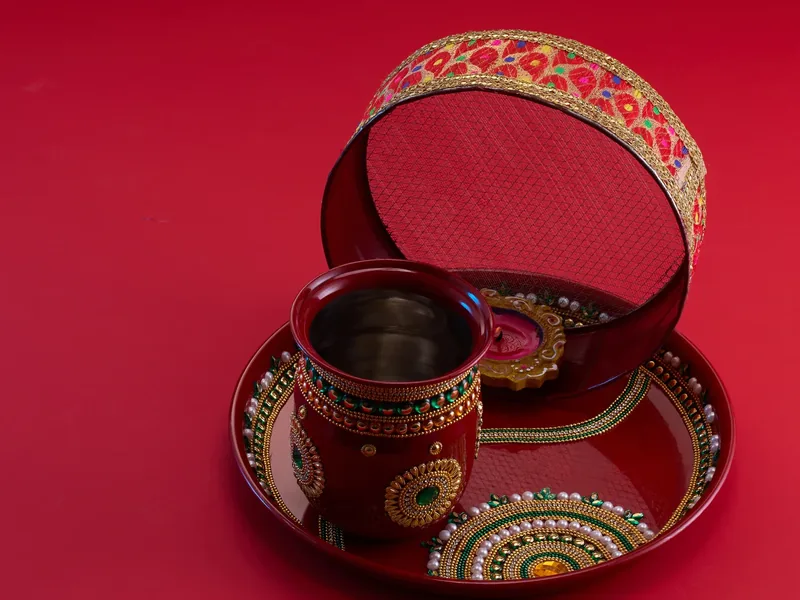
- A puja thali. Brass or steel, large enough for the lamp, flowers and prasad.
- Kumkum, roli and sandalwood paste. For tilak on tools, books and family members.
- Diyas, cotton wicks and ghee or oil. At least two lamps, one for the deity and one for the Shami or tools.
- Incense and camphor. For the aarti.
- Flowers and garlands. Fresh marigolds are usual, and blue Aparajita flowers if you can find them. If you need a long-lasting door or shrine decoration, an artificial marigold garland works too.
- Prasad and fruit. Seasonal fruit, sweets or a simple kheer. Buy fresh on the day.
- Shami leaves, if available, and rice grains (akshat) for the offering.
If you also plan the Diwali puja, our Diwali puja samagri list overlaps with this one, so you can buy the common items once.
See ideas on Amazon.in
How can you celebrate Dussehra at home with children?
If you live in a city flat and cannot attend a big Ramlila, there is plenty to do at home. Here are a few ideas that work for families.
- Tell the story. Read or narrate the Ramayana episode or the Durga legend in short, child-sized chapters. Ask the children what they think the ten heads of Ravana stand for.
- Make a paper Ravana. Children can draw ten faces and label each with a habit to give up, such as anger or laziness. It is the same symbolism as Ravan Dahan, without fire.
- Clean the work corner. It is a good moment to tidy school bags, laptops, kitchen tools and sewing machines before Ayudha puja.
- Cook one special meal. Families often cook a festive thali after the puja. If you are breaking a Navratri fast, start light. See our Navratri vrat food list for ideas.
- Visit elders. Offer Shami leaves or sweets and take their blessings.
If you go to a Ravan Dahan event, keep children well back from the effigy and fireworks, stay with a group and follow the organisers' safety instructions. Crowds can be dense and the burning area gets hot.
What comes after Dussehra?
The festive season continues without a break. Karwa Chauth is on Thursday 29 October, Dhanteras on Friday 6 November, Diwali (Lakshmi Puja) on Sunday 8 November, and Bhai Dooj on Wednesday 11 November, though some calendars say 10 November for Bhai Dooj.
Dates vary by region and panchang. Dussehra is roughly nineteen days before Diwali, so many families start cleaning and shopping right after the puja. Our Diwali 2026 five-day calendar lays out each day, and the Karwa Chauth 2026 guide covers the fast on 29 October.
Frequently asked questions
What is the date of Dussehra in 2026?
Dussehra is on Tuesday 20 October 2026. Check your local panchang for the exact timings of the rituals, because they vary by city.
Why is Dussehra celebrated?
It celebrates the victory of good over evil, through the legends of Rama defeating Ravana and Goddess Durga defeating Mahishasura. Different regions emphasise different stories.
What is the best time for Dussehra puja?
Many families do Aparajita puja, Shami puja and Seema Avalanghan in the afternoon (aparahna) period. The exact window depends on your city, so check a local panchang.
Is Ravan Dahan done on 20 October 2026?
In North India, effigies are burned on the evening of Vijayadashami, which is 20 October 2026. Local organisers announce their own timings.
Do I have to fast on Dussehra?
Not necessarily. Some families end their Navratri fast on Dussehra, while others do so on Ashtami or Navami. If you fast and have diabetes, are pregnant or have any medical condition, check with your doctor first.
Your next step: look up the Dussehra puja window for your city on a local panchang, and note it on the family calendar. Then see Diwali 2026: the five days, from Dhanteras to Bhai Dooj and the Diwali puja samagri list so you can plan the next three weeks.
We may earn a commission if you buy through links on this page, at no extra cost to you. As an Amazon Associate I earn from qualifying purchases. How we earn