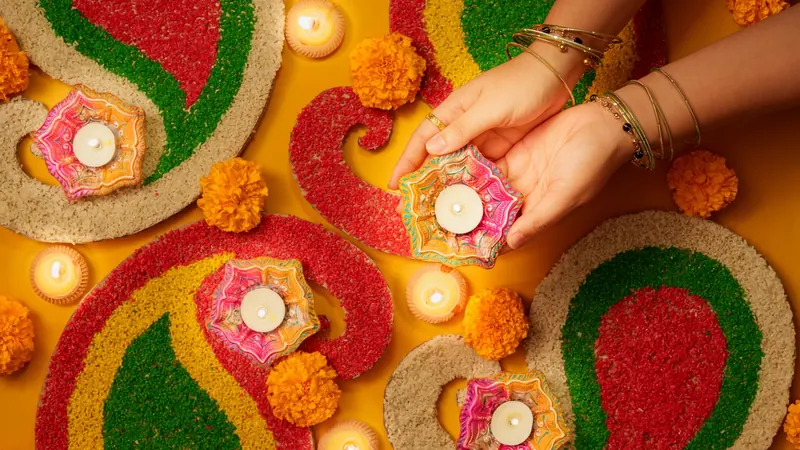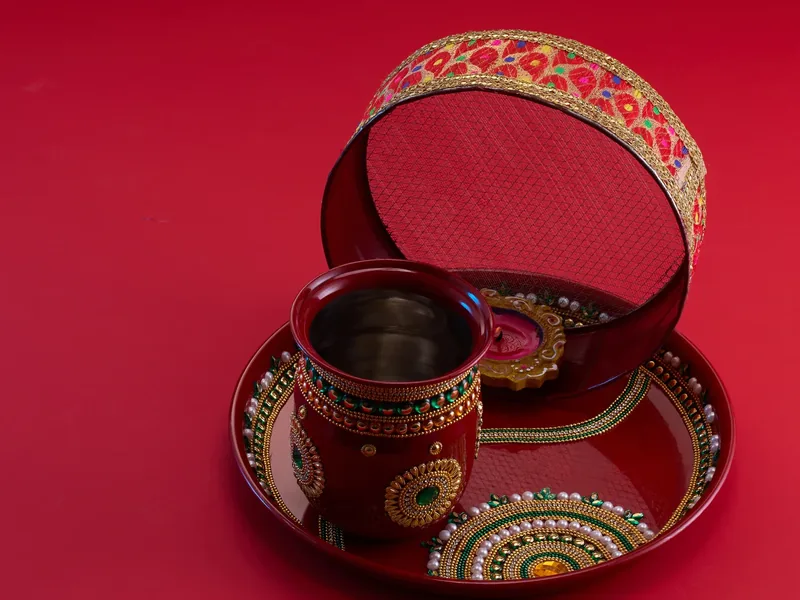
A Diwali Lakshmi puja needs a Lakshmi-Ganesha idol or picture (new ones if your family changes them each year), a red cloth and a wooden seat, earthen lamps, a kalash, flowers and garlands, fruit and sweets, and the usual thali basics: roli, rice, incense and ghee. Lakshmi Puja falls on Sunday 8 November 2026, two days after Dhanteras on Friday 6 November.
Tick items off as you buy them. Your progress is saved on this phone, you can print the list, and one tap sends it to the family WhatsApp group. Lamp and garland counts follow Drik Panchang. The weights in grams are our rough guide for one household. Pick your city in the puja-time box above.
The core Diwali puja samagri list
This is the traditional minimum, based on the list Drik Panchang publishes for the Diwali puja. Hindi names are beside each item so you can ask for it at the shop.
- Lakshmi and Ganesha idols (लक्ष्मी-गणेश की मूर्ति): one new pair, if you are changing them this year. Check Lakshmi-Ganesh idol sets on Amazon
- Wooden stool (चौकी): one, to hold the idols, with a red cloth (लाल कपड़ा) over it as the seat.
- Red silk cloth and yellow cloth (लाल और पीला कपड़ा): one of each, for the goddess and for the offerings.
- Large earthen lamps (बड़े दीपक): five, for the main puja.
- Small earthen lamps (छोटे दीये): at least 25, for the home and the entrance. Check packs of earthen diyas on Amazon
- Kalash (कलश): one fresh earthen pitcher, filled and decorated as your family does.
- Flowers and garlands (फूल-माला): at least three fresh garlands, plus about 250 g of loose marigold.
- Bilva and tulsi leaves (बेलपत्र, तुलसी): a small handful of each.
- Naivedya (नैवेद्य): sweets, fruit, sugarcane and lava or khil (puffed rice), about 250 g of sweets and a plate of seasonal fruit.
- Sweet paan (मीठा पान): at least three leaves.
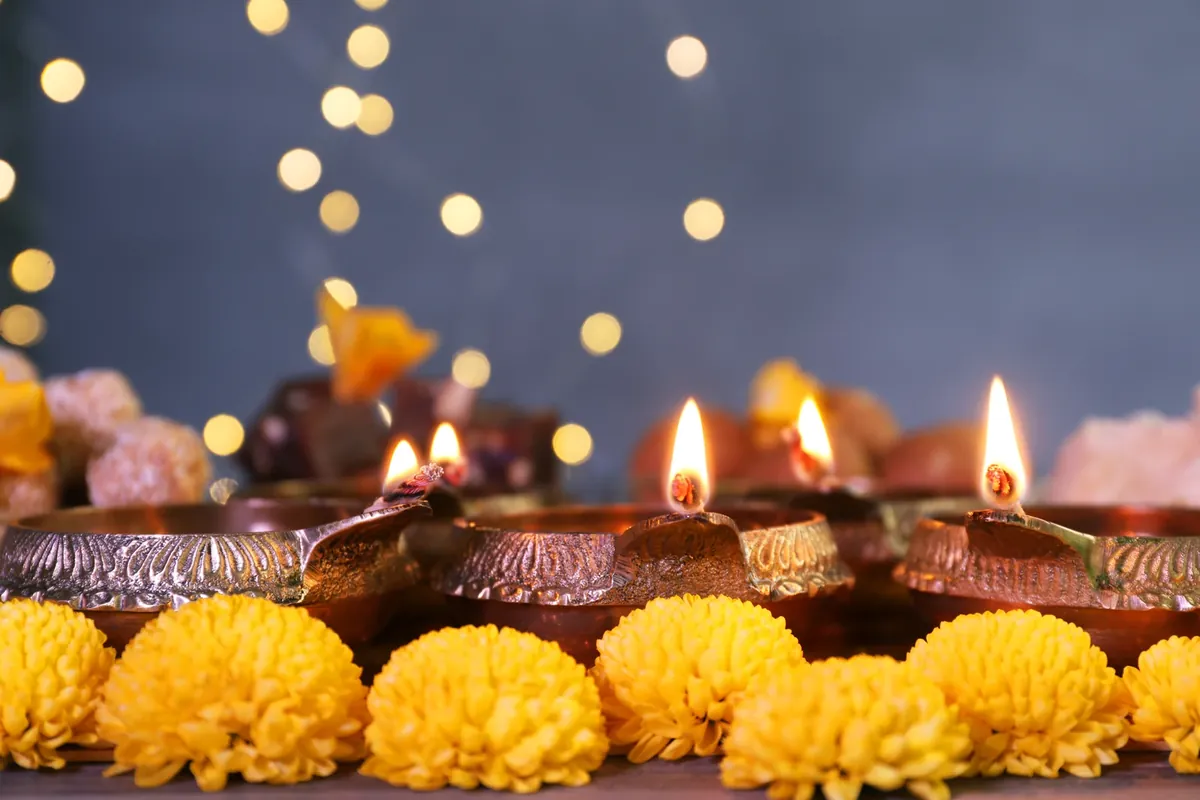
Everyday thali basics you probably already have
These small items go on almost every puja thali. Check your puja shelf before you buy.
- Roli or kumkum (रोली, कुमकुम): a small packet of about 50 g, for the tilak. Check puja samagri kits on Amazon
- Akshat (अक्षत): about 250 g of whole, unbroken rice.
- Moli or kalava (मौली, कलावा): one reel of the red-yellow sacred thread.
- Incense and camphor (धूप-अगरबत्ती, कपूर): one pack of each.
- Ghee or oil and cotton wicks (घी, रुई की बाती): about 250 g of ghee and a packet of wicks for the lamps.
- Panchamrit (पंचामृत): milk, curd, ghee, honey and sugar, if your family offers it.
- Gangajal (गंगाजल): or clean water in a small bowl, for the offering.
- Betel nut and leaves (सुपारी, पान): if your family uses them.
- Coins or notes (सिक्के): a few, for the offering.
- Matchbox, bell and clean cloth (माचिस, घंटी, साफ़ कपड़ा): one of each.
The full Lakshmi puja sequence also uses sindoor, sandal paste, new cloth and, in some households, jewellery for the goddess. You do not have to offer every item. Follow what your family does.
Things people forget until the evening
- A lighter or matchbox that actually works, and a spare.
- Extra oil or ghee and wicks to refill the lamps.
- A tray or stand to hold the lamps, so they do not mark the floor.
- Small bowls for sweets, rice and water.
- Newspaper or an old cloth under the puja area, because wax and oil drip.
- A phone or speaker with the aarti, so everyone can sing along.
Traditional extras some families add
Some households follow a longer Diwali list. These are not essential, but they are worth knowing if your priest or elders ask for them.
- Bahi-khata (बही-खाता): new account books for blessings, with a pen and inkpot (कलम-दवात). Common in business families.
- Durva grass (दूर्वा).
- Pancha pallav (पंचपल्लव): twigs from five trees: mango, palash, banyan, peepal and bakul.
- Sarvoshadhi (सर्वौषधि): a set of ten herbs.
- Sapt-mritika (सप्तमृत्तिका): mud from seven places, such as a cow shelter, an ant heap and a river confluence.
If an item is hard to find, whole rice (akshat) can stand in for it. Do not let one missing herb stop you from doing the puja.
How much should you budget for a basic Diwali puja?
Pick the tier that matches your budget, then spend it on the items in the lists above in this order. Prices change daily and differ by shop and city, so check the live price before you pay.
| Your budget | Where to spend it first |
|---|---|
| Under ₹500 | The consumables for the evening: earthen diyas, cotton wicks, ghee or oil, incense, camphor, roli and moli, rice and a few flowers. Reuse the idols, thali and kalash you already own. |
| ₹500 to ₹1,000 | The consumables above, plus one new item: a Lakshmi and Ganesha idol set, a kalash, or a ready-made roli, moli and kumkum kit. |
| ₹1,000 to ₹2,000 | Two or three new items together, such as idols, a simple thali and a kalash, with sweets and fruit for the naivedya. |
| ₹2,000 and above | Pieces that last for years: a brass thali set, brass lamps and a copper kalash, along with good dry fruits and sweets, and fresh flowers and garlands for the whole household. |
Flowers, fruit and sweets are extra at every tier, and their prices swing by city and by day. If you already own a thali, a kalash and lamps, the first two tiers are usually enough.
What to buy, and when
Some things keep for weeks and others should be bought a day or two before. Splitting the list saves you a rushed shop on Dhanteras or Choti Diwali.
| When | What to buy |
|---|---|
| Two weeks before | Idols, kalash, brass or earthen lamps, thali, red and yellow cloth, new account books if you use them |
| One week before | Incense, camphor, roli, moli, rice, cotton wicks, ghee or oil, coins for the offering |
| Two days before | Sweets, dry fruits, sugarcane, lava (puffed rice), betel leaves |
| The day before or the morning of | Fresh flowers and garlands, tulsi, bilva and mango leaves, fresh fruit |
For many families, Dhanteras (Friday 6 November) is the day the new idols and utensils come home, so plan the thali items for the days around it and not for the busiest shopping day of the year.
A short list if you live away from home
In a rented flat, a hostel or another country, the full list can feel impossible. A small puja is still a real puja for many families, and it is worth asking your elders. A practical minimum:
- A small Lakshmi-Ganesha picture or idol, on a clean cloth.
- Five diyas, with ghee or oil and cotton wicks.
- A few flowers or one garland.
- Incense sticks and a small bowl of rice.
- A simple sweet or a handful of dry fruits.
- Roli or kumkum for the tilak, if you have it.
Set diyas on a steady tray, an arm's length from curtains, dupattas and paper. Never leave a lit diya in an empty room, and keep children and pets away.
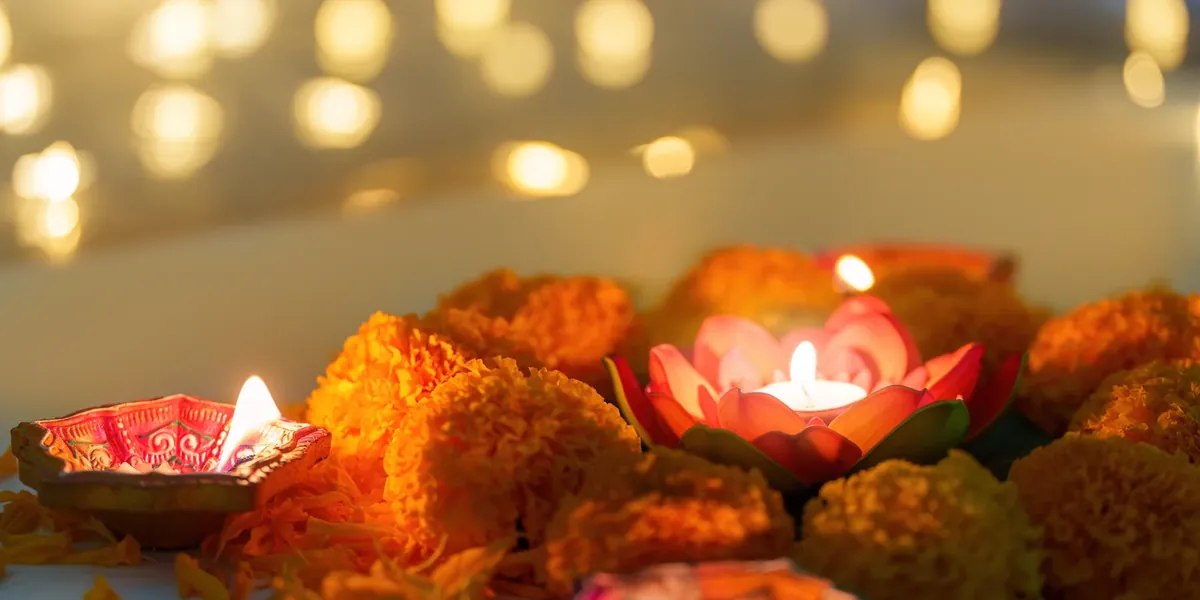
How do you set up the puja space?
- Clean the area, and draw a small rangoli or lay a clean white cloth if your family does.
- Place the wooden stool, cover it with the red cloth and set the idols on it.
- Put the kalash beside the idols, following your family's practice.
- Arrange the thali with roli, rice, flowers, incense and a lamp within arm's reach.
- Keep sweets, fruit and betel leaves ready for the naivedya.
- Light the lamps: the larger ones at the centre, the small ones along the entrance and windows, once you are ready to begin.

What should you check before you buy a puja item?
- Idols: a stable base and a size that fits your shelf. Clay and plaster idols are fragile, so inspect them when they arrive.
- Brass or copper: check whether it is solid metal or only plated. Brass cleans well with a lemon-and-salt or tamarind paste.
- Lamps: a wide bowl for the wick and a flat base. Soak new earthen diyas in water before use so they do not soak up all your oil. Check brass diya sets on Amazon
- Incense and camphor: sealed packs with ingredients listed. If anyone at home has asthma, ask them before you light a lot of smoke indoors.
- Flowers: buy on the morning of the puja. Marigold is common, though what you offer depends on your tradition.
- Sweets: check the date of making, and buy a small fresh amount rather than a big box that goes to waste.
If you are putting the puja together from scratch, a ready-made thali set is a sensible start, but check what is inside because kits differ a lot. Check puja thali sets on Amazon
Does the list change by region?
Yes. Many families worship Lakshmi and Ganesha together and some add Kubera and Saraswati. In Bengal and parts of the east, Diwali night is devoted to Kali. Business families often include account books and other households do not. Not every home uses panchamrit, sugarcane or sapt-mritika, and many do a shorter puja with a lamp, flowers and sweets. Ask an elder in your family where your custom differs from this list.
Buying and setting up: Dhanteras 2026 buying guide, rangoli designs and stencils, sweets and dry fruit for the naivedya and diya and lights ideas.
Frequently asked questions
What is needed for Lakshmi puja at home?
Lakshmi and Ganesha idols, a red cloth and a stool, earthen lamps, a kalash, flowers and garlands, fruit and sweets, and thali basics such as roli, rice and incense. Follow your family tradition for the rest.
When is Lakshmi Puja in 2026?
Lakshmi Puja is on Sunday 8 November 2026 (New Delhi calendar). The puja time depends on your city, so check a local panchang.
How many diyas do I need for Diwali?
The traditional list gives five large earthen lamps and at least 25 small ones for the puja. Many families light more around the home and entrance. There is no fixed upper limit.
Can I use the same idols every year?
Many families do, and others buy a new pair. The traditional list mentions new idols, but practice varies. If you are unsure, ask your family priest.
What if I cannot find every item on the list?
Do not worry. Whole rice (akshat) can stand in for a missing item. A shorter puja with a lamp, flowers, sweets and sincere prayer is accepted in many households.
Where this list comes from: the core items follow Drik Panchang's Diwali samagri page, and the everyday items come from common household and shop lists. Customs differ, so follow your family's.
Your next step: tick off what you already have and buy the rest in the order of the table before Dhanteras. Then see the five-day Diwali calendar, our Diwali cleaning checklist and decoration ideas for your home.
We may earn a commission if you buy through links on this page, at no extra cost to you. As an Amazon Associate I earn from qualifying purchases. How we earn