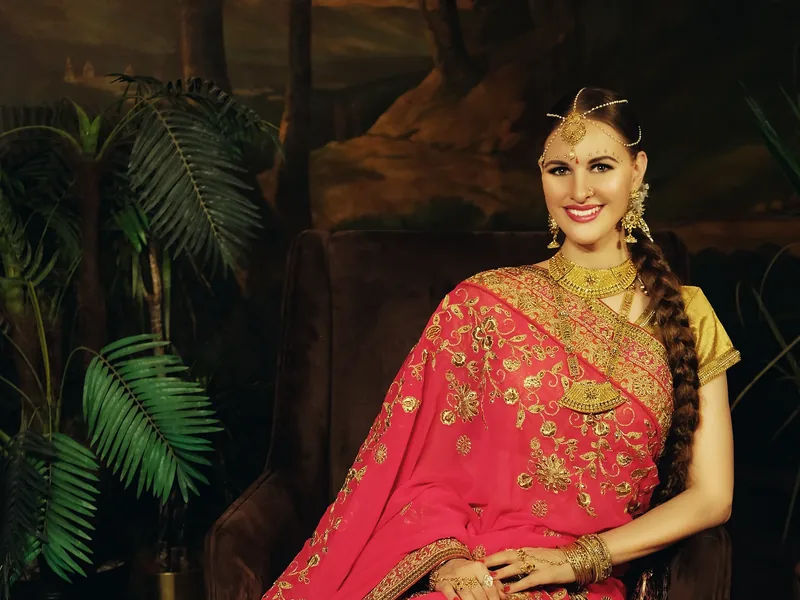
A real chikankari kurti is embroidered by hand, stitch by stitch, in Lucknow or the villages around it, so its motifs vary slightly and the back of the cloth shows knots and thread ends. A machine-made one imitates the look with machine stitching, which is quicker and cheaper, and its motifs repeat perfectly.
No single test is conclusive, but checking the repeat, the back, the stitch types and the fabric together will catch most imitations.
Machine-made chikankari-style kurtis are a fair budget choice when they are sold honestly. The problem starts when machine work is priced or described as hand work. Below we cover what the GI tag means, the stitches to look for, how to separate hand, machine and Schiffli work, what decides the price, where to buy, and how to wash it.
We describe price tiers rather than quote numbers, because published price lists come mostly from sellers and are rarely dated.
What is Lucknow chikankari, and what does its GI tag mean?
Chikankari is a Lucknow embroidery craft, traditionally worked in white thread on light fabric. The Indian GI Registry lists "Lucknow Chikan Craft" as a registered Geographical Indication: application number 119, registered on 2 December 2008 and valid up to 6 December 2027.
Making a piece follows a sequence: the design is prepared, the pattern is block-printed on the cloth, the cloth is embroidered, and the finished piece is washed to remove the printed pattern.
A GI protects the name and the craft's place of origin. It is not a quality inspection of any single kurti. A practical use is that the registry entry lists registered authorised users, mostly chikan businesses and artisans in Lucknow, Bijnor, Kakori and Chinhat, so you can ask a seller whether they are one and check on IP India's public GI search.
Which stitches should you look for?
Chikankari is commonly described as using dozens of named stitches, with counts quoted anywhere from 32 to 36 or more. We found no primary source for an exact number, so treat any figure loosely. These are the stitches most often described as the work that separates handwork from cheap imitation, and the descriptions below are the commonly given ones, because makers and regions use different names.
| Stitch | What it is (commonly described) | What to look for |
|---|---|---|
| Bakhiya, or shadow work | Worked on the wrong side of the cloth so a soft shadow shows on the front | A pale, shadowy outline of petals and leaves on the front, with thread crossing over the motif on the back |
| Tepchi | A long running or darning stitch, often the base for other stitches | Fine straight lines along stems and outlines |
| Murri | Tiny rice-shaped, knot-like stitches used for flower centres, described as one of the oldest and most sought-after forms | Small raised grain-like dots in the middle of flowers |
| Phanda | Tiny knots, evenly spaced, forming raised dots; related to murri | Neat, evenly spaced raised dots |
| Jali | Net-like openwork made by drawing apart the fabric threads and securing them with tiny buttonhole stitches | Small open holes in a net or lattice pattern |
How can you tell hand, machine and Schiffli chikankari apart?
Hand work is done with a needle by one artisan. Machine work uses a sewing or computerised embroidery machine. Schiffli work uses a large multiple-needle embroidery machine that stitches the same motif many times across a length of cloth. Use these checks together.
- The repeat. TRC Leiden, a textile research centre, says motifs on industrial embroidery look as if a ruler was used to get everything on straight lines. Hand motifs vary slightly.
- The back. Hand work often shows knots, thread ends and small irregularities, while machine work is often more uniform. A messy back does not prove a piece is handmade, so use this check with the others.
- Thread across the front. Machine-stitched pieces can show thread running across the front between motifs. Hand embroiderers normally hide the yarn on the back.
- Stitch variety. Look for shadow work, jali, and knot-like murri or phanda. Sellers say these are generally absent from machine work. One flat stitch repeated everywhere is a warning sign, not proof.
- The fabric. Hand embroidery needs cloth a needle can pierce, so very thick, stiff fabric is unusual in hand chikankari.
Even textile specialists say it can be very difficult to spot the difference, and thread evidence alone does not identify Schiffli work, because single-needle machines use the same two-thread system. So the safest check is the seller: ask who made it, how many days it took, and whether they are a registered GI user.
Which fabric suits which occasion?
| Fabric | What it is | Best for |
|---|---|---|
| Cotton | Natural, breathable fibre | Everyday and office wear |
| Mulmul | Fine cotton muslin, soft and light; sheer in the finest grades | Hot days, with an inner layer |
| Voile | Lightweight, sheer plain-weave cloth, usually cotton or a cotton blend | Light summer kurtis, with a slip |
| Georgette | Sheer, lightweight, drapey crepe, originally silk and now often synthetic too | Festive sets and flowing shapes, with an inner |
| Silk and organdie | Both appear among the fabrics listed in the GI application for Lucknow chikan craft, alongside cotton, mulmul, tanzeb, voile, chiffon, linen, khadi and georgette | Occasion wear |
Wherever the fabric is sheer, you need a slip or inner in a matching shade, so ask whether one is included. Sheer cloth in bright sunlight teaches its lesson once, so budget for the slip. Check the fabric percentage too, because a blend can change how the kurti breathes and how it should be washed.
What decides the price, and what are the tiers?
Hand embroidery is slow, and time is the main cost. Sellers say an intricate piece can take weeks. Price also rises with stitch density, with slower stitches such as jali and murri, with the fabric, and with the seller's costs and delivery. Because numbers change and published lists are mostly from sellers, here are tiers instead.
| Tier | What it usually is | What to check |
|---|---|---|
| 1. Machine embroidery on blended or synthetic fabric | Identical motifs, quick to make, the lowest-priced end | Fibre label, colour fastness, "chikankari-style" wording |
| 2. Machine embroidery on cotton | Better fabric, same uniform motifs | Cotton percentage, the back of the work |
| 3. Light hand embroidery on cotton | Simple tepchi and shadow work, fewer motifs | Stitch variety, the seller's account of who made it |
| 4. Dense hand embroidery on mulmul, cotton or georgette | Shadow work plus jali, murri or phanda across the garment | Days of work, a neat back, a registered GI user |
| 5. Heirloom or made-to-order pieces | Fine fabrics, very dense work, often custom | Written order details and return terms |
A useful sanity check: compare the kurti with a plain, unembroidered kurta in the same fabric. The gap is what you are paying for the embroidery. If the gap is tiny, something is missing, and the likeliest culprit is the hand work. Ask what kind of embroidery it is.
Where should you buy: Lucknow markets or online?
An Outlook Traveller Lucknow shopping guide names three areas. It lists Chowk, in the old town, for zardosi, ittar, decorative items and chikankari garments. It describes Aminabad as a market for practising your bargaining, with hosiery, bedsheets, embroidered fabrics, footwear and bangles.
It lists Hazratganj for chikankari outfits, hand-woven saris and khadi. In any market, compare three shops, ask to see the back of the embroidery, and ask for a proper bill. Opening hours differ, so check locally.

Online, ask for close-up photos of the front and the back, read the description for "hand embroidered" rather than "chikankari style", check the size chart in centimetres, and buy where returns are easy. Browse cotton chikankari kurtis on Amazon and then apply the checks above. For festive wear, see georgette chikankari kurti sets on Amazon.
Who actually makes it?
A University of Bonn research page describes chikankari embroidery as almost exclusively carried out by women, many living in villages around Lucknow and working for a single trader. It says they still have little direct access to the market and no financial security.
It also notes that SEWA, an organisation founded in Lucknow in 1984, helps embroiderers sell through their own stores without middlemen. Workforce estimates online run into lakhs, but we found none from a recent census, so we do not quote one.
You can prefer sellers who say who made a piece and how long it took, and treat a price that looks too low for weeks of work as a reason to ask whether it is machine work.
How do you wash and store a chikankari kurti?
Follow the care label first. Makers and sellers commonly advise the following.
- Wash it separately from other clothes, in cold water, so colours cannot run onto it.
- Hand wash with a mild liquid detergent.Check delicate-wash detergents on Amazon
- Keep the soak short, about 5 to 10 minutes, and do not scrub the embroidery.
- Do not wring. Press the water out with a towel.
- Dry flat or hang in the shade, away from direct sun. A wet georgette hung up can lose its shape.
- Iron on the reverse on low heat, with a thin cotton cloth over the embroidery, and never leave a hot iron unattended.
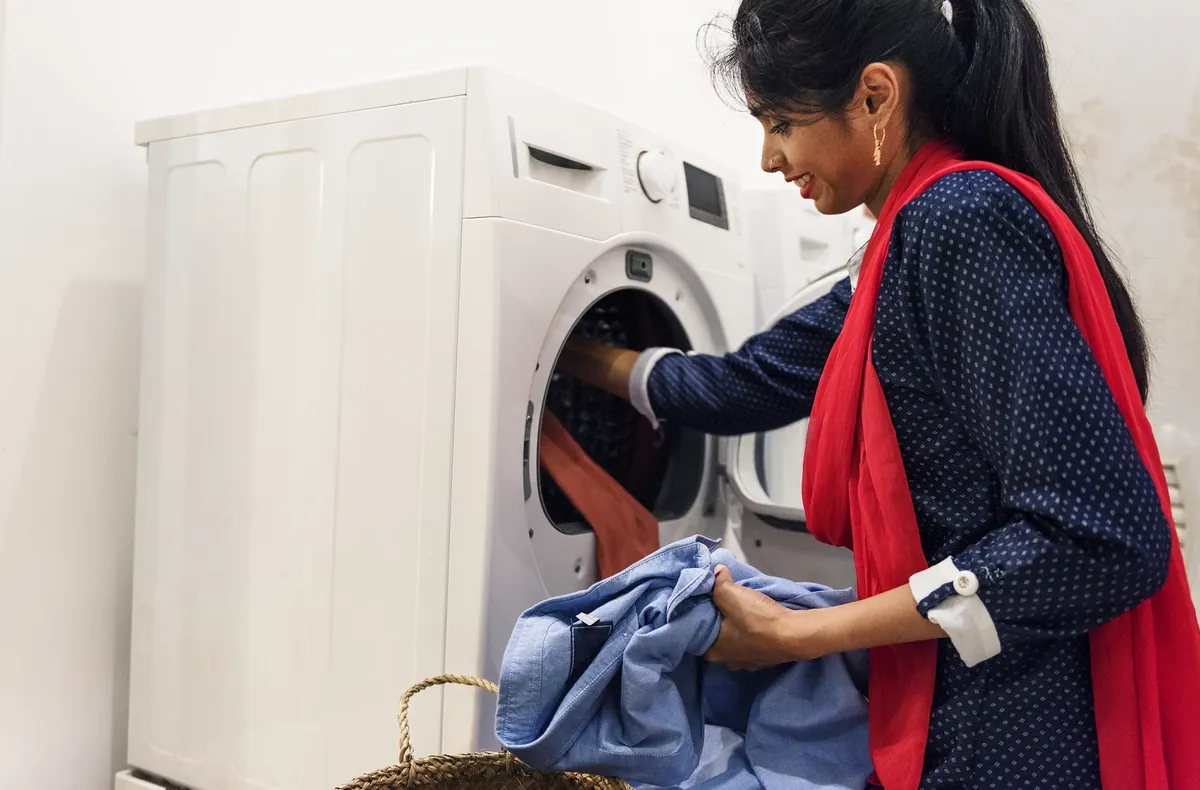
For georgette and heavily worked pieces, dry cleaning may be the safer choice. When you store a kurti, make sure it is completely dry, fold it rather than hanging a heavy piece, and keep it away from damp.
How should it fit, and how do you style it?
Check the chest, waist and length in centimetres against a kurti that fits you well. Natural fibres such as cotton can shrink in the first wash, so ask whether the fabric has been pre-washed. Sheer fabrics such as mulmul, voile and georgette need an inner.
For the office, a straight cotton or mulmul kurti in white or a muted shade works with straight trousers or palazzos, or under a blazer in cooler weather, with light jewellery and closed shoes. White is also one of the nine Navratri colours, so a white or cream kurta set is an easy fit for that day; see our Navratri 2026 colours guide.
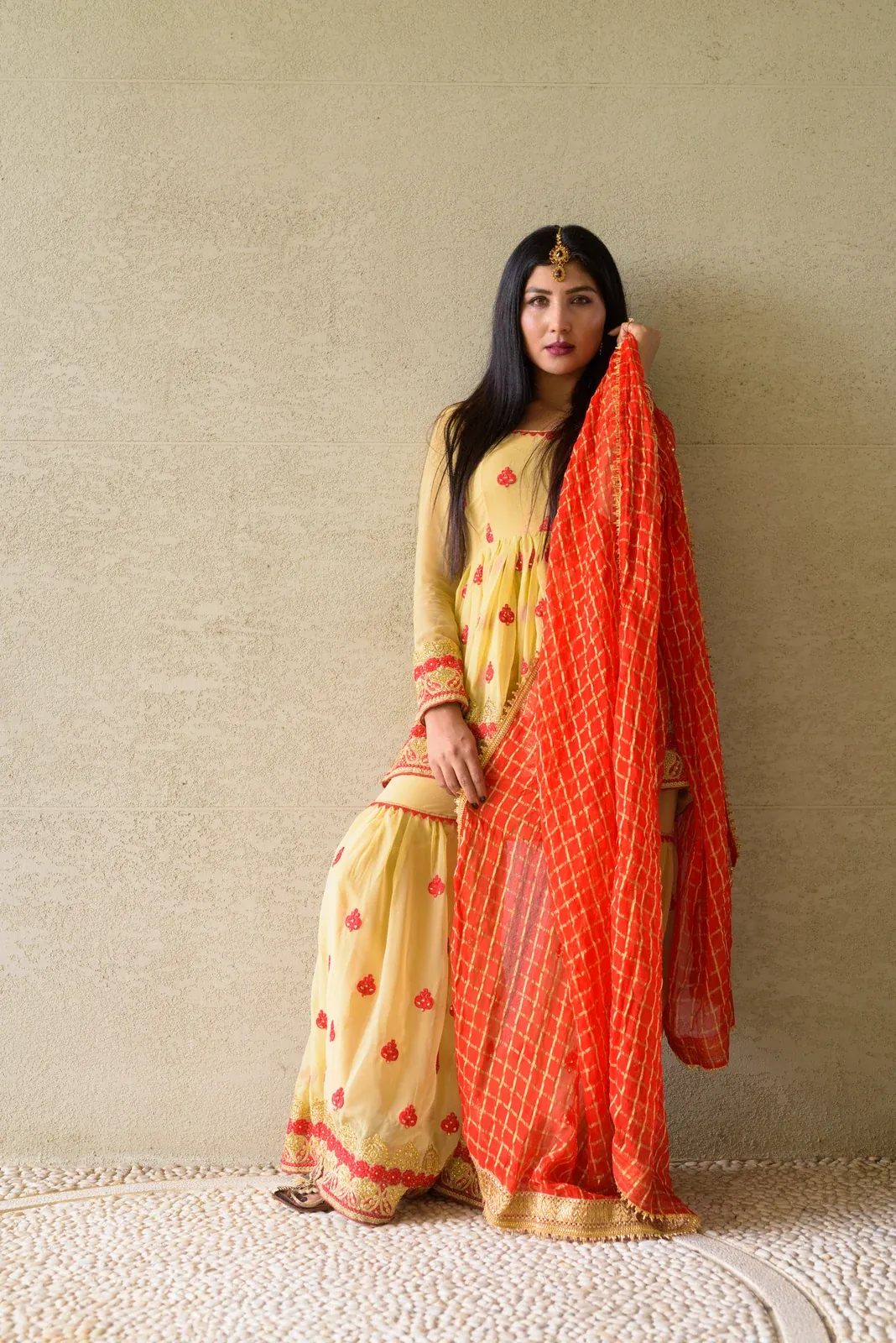
For festivals, a georgette set with a sharara or gharara, a dupatta and jhumkas does the job.
Frequently asked questions
How can I tell if a chikankari kurti is handmade?
Check for slightly varied motifs, knots and thread ends on the back, stitch variety such as shadow work, jali and murri, and no thread running across the front between motifs. No single test is conclusive, so also ask the seller who made it and how many days it took.
What does the GI tag for Lucknow chikankari mean?
The GI Registry registered "Lucknow Chikan Craft" on 2 December 2008. It protects the name and origin of the craft. It is not a quality check on an individual kurti, but the registry lists authorised users you can ask a seller about.
Can I wash a chikankari kurti in a washing machine?
Most sellers recommend hand washing in cold water with a mild detergent and no wringing. Follow the care label, and treat georgette and heavily embroidered pieces as hand-wash or dry-clean only unless the label says otherwise.
Which fabric is best for a chikankari kurti in summer?
Cotton, mulmul and voile are cotton-based and lighter than most synthetic fabrics, so they suit hot weather. Sheer fabrics need an inner layer.
Where can I buy chikankari in Lucknow?
An Outlook Traveller guide lists Chowk for chikankari garments (and zardosi and ittar), Hazratganj for chikankari outfits, and Aminabad as a bargaining market for hosiery, bedsheets, embroidered fabrics, footwear and bangles. Check opening hours locally.
Your next step: before you buy, turn the kurti over, photograph the back, and ask the seller three questions: who made it, how many days it took, and whether they are a registered GI user. Then plan what to wear it with using our Diwali outfit ideas for women and wedding guest outfits by season and budget.
We may earn a commission if you buy through links on this page, at no extra cost to you. As an Amazon Associate I earn from qualifying purchases. How we earn