






























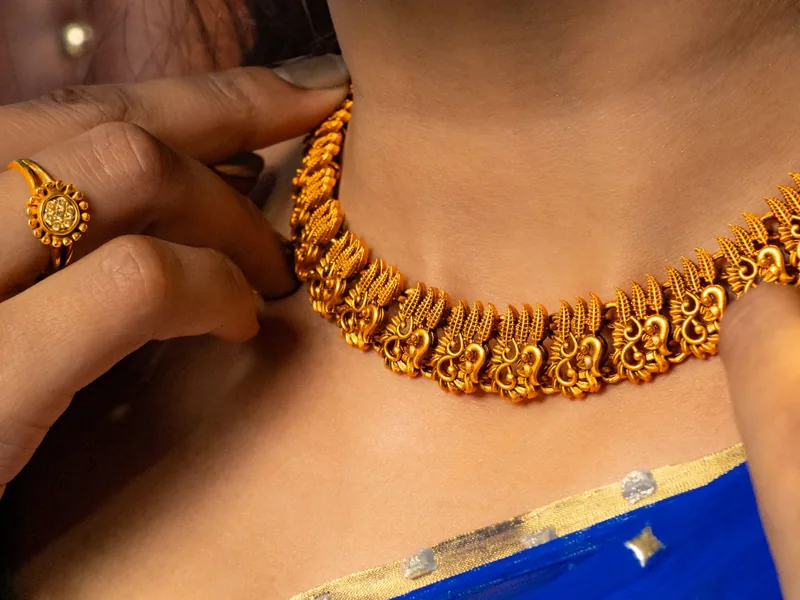
The safest wedding guest outfit is a richly worked but not bridal one: a silk or Banarasi saree, a lehenga or a heavy embroidered suit in a jewel tone, with something warm over it for a winter evening. Keep white, black and the bride's red out of the plan unless the host family has told you otherwise, because many families avoid them at the main ceremony.
The longer answer depends on the time of day, whose wedding it is and which part of India the family comes from. This guide takes them in that order, then covers haldi, mehndi and sangeet, a budget plan for a busy season, and the one safety rule most guests forget at the pheras.
What does a winter wedding season change about my outfit?
Hindu wedding dates resume after Dev Uthani Ekadashi, which falls on 20 November 2026 for Smarta families and 21 November for Vaishnava families in India. Several wedding calendars list the first dates from about 21 November. The calendar then pauses for Kharmas, which begins with Dhanu Sankranti on 16 December 2026 and ends with Makar Sankranti on 14 January 2027, and weddings carry on into March.
Dates differ between calendars, so check your own panchang or ask the family pandit before you book leave.
For a guest this means two crowded windows: late November to mid December, and mid January onwards. If you have four or five invitations, you will probably be dressing for most of them within a few weeks of each other. Plan them as a set.
Winter changes three things.
- Fabric. Velvet, heavy silk, brocade and Banarasi look right and keep you warm. A sheer net saree with a sleeveless blouse is a hard sell at an outdoor function after dark.
- Layers. A shawl, a cape or a long embroidered jacket is part of the outfit, so choose it before you buy the outfit and let the colours agree. Check embroidered shawls on Amazon
- Hours. Muhurats decide when the pheras happen, and that can be late at night. Ask the host what the schedule is, and dress for the function, not for the clock.
Day wedding or evening wedding: how should the outfit differ?
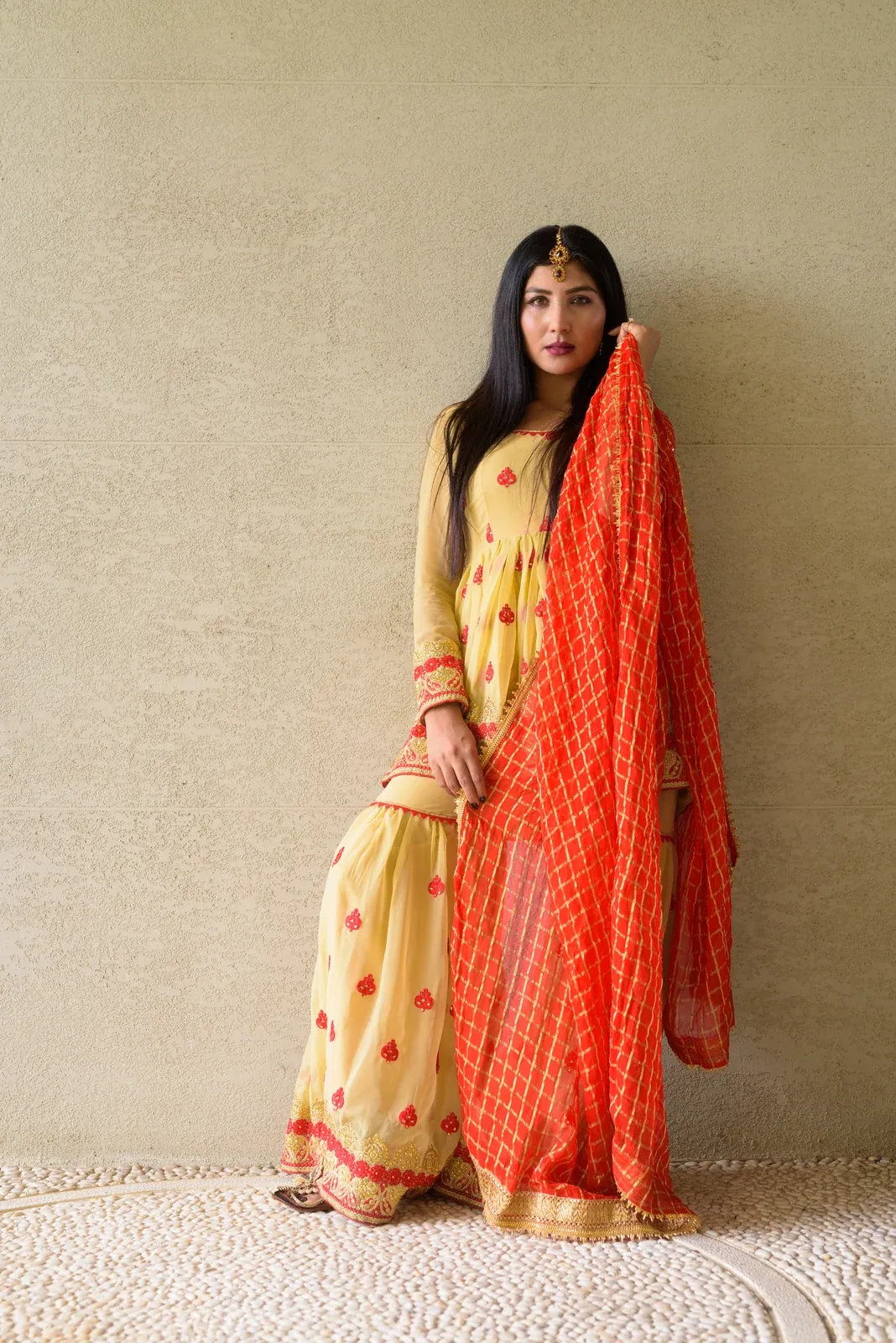
Daytime asks for lighter fabric and softer colour. Evening asks for richer fabric, more work and deeper colour. The table below is a starting point, not a rulebook.
| Part of the day | Fabric and work | Colours | Jewellery and shoes |
|---|---|---|---|
| Morning to afternoon (pheras, lunch) | Silk or cotton-silk saree, organza, a suit with light embroidery | Saturated pastels, mustard, peach, sage green; jewel tones if the venue is formal | One statement piece, comfortable flats or low heels |
| Evening (reception, sangeet) | Velvet, brocade, Banarasi, heavy embroidery, sequins | Emerald, wine, midnight blue, gold and champagne | A fuller set, heels you have already worn in, a small bag with a strap |
Pick the saturated version of a pastel. A washed-out peach or ice blue can look white in photographs.
Is a family wedding different from a friend's wedding?
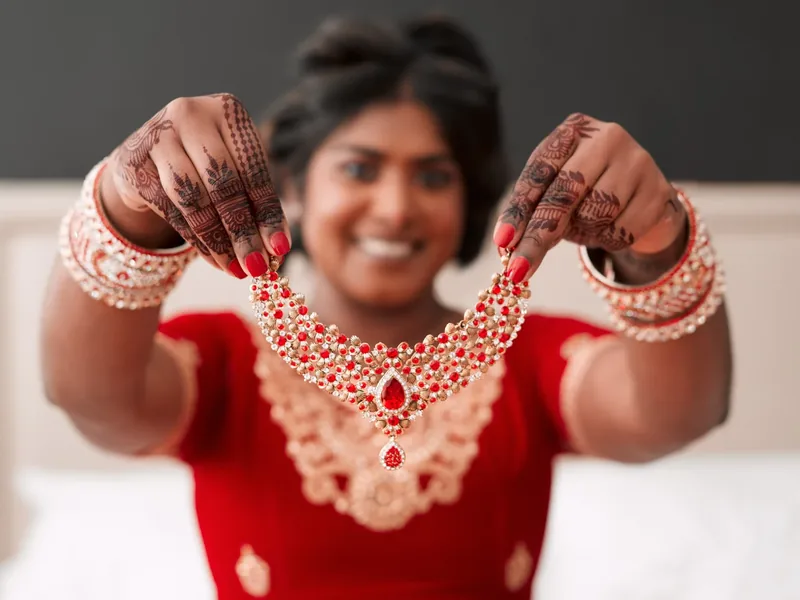
Yes, mainly in how much coordination you need. At a family wedding you will be in many of the photographs, and the hosts often expect you to dress up for every function. At a friend's or colleague's wedding you are a guest in the crowd, so you can go a notch lighter.
- Family (bua, mausi, cousin, bride's or groom's side). Ask which colours are already taken. Many families give each function a palette, and the mothers of the bride and groom usually wear the richest outfits, so do not compete with them.
- Friend's wedding. Follow the invitation. If it says traditional, wear a saree, lehenga or suit; if it says festive, a well-cut Indo-western outfit works. Do not copy the bridesmaids' theme if the bride has chosen one.
- Colleague's reception. Smart and polished is enough, such as a silk saree or an embroidered kurta set with a dupatta.
If you are unsure, message someone in the family: "I am thinking of deep green for the sangeet, is that fine?" Hosts are usually glad you asked.
What do guests wear in different parts of India?
Families vary a great deal inside every region, so treat these as common patterns and not as rules. When in doubt, ask the host family.
- North India. Lehengas, heavily embroidered suits and Banarasi sarees all fit in.
- Gujarat. A bride's saree may be a white-and-red Panetar, often given by her maternal side, and a Gharchola, traditionally from the in-laws, may be worn over it. So a plain white-and-red saree can look like a copy of the bride. A bandhani in another palette is a safer choice.
- Maharashtra. A Paithani silk saree is the classic Maharashtrian bridal choice, so check your colour with someone in the family before you wear one yourself. Other silk sarees are the usual guest default.
- Tamil Nadu and the South. Silk sarees, especially Kanjivaram, are the norm. Some Tamil wedding guides advise against white and black at the main ceremony and against solid red or any shade close to the bride's saree, which is often red, maroon or gold-yellow. Blues, greens, yellows and deep pinks are the common guest choices in silk.
- Kerala. Off-white or cream with a gold kasavu border is traditional wedding wear for many Kerala families, and some guides call it the exception to the usual rule about white. Guides disagree on whether guests are expected to wear it, so ask.
- Bengal. The bride traditionally wears a red Banarasi, so guests usually avoid full red. For the haldi function, called gaye holud, yellow is the colour of the day.
Which colours should I avoid at an Indian wedding?
Avoid the bride's colour, and ask before wearing white or black. The reasons come from custom, not from a law, and they differ between families.
| Colour | Why many families avoid it | Safer swap |
|---|---|---|
| White | Linked with mourning in many Hindu families; also the bride's colour at a Christian wedding | Saturated pastel, or ivory only with strong colour work |
| Black | Seen as inauspicious by many families, though more relaxed at receptions | Deep green, plum or navy; wear black at a sangeet if the family is relaxed |
| Bridal red and close shades | Looks like you are competing with the bride | Wine, rose pink, orange-gold or any jewel tone |
Safe, flattering choices that hold up almost anywhere are emerald, royal blue, teal, mustard, plum and deep pink. Gold and champagne work in the evening, but we would keep them off daytime functions, where they can read as bridal.
What should I wear to the haldi, mehndi and sangeet?
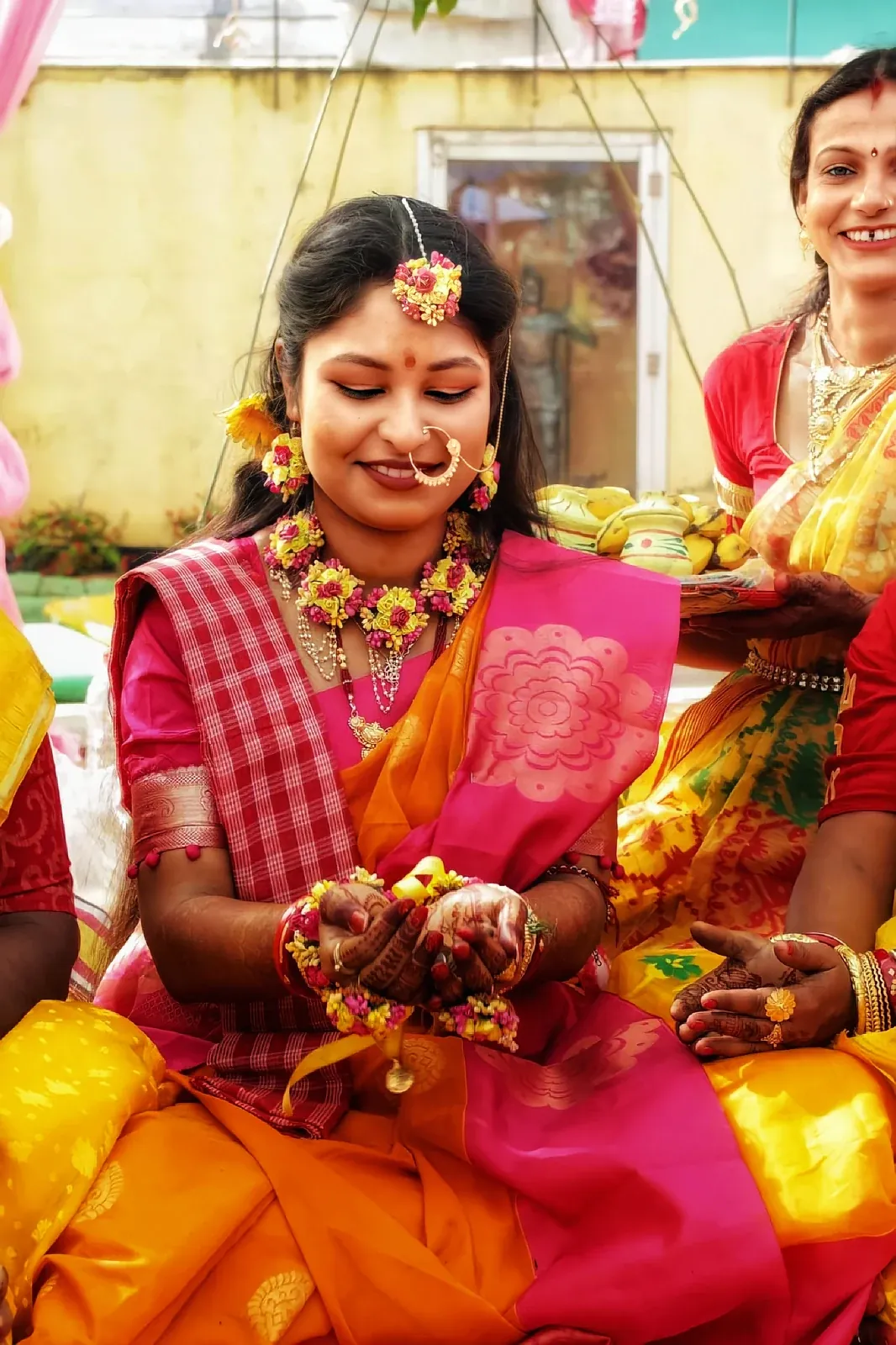
Wear yellow cotton to haldi, a light green or pink set to mehndi, and a jewel tone you can dance in to the sangeet. Each function has a practical rule that matters more than the fashion.
| Function | Colour | Fabric and cut | Practical rule |
|---|---|---|---|
| Haldi | Yellow, marigold, orange | Cotton or cotton-silk kurta set or a simple saree | Turmeric stains, so skip silk and heavy embroidery and carry a change of clothes |
| Mehndi | Green, pink, orange, peach | Light kurta set with palazzo, co-ord set, easy anarkali | You may sit on the floor with wet henna on your hands, so avoid tight skirts and trailing dupattas |
| Sangeet | Jewel tones, metallics | A lighter lehenga, a pre-pleated saree, an Indo-western gown | Do a full twirl in the mirror, and wear shoes you have already danced in |
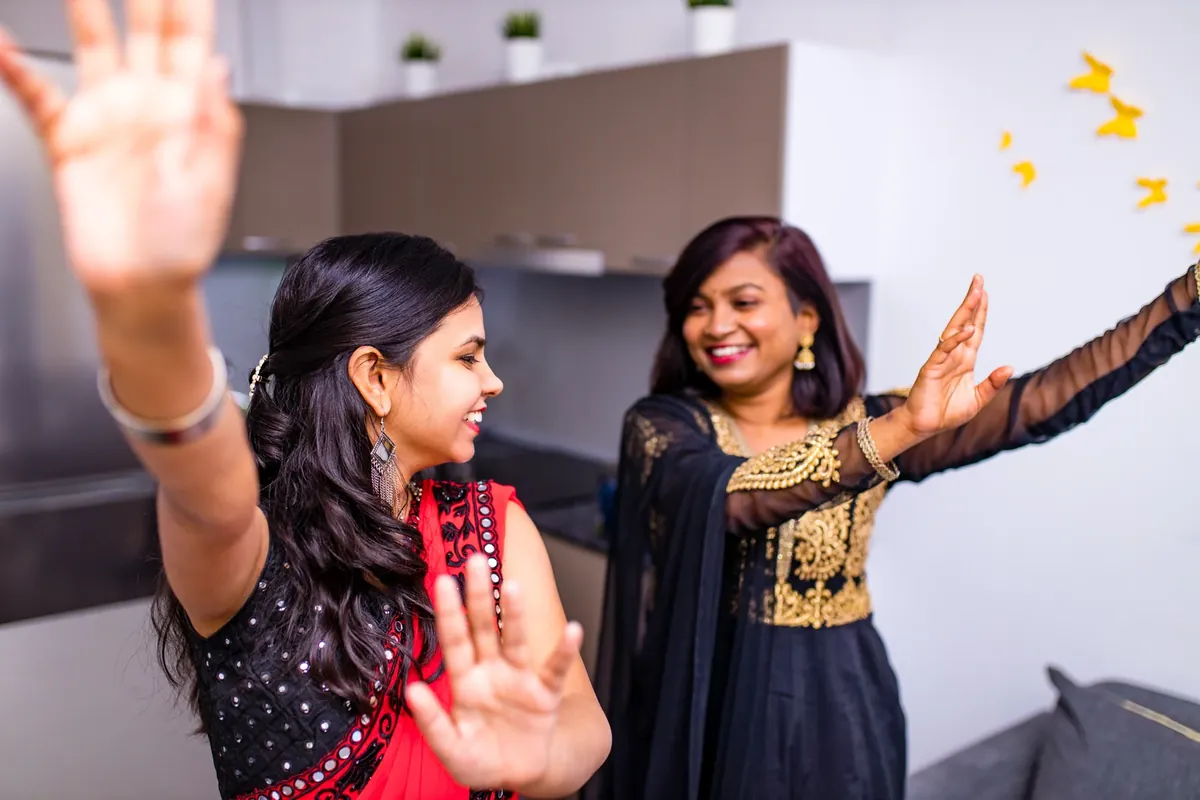
The sangeet is where many guests regret the weight of the skirt by 10 pm. Our Garba and dandiya outfit ideas explain what stays comfortable through hours of dancing, and the same rules apply here.
How much should I spend, and what can I rent or rewear?
Set a budget for the whole season first, then give each function one job. A workable plan is one new outfit, two refreshed outfits and one rental. The tiers below are budgets you pick for yourself. Read the middle column as what to aim for, not as a promise of what any shop charges.
| Tier you choose | What to aim for | Where to spend |
|---|---|---|
| Under ₹3,000 per outfit | Re-style what you own, a readymade cotton-silk or georgette set, a rental for one evening | A new dupatta or blouse and good safety pins |
| ₹3,000 to ₹10,000 | One new stitched suit or saree for the main function plus refreshed outfits | Stitching and fit, since a well-fitted blouse lifts a modest saree |
| ₹10,000 to ₹25,000 | A silk saree, a semi-heavy lehenga or a designer rental for the sangeet | Fabric quality and the finishing, not the label |
| Above ₹25,000 | A pure silk saree or lehenga you will wear for years, or the family-wedding showstopper | Something you can rewear and hand down |
For repeat-wearing, change the three things photographs catch most: the blouse, the dupatta and the jewellery. One saree with two different blouses reads as two outfits. A lehenga skirt with a new blouse and dupatta does the same. Avoid repeating a whole outfit with the same family circle at two functions.
Rent the pieces you will wear once, such as a heavy lehenga or a designer gown. Before you pay, ask about the fitting, the deposit, who pays for dry cleaning and the return date, which should fall after the last event.
Our bridal lehenga guide has a rent-or-buy table that works for guests too. Buy, rather than rent, a pure silk saree: it is the one piece that repays being owned. For that, see our wedding saree guide.
How do I stay comfortable and safe through a long wedding?
Fire is the risk nobody mentions on the invitation. At the pheras and the havan, flames burn at ground level while guests lean in to offer samagri or take photographs. Long, loose ends of a dupatta or pallu are the part of an outfit most likely to catch.
An Indian observational study of domestic burns found sarees, salwars and dupattas among the garments most often involved, and fire-safety guidance points to loose, flowing ends as the danger more than any single fabric. So the rules are about fit:
- Pin your dupatta or pallu firmly at the shoulder and tuck the loose end into your waist before you step near the fire.
- Stand a step back from the havan kund, diyas and candles, and never lean over a lit flame. Never leave a lit diya or candle unattended, and keep them well away from children, curtains and dupattas.
- If clothing does catch fire, stop, do not run, drop to the floor, cover your face with your hands and roll until it is out.
For comfort, break in your shoes before the day, since embroidered juttis on Amazon or block heels are kinder than stilettos on a long day. Keep a pouch with safety pins, a mini sewing kit, a stain-remover pen and a spare pair of earring backs. Choose a blouse in which you can raise both arms, because there will be a lot of hugging.
Frequently asked questions
What should I wear to an Indian wedding as a guest?
A silk or Banarasi saree, a lehenga or an embroidered suit in a jewel tone is the safest choice. Skip white, black and the bride's red unless the host family says it is fine, and ask about each function's colour theme if there is one.
Can I wear black or white to an Indian wedding?
Many families avoid both at the main ceremony, because white is linked with mourning in many Hindu families and black is seen as inauspicious. Receptions and sangeets are often more relaxed. If you are unsure, pick a deep colour and message the host.
What do guests wear to a haldi ceremony?
Yellow or another sunny colour in a washable fabric such as cotton. Turmeric stains, so skip silk and heavy embroidery, and carry a change of clothes for the rest of the day.
Is it all right to wear the same outfit to two weddings?
Yes, if the guest lists are different. If the same relatives will be at both, change the blouse, the dupatta and the jewellery so it looks like a new look. Avoid repeating a whole outfit within the same circle.
How early should I buy my wedding guest outfit?
Tailors get busy in wedding season, so book the stitching when the invitation arrives and ask for a delivery date, not "a week". Readymade outfits and rentals can be sorted closer to the date, but check sizes and the return date early.
Your next step is to list every function you are invited to, mark each against the tables above and write down what you already own for it. Decide your one new outfit, then book the tailor. If a saree is the plan, read our wedding saree guide, and for a lehenga see the bridal lehenga guide.
If you are choosing something for the couple, our wedding gift ideas by budget will save you an afternoon.
We may earn a commission if you buy through links on this page, at no extra cost to you. As an Amazon Associate I earn from qualifying purchases. How we earn



