The Diwali decorations that work in most Indian homes are simple: a toran on the main door, a rangoli at the threshold, diyas along the entrance and windows, and warm string lights to tie the room together. Diwali (Lakshmi Puja) falls on Sunday 8 November 2026 according to most calendars, so aim to have everything up by Dhanteras on Friday 6 November. Dates can differ by region, so check your local panchang.
That is the whole formula. What changes from home to home is the look: traditional with marigold and brass, minimal with one or two quiet touches, or rental-friendly with nothing drilled into the wall. This guide walks through each look, then lists what to buy and what to skip.
When should you put up Diwali decorations?
Put them up after the deep clean and before Dhanteras, so the house is ready when the five days begin. Most families finish the big jobs (lights, door decor, puja room) over the weekend before Dhanteras, and add fresh flowers on the day itself.
A sensible order saves you from decorating a dusty room twice:
- Clean first. Our room-by-room Diwali cleaning plan starts about three weeks out.
- Hang lights and any wall decor once the walls and windows are done.
- Set up the puja area using the Diwali puja samagri list.
- Buy fresh marigold garlands and flowers the day before or the morning of, because they wilt quickly in warm weather.
If you are unsure which day does what, the five-day Diwali calendar lays it out from Dhanteras to Bhai Dooj.
How do you decorate a home the traditional way?
A traditional Diwali look is built from four things: a toran, a rangoli, diyas and flowers. Each one has a job, and none needs to be expensive.
The toran. This is the door hanging placed above the main entrance. Traditionally it is made of fresh mango or ashoka leaves and marigolds, and many families see it as a way of marking the doorway as welcoming for Lakshmi and Ganesha.
Today you will also find fabric, bead and artificial-flower versions that last for years. Both are fine; what matters is that it hangs straight and is not crushed by the door when it opens.
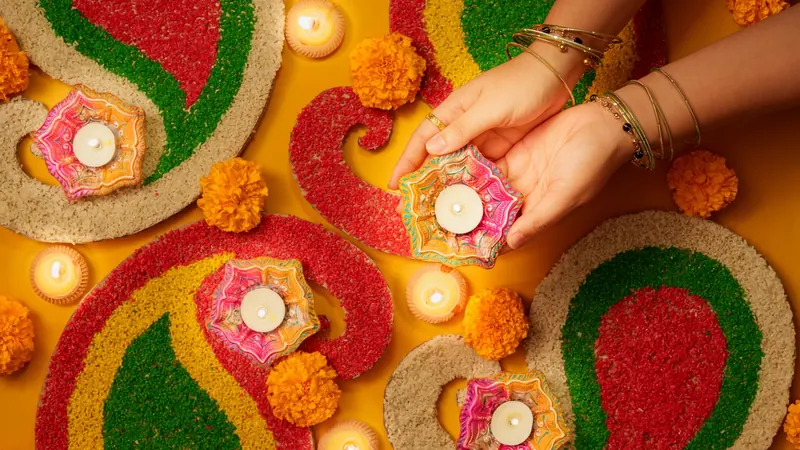
The rangoli. A rangoli at the entrance is made with coloured powder, flower petals, or rice flour, depending on the region and the family. Many people also use reusable stencils or a stick-on design if they are short of time. Size the rangoli to the doorway, leaving the door swing and shoe rack clear; a stencil gives a clean edge in minutes.
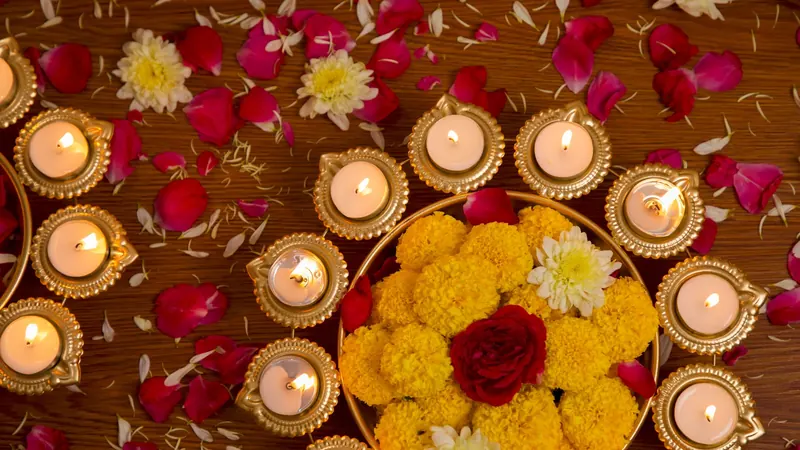
Diyas. Clay lamps are placed at the threshold, on window ledges, near the puja area and sometimes on the balcony. A cluster of five to nine diyas in a tray looks richer than a long scattered line, and it is easier to keep an eye on.
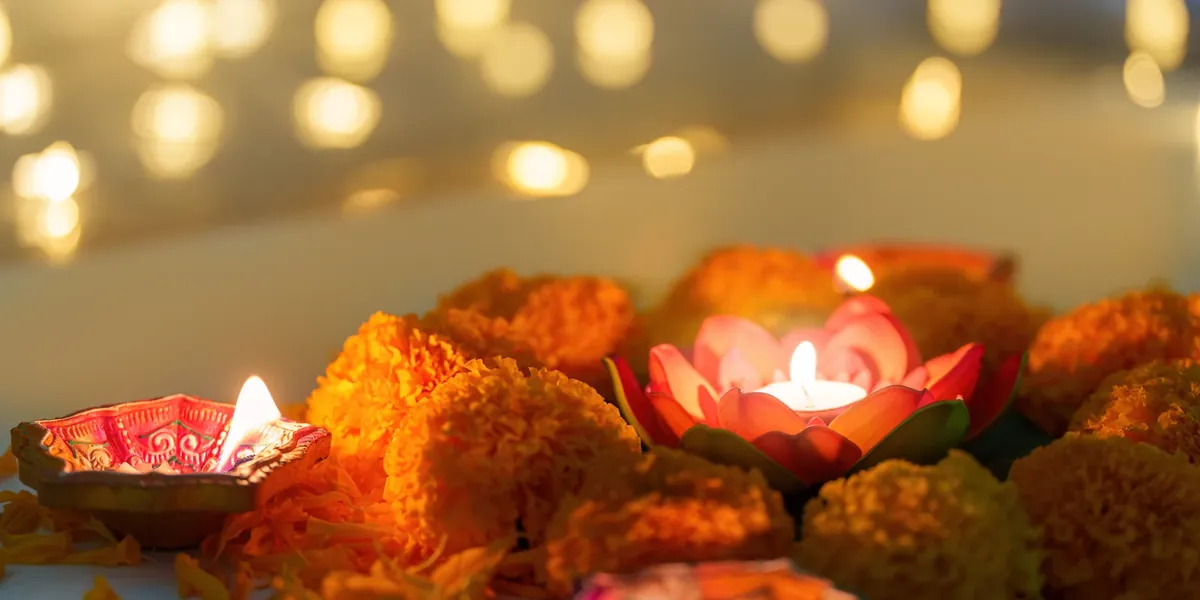
Flowers. Marigold is the usual choice because the orange and yellow read as warm and festive, and a bowl of loose petals around diyas costs very little. Roses and jasmine work well in the puja area.
A note on tradition: practices differ. In some families the toran stays up for the full five days, in others it is changed daily, and rangoli styles vary a lot between Gujarat, Maharashtra, Tamil Nadu and the north. Do what your family does, and use this guide as a set of options.
What does a minimal Diwali look include?
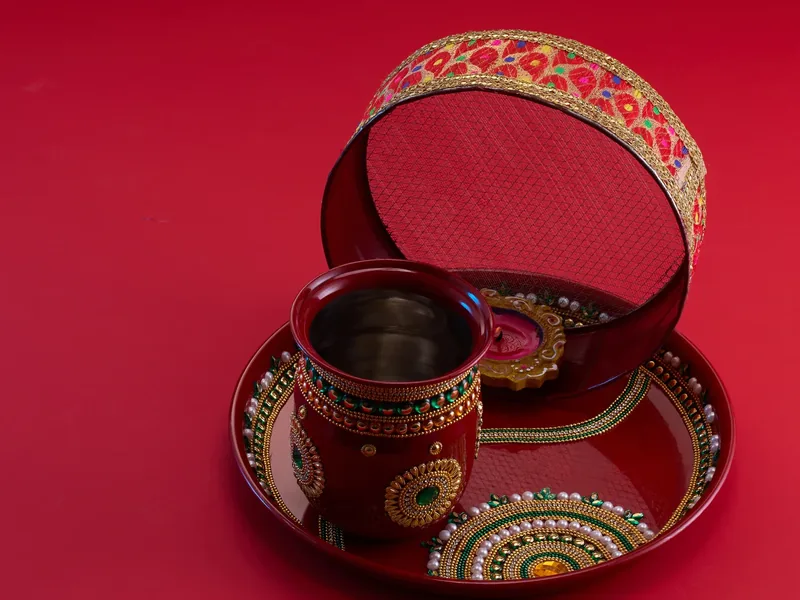
A minimal Diwali look uses one colour family, one focal point and very few objects. It suits small flats and anyone who dislikes clutter, and it often photographs better than a house covered in every decoration at once.
A simple recipe:
- Pick one palette. Ivory and gold, or white and marigold orange, or deep green and brass. Stick to it across the toran, cushions and table.
- Choose one focal point. Usually this is the entrance or a single console table with a brass urli (a shallow bowl) filled with water, petals and floating tealights.
- Use light, not objects. A single warm string of lights does more than ten ornaments.
- Swap, do not add. Change the cushion covers and table runner for the week instead of buying new decor that will sit in a cupboard for eleven months.
The rule we would give any reader: if you cannot name where a decoration will live after Diwali, do not buy it.
How do you decorate a rented home without damaging the walls?
Use things that hang, stand or stick without drilling: door-top hooks, removable adhesive hooks, curtain rods, tray arrangements and flameless lights. Check your tenancy agreement or ask the landlord if you are unsure, because rules on nails and adhesive differ.
- Toran: loop it over the top of the door frame with a removable hook, or tie it to the curtain rod if the door is recessed.
- Lights: run string lights along a curtain rod, bookshelf edge or window frame instead of the wall. Where you do use adhesive hooks, read the weight rating on the pack and test one on a hidden spot first, because some paints peel.
- Diyas and candles: keep them on trays, plates or in glass holders on tables and shelves, never on thin fabric.
- Rangoli: a stick-on or reusable rangoli mat avoids stains on a floor you do not own.
- Wall decor: a paper star, fabric bunting or a hanging lantern from the ceiling hook that already exists.
What to buy for Diwali decoration: our picks
These are the product types most people end up buying. We describe what to check rather than naming models, because stock and prices change every week, so check the current price on the listing.
Toran or door hanging
Choose between a fresh one made on the day and a reusable fabric or bead toran. For a reusable one, check the length against your door width, the quality of the hanging loops, and whether the flowers are stitched or only glued.
Rangoli colours, stencils or reusable mats
If you are short on time or have never made a rangoli, stencils give clean edges and reusable mats can be rolled up and stored. Look for non-toxic colours if you have small children or pets.
Brass or clay diya sets
Clay diyas are the traditional choice and are cheap by the dozen. A brass diya set lasts for years and is easy to wipe clean. Check the base: a wide, flat base is steadier on a tray.
Flameless LED tealights
These are the sensible choice for balconies, windy spots, around curtains and in homes with young children. Check that the batteries are replaceable and that the flicker looks warm, not blue-white.
Warm white string lights
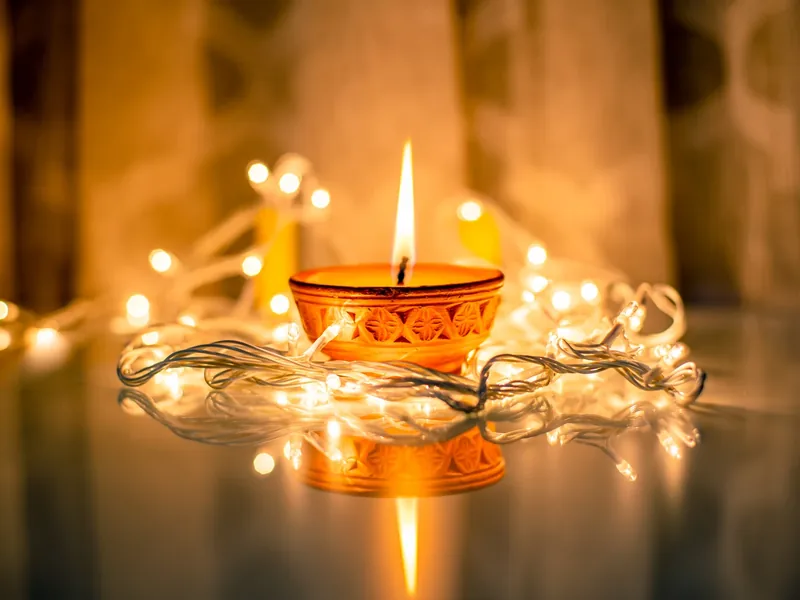
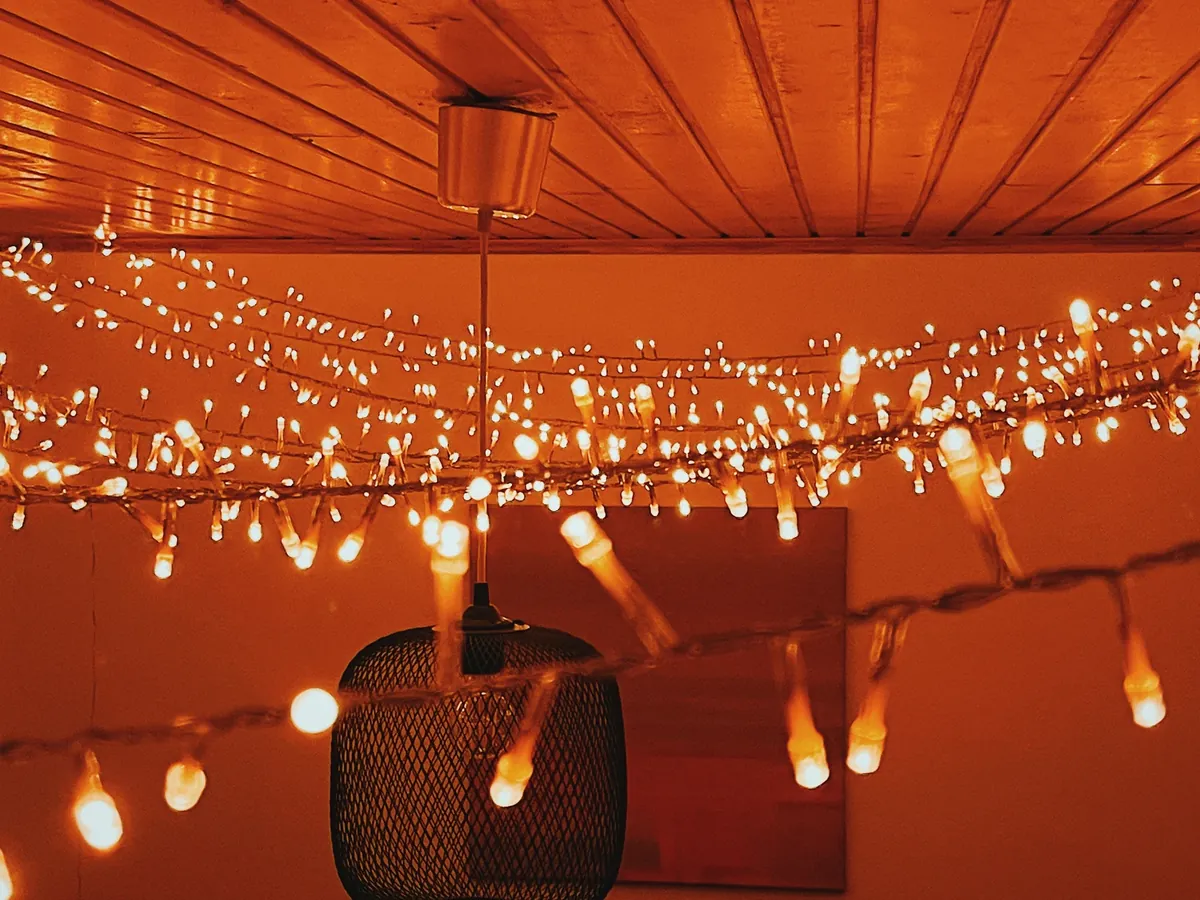
Look for 'warm white' (about 2700K) on the pack; cool white turns marigold and brass blue-grey. A 5 to 6 m string covers one standard 3 x 7 ft door frame. Check the length, whether it is for indoor or outdoor use, and the connector or plug. Buy lights with the voltage and wattage printed on the pack, a brand name and a service address.
Hanging lanterns
Paper, fabric or metal lanterns add height to a corner or balcony. In a rented flat, choose ones that hang from a single hook. Paper lanterns and open flames do not mix, so use them with LED lights only.
Removable adhesive hooks
For renters, these hold lights and light toran. Match the hook to the weight and the wall finish (paint, tile or wallpaper) printed on the pack.
See ideas on Amazon.in
- Toran or door hangingDiwali toransSee ideas
- Rangoli colours, stencils or reusable matsRangoli stencils and coloursSee ideas
- Brass or clay diya setsBrass diya setsSee ideas
- Flameless LED tealightsLED tealightsSee ideas
- Warm white string lightsSee ideas
- Hanging lanternsSee ideas
- Removable adhesive hooksSee ideas
How do you decorate a balcony for Diwali?
Keep the balcony simple: weather-safe string lights along the railing, a row of LED or well-guarded diyas, and a few potted flowers. The balcony is the part of your home the neighbours and the street see, so it earns a little extra effort.
- Use outdoor-rated lights where there is any chance of rain, and keep plugs and connectors off the floor.
- Check the wind. Open flames on a breezy balcony tip over or blow onto fabric. LED tealights are safer.
- Anchor everything. Heavy brass diyas and planters stay put; paper decor does not.
- Layer heights. A bench or stool with a tray, plus a hanging lantern, gives depth in a tiny space.
- Follow your society rules on lighting and open flames, especially in high-rise buildings.
How do you make the entrance look festive?
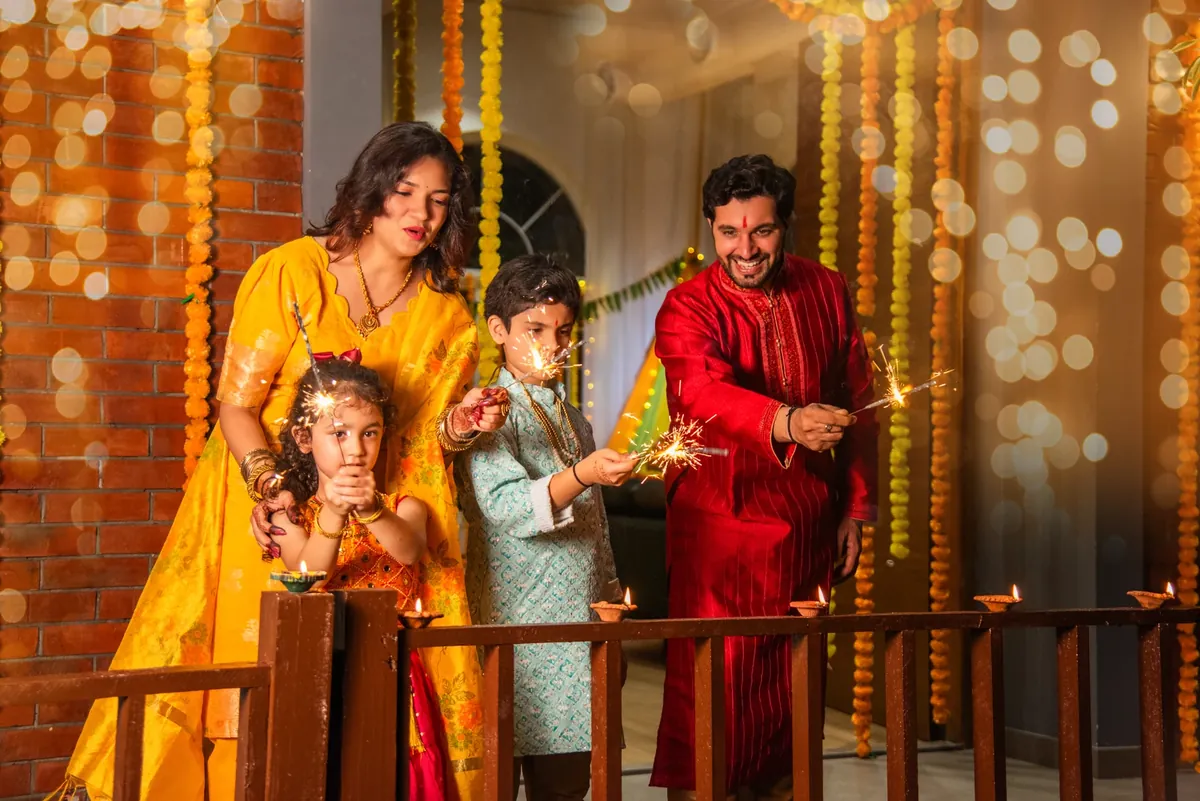
Focus on three things: the door, the floor and the light. Spend on the door first: a toran, a rangoli and a pair of lamps are the three things every visitor sees.
- Door: a toran on top, a clean nameplate, and a wreath or hanging garland if you like.
- Floor: a rangoli, with a doormat that is clean and not clashing with it. Tidy the shoe rack out of view.
- Light: a pair of diyas or LED lamps on either side of the threshold, plus warm string lights above or beside the door.
A tray of flower petals and a lit lamp near the door can replace a large rangoli if you are short on floor space.
Is it safe to use diyas and lights around curtains and children?
It is safe if you treat flames as the exception, not the default. UK fire and rescue services give the same core advice before Diwali: keep lamps and candles on stable surfaces, away from curtains, dupattas and decorations, never leave them unattended, and keep children and pets supervised.
- Put diyas on a metal or ceramic tray and keep fabric, paper decor and table runners at a distance.
- Use LED tealights near curtains, in bedrooms and wherever you may leave the room.
- Do not daisy-chain many string lights into one extension board; check the rating on the pack.
- Replace any string of lights with cracked wires or loose bulbs.
- Keep a dry-powder fire extinguisher within reach. Never throw water on a burning diya or any oil fire, and switch off at the MCB before dealing with an electrical fire. 112 is the national emergency number in India.
What should you spend on first?
Spend on the entrance and the lights, then the puja corner, then everything else. A good entrance and warm lighting change the feel of the house more than any amount of decor in the bedroom.
- Entrance: toran, rangoli, diyas.
- Lighting: warm string lights and a few LED tealights.
- Puja corner: flowers, a clean cloth, a tray of diyas.
- Soft furnishing swaps: cushion covers and a table runner in your palette.
- Extras: lanterns, bunting and wall hangings, only if you have space to store them.
Going further: lights and diya ideas, rangoli designs and stencils, the Diwali cleaning supplies list and what to buy on Dhanteras.
Frequently asked questions
When should I put up Diwali decorations in 2026?
Most families finish by Dhanteras on Friday 6 November, ahead of Lakshmi Puja on Sunday 8 November. Some put lights up a week earlier. Check your local panchang for your city's exact dates.
Can I decorate for Diwali without drilling into the wall?
Yes. Use door-top hooks, curtain rods, shelf edges and removable adhesive hooks, and keep flames on trays. Read the weight rating on any adhesive hook and test it on a hidden spot first.
Are LED diyas a good replacement for clay diyas?
They are a sensible replacement near curtains, on windy balconies and in homes with small children. Many families still light clay or brass diyas for the puja itself and use LEDs for everything else.
Which colours suit a Diwali decoration?
Marigold orange, deep red, gold, brass and ivory are the usual choices. Pick one or two and repeat them across the home for a calmer look.
How do I make a small flat look festive on a budget?
Focus on the entrance: a toran, a small rangoli, two diyas and one string of warm lights. Swap cushion covers instead of buying new decor, and skip anything you cannot store.
Your next step this week: choose your look (traditional, minimal or rental-friendly), write a five-item buying list, and put the cleaning dates in your diary first with the Diwali cleaning checklist. Then sort the puja items from the samagri list and plan the days with the five-day Diwali calendar.
We may earn a commission if you buy through links on this page, at no extra cost to you. As an Amazon Associate I earn from qualifying purchases. How we earn