Buy 22K gold for jewellery you will wear, and 24K gold when you want pure gold as a coin or bar to hold. 24K is about 99.9 percent gold and too soft to make into everyday jewellery, while 22K is about 91.6 percent gold, mixed with other metals so it is strong enough to wear, shape and set with stones.
The price per gram is higher for 24K, but the right choice depends on what you are buying the gold for.
Any rupee figures below are labelled EXAMPLE numbers to show the arithmetic. We use ₹13,500 per gram for 22K and about ₹14,700 for 24K, close to the IBJA benchmark in the week of 12 October 2026, but they are not today's rate. Please check the day's rate from a published source before you buy.
What is the actual difference between 22K and 24K gold?
The "K" stands for karat (carat in many Indian shops), a measure of how many parts out of 24 are pure gold. 24K is 24 parts out of 24 pure gold, which works out to about 99.9 percent in practice.
22K is 22 parts gold and 2 parts other metals, usually copper or silver, which is about 91.6 percent gold. In the hallmark you will see this as a number: 22K916 for 22 carat gold and 999 for 24 carat.
| 24K gold | 22K gold | |
|---|---|---|
| Pure gold share | About 99.9 percent | About 91.6 percent |
| Typical mark | 999 (some marks read 995) | 22K916 |
| Feel | Very soft, bends and scratches easily | Harder, holds its shape |
| Best for | Coins and bars | Everyday and festive jewellery |
| Price per gram | Higher (more pure gold) | Lower, roughly 8 percent less per gram |
| Making charges | Low premium on coins and bars, but check | Charged on most jewellery |
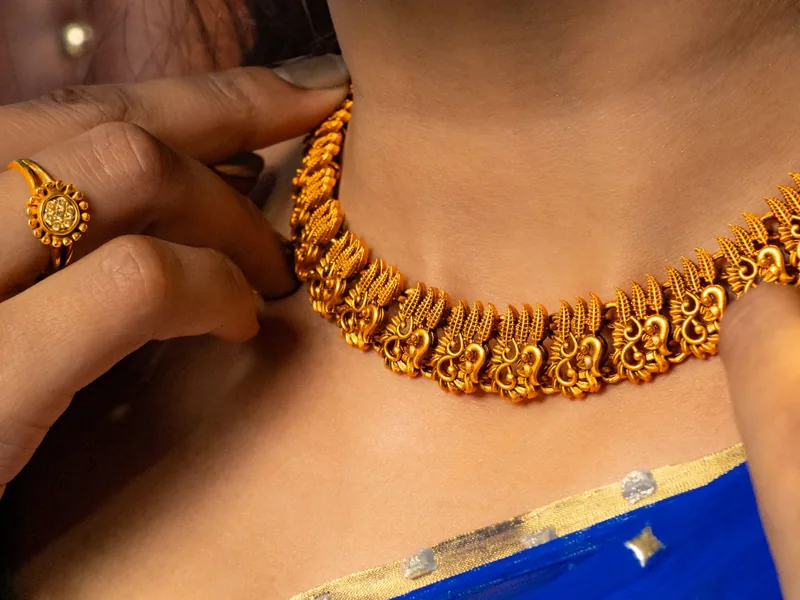
The other metals in 22K are not a defect. They are what make jewellery practical, because pure gold is so soft that a thin bangle would bend and a claw setting could not hold a stone.
Why isn't 24K used for most jewellery?
Because it does not survive daily life. Pure gold scratches, dents and loses its shape, so a bangle or chain made of it would deform with normal wear, and delicate designs and settings would not hold. Some shops sell 24K pieces, and they do look richer in colour, but these are best treated as occasional-wear items or kept for the weight, not worn hard.
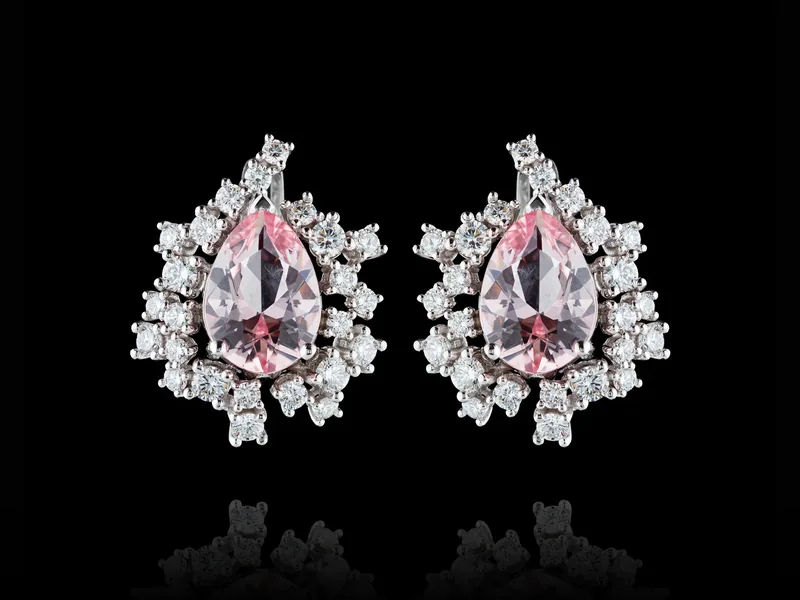
That is why Indian jewellery is mostly 22K, and 18K is the usual choice for diamond and heavily stone-set pieces, because the higher alloy content holds stones more securely. If you like the look of a lighter, modern piece with stones, 18K is worth considering; you will find the hallmark reads 18K750.
Which is cheaper, 22K or 24K?
Per gram, 22K is cheaper, because it contains less gold. A rough sense-check is the 22 over 24 rule: if the 24K rate were about ₹14,700 per gram (EXAMPLE), the 22K rate would be about ₹13,500 per gram.
The same idea, using the 750 and 585 purity marks, gives roughly ₹11,000 per gram for 18K and ₹8,700 for 14K (also EXAMPLES). Your jeweller will publish their own rate for each purity, so use that for your bill.
But the cheaper rate is not the whole story, because of making charges. Here is the same EXAMPLE budget compared:
| Item (EXAMPLE) | 22K bangle, 10 g | 24K coin, 10 g |
|---|---|---|
| Rate per gram | ₹13,500 | ₹14,700 |
| Gold value | ₹1,35,000 | ₹1,47,000 |
| Making charge or premium | 10 percent making: ₹13,500 | Assume 3 percent premium: ₹4,410 |
| Total before GST | ₹1,48,500 | ₹1,51,410 |
| Pure gold you own | About 9.16 g | About 9.99 g |
Coins are usually 24K, which costs more per gram than 22K, so the coin column uses the 24K example rate, not the ₹13,500 used for the bangle. Look at the last row. In this EXAMPLE the coin costs about ₹2,900 more, and it gives you about 0.8 g more actual gold, because the bangle is partly alloy and partly labour.
The 3 percent coin premium is only an assumption for the example, and real premiums vary by seller, so ask for the exact figure.
Which holds its value better when you sell?
If you sell, a jeweller or bullion dealer will value your gold on its pure gold content at the day's rate, and typically deducts a margin. For jewellery, the making charge you paid is not credited back, and GST is not returned. For a plain coin or bar, there was little or no making charge to lose, so a bigger share of what you paid comes back.
That is the honest comparison: jewellery is partly a purchase for wearing and enjoying, and partly gold. A coin is almost entirely gold. If your goal is to hold gold as a store of value, 24K coins and bars are usually the more efficient form.
If your goal is to wear it, buy the 22K piece and accept that the making charge is the price of the design. Our gold making charges guide explains how to keep that cost down.
What does the hallmark tell you?
BIS runs the hallmarking system for gold jewellery in India. Since 1 July 2021, a BIS hallmark has three marks: the BIS logo, the purity mark (for example 22K916, 18K750 or 14K585) and a six-character alphanumeric HUID, which is unique to each piece.
Since 1 April 2023, jewellery hallmarked without that six-character HUID can no longer be sold. You can check the HUID on the BIS Care app using the Verify HUID option. The BIS site is bis.gov.in.
Hallmarking is not compulsory everywhere. BIS's mandatory scheme covers 14, 18, 20, 22, 23 and 24 carat gold jewellery and artefacts in the districts BIS has notified: 380 from 2 March 2026, extended by later orders (a Third Amendment Order of 3 August 2026 took it to 392 districts, according to Business Standard), so check the current BIS list for your district.
Jewellers must be registered with BIS to sell hallmarked jewellery. BIS lists exemptions, including jewellers with annual turnover up to ₹40 lakh, pieces under 2 grams and Kundan, Polki and Jadau jewellery. Outside the notified districts you can still ask for a hallmarked piece.
BIS's FAQ on the mandatory order also lists gold bullion in rod, plate, sheet, strip, tube or coin form among the exempt items, so coins and bars are not covered by the jewellery hallmarking rule. The safe approach is to buy from a reputable seller and ask for a purity certificate with the stamped purity on the coin or bar's packaging.
Should you buy gold coins on Dhanteras?
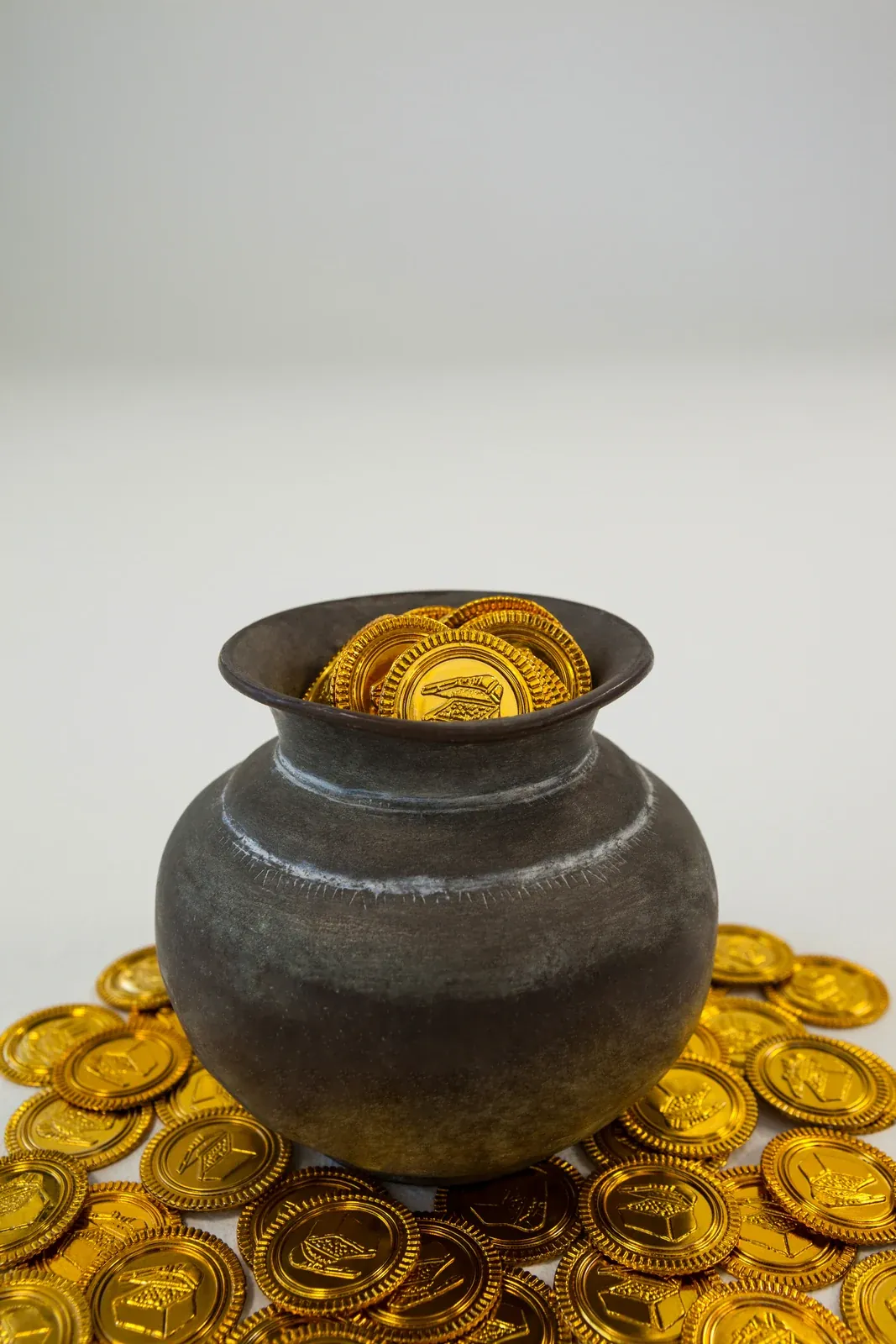
Many families buy gold or silver on Dhanteras, which most calendars place on Friday 6 November in 2026 (please check your local panchang). Coins and small bars are a popular way to do it, because they are easy to buy in small quantities.
If you are choosing a coin, ask for 24K with its purity mark, and compare the premium over the day's rate across two or three sellers. Our Dhanteras 2026 guide covers what to buy and what to skip that day.
A small coin on Dhanteras and a wearable 22K piece for a wedding can sit side by side. They do different jobs.
What should you check before you buy either one?
- The purity mark. 22K916 for 22 carat jewellery and 999 on 24 carat gold, plus the BIS logo and the HUID on hallmarked jewellery.
- Verify the HUID on the BIS Care app before you leave the shop.
- The rate. Compare with the day's published rate, such as the IBJA benchmark at ibjarates.com, which states that its rates are without 3 percent GST and making charges.
- Weight. Net gold weight on the invoice, with stones listed separately.
- Making charge or premium. Percentage, per gram or flat, in writing.
- GST. Gold attracts 3 percent GST; ask how it appears on your invoice.
- Buyback terms. What the seller deducts and whether making charges come back.
- Invoice and certificate. Keep both, and store the gold safely.
If you are buying a coin or bar, a small lockable box helps you keep it and its certificate together. Check lockable storage boxes on Amazon

Which one should you buy?
Match the purity to the purpose.
- Daily wear and festive jewellery: 22K, because it is strong and the standard in Indian shops.
- Diamond or gemstone-studded pieces: often 18K, as many guides recommend for holding stones.
- Holding gold as savings: 24K coins and bars, bought from a reputable seller with a certificate.
Our stance is a plain one. Do not buy 22K jewellery as an investment and expect the making charge back, and do not expect to wear 24K every day. The two forms of gold do different jobs.
What mistakes do buyers make?
- Comparing a 22K rate with a 24K rate and thinking one shop is cheaper.
- Paying the gold rate on stone weight.
- Ignoring the making charge because the per-gram rate looked good.
- Buying without checking the HUID.
- Not asking about buyback until the day you want to sell.
Frequently asked questions
Is 24K gold better than 22K gold?
24K is purer, at about 99.9 percent gold, but it is too soft for most jewellery. 22K, at about 91.6 percent gold, is the better choice for jewellery, and 24K suits coins and bars.
Why is 22K gold used for jewellery in India?
Because the 8 percent or so of other metals, usually copper or silver, makes it harder and more durable than pure gold, so it keeps its shape in daily wear.
What does 916 mean on gold jewellery?
It is the fineness mark for 22 carat gold, meaning about 91.6 percent pure gold. It appears in the hallmark as 22K916, alongside the BIS logo and a six-character HUID.
Is 24K gold jewellery available?
Some shops sell 24K jewellery, but it is soft and bends or scratches easily, so it is not suitable for everyday wear. Many buyers keep 24K for coins and bars.
How can I check that my gold is genuine?
On hallmarked jewellery, look for the BIS logo, the purity mark and the six-character HUID, and use the Verify HUID option in the BIS Care app. Hallmarking is mandatory only in notified districts and some pieces are exempt, so ask the seller. Buy only from sellers who give you an itemised invoice.
Your next step is to decide the purpose before you walk into a shop: wear, gift or hold. Then use our gold price calculation guide to check the quote line by line, and read our jewellery brands comparison if you are choosing where to shop.
We may earn a commission if you buy through links on this page, at no extra cost to you. As an Amazon Associate I earn from qualifying purchases. How we earn