This is general information from published health sources and is not a substitute for medical advice.
No diet can promise to prevent heart disease, and this post does not make that claim. What published guidance supports is an eating pattern built on vegetables, fruit, pulses, whole grains and millets, with limited salt, ghee and oil, sugar and packaged food. A Cochrane review found that cutting saturated fat for at least two years lowered combined cardiovascular events (such as heart attacks and strokes) by 17%.
This post covers the overall pattern and daily habits, with portions from ICMR-NIN, the National Institute of Nutrition of the Indian Council of Medical Research. For the individual foods, see our companion guide to ten everyday Indian foods that fit a heart-friendly diet.
What diet can and cannot do for your heart
The World Health Organization estimates that cardiovascular diseases caused 19.8 million deaths in 2022, about 32% of all deaths worldwide, and that heart attacks and strokes account for 85% of them. It lists unhealthy diet, physical inactivity, tobacco use and harmful use of alcohol as the main behavioural risk factors. Food is one lever among several, and your blood pressure, blood sugar and cholesterol matter too, so get them checked.
The same Cochrane review found little or no effect of cutting saturated fat on deaths from all causes. So treat the habits below as sensible, well-supported steps, not a guarantee. And never stop or reduce a medicine your doctor has prescribed because you have changed what you eat.
Eight everyday habits for a heart-friendly Indian plate
The portions below come from ICMR-NIN's "My Plate for the Day", which is based on a 2,000 kcal diet. Your needs depend on your size, age and activity, so treat them as a guide.
1. Fill half your plate with vegetables and fruit
ICMR-NIN suggests at least 400 g of vegetables a day, with green leafy vegetables in every meal, and about 100 g of fruit. Choose fresh fruit rather than juice. Add vegetables to dal, atta dough, poha, upma and raita, so they are not a side dish you skip.
2. Make dal or pulses a daily habit
The plate includes about 85 g (raw weight) of pulses a day. Pulses (dal, rajma, chana, lobia) are good sources of protein and fibre. ICMR-NIN also notes that eating cereals and pulses together, at about three parts to one, improves the quality of the protein in a meal. If you eat eggs, fish or meat, these can replace part of the pulses.
3. Choose whole grains and millets more often
ICMR-NIN advises a combination of whole grains, pulses and millets, and prefers whole grains and millets to refined grains. Use whole wheat atta instead of maida, and mix jowar, bajra or ragi into your rotis. The plate allows about 250 g (raw weight) of cereals and millets a day.
4. Measure your cooking oil
ICMR-NIN's plate allows about 27 g of oils and fats a day per person, roughly five to six teaspoons for all your cooking. For a family of four, that is about 3.2 kg, or roughly 3.5 litres, a month: a quick way to check your own use.
- Use a variety of oils, nuts and seeds rather than one oil only.
- Limit ghee and butter, which are high in saturated fat.
- Avoid vanaspati (partially hydrogenated fat), which contains trans fats.
- Do not reheat and reuse frying oil repeatedly, as heating oil again and again creates harmful compounds.
5. Keep salt under 5 g a day
ICMR-NIN advises no more than 5 g of added salt a day, about a level teaspoon, counting everything. It advises restricting processed and preserved foods such as snacks, sauces, ketchup, biscuits, chips, cheese and salted fish. In Indian kitchens, pickles, papad, namkeen, instant noodles and ready masala mixes belong in that group.
Taste your food before adding salt at the table. Vegetables and fruit supply potassium, which helps the body excrete sodium and supports blood pressure.
6. Cut back on sugar and packaged food
ICMR-NIN advises that sugar should be under 5% of an adult's daily energy, and its plate puts the limit at 25 to 30 g a day, about six teaspoons. Sweet chai, mithai, cold drinks and packaged juices add up quickly.
It also advises restricting high-fat, high-sugar, high-salt and ultra-processed foods such as biscuits, cakes, pastries, breakfast cereals, health drinks and cool drinks. It adds that even home-made food can become unhealthy if made with a lot of fat, sugar or salt.
7. Add fish, nuts and seeds
ICMR-NIN suggests about 200 g of marine fish a week, such as mackerel, for those who eat fish. The plate also includes about 35 g of nuts and seeds a day. Choose unsalted nuts, not fried or salted ones. If you do not eat fish, nuts, oilseeds, green leafy vegetables and fenugreek (methi) seeds are sources of the plant omega-3 fat ALA.
8. Move more, and avoid tobacco and alcohol
ICMR-NIN advises a minimum of 30 to 45 minutes of brisk walking or other moderate activity for adults, and advises avoiding alcoholic drinks. The WHO lists tobacco use among the main behavioural risk factors for cardiovascular disease. If you use tobacco in any form, ask your doctor for help to stop.
You do not need to change all eight habits at once. Pick the easiest first, such as measuring the oil or adding a vegetable to every meal, and keep it going for a few weeks before adding another.
Involve the person who cooks, because in many homes the cook decides how much oil, salt and sugar goes into the pot. A shared plan is easier to keep than a list of rules for one person.

A sample day of heart-friendly eating
This is an example, not a prescription.
- Breakfast: vegetable poha, besan chilla or ragi dosa with curd, and a fruit.
- Lunch: a whole wheat or jowar roti, dal, a green leafy sabzi, a salad and a small bowl of curd.
- Evening: roasted chana or a small handful of unsalted nuts, with chai that has little or no sugar.
- Dinner: vegetable khichdi with a little ghee or oil, or fish curry made with a measured amount of oil, with a salad.
Talk to a doctor or dietitian first if
- You have diabetes, high blood pressure, high cholesterol or kidney disease, or you have heart disease, a stent or bypass surgery.
- You are pregnant or breastfeeding.
- You take warfarin. The NHS says foods high in vitamin K, such as broccoli, spinach and other green leafy vegetables, can affect how warfarin works. You can still eat them, but talk to your warfarin clinic before making big changes to your diet.
Warning signs: do not wait
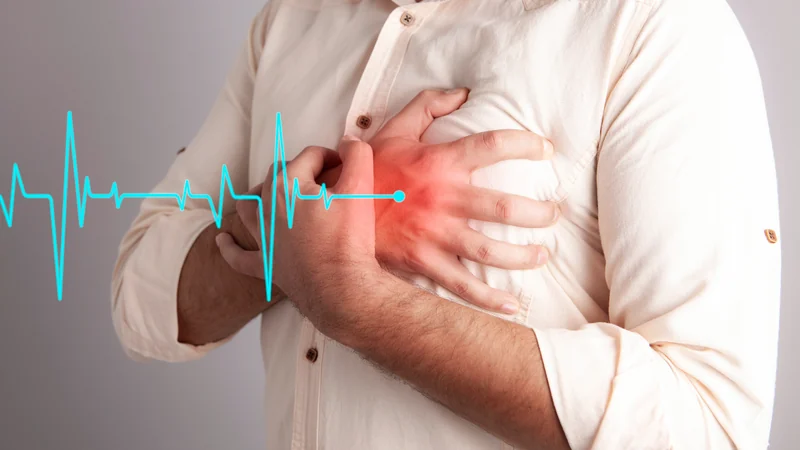
The WHO lists these warning signs of a heart attack: chest pain or discomfort in the centre of the chest; pain in the arms, left shoulder, elbows, jaw or back; difficulty breathing; nausea or vomiting; light-headedness; cold sweat; and turning pale. Warning signs of a stroke include sudden weakness or numbness of the face, arm or leg (especially on one side), sudden confusion or trouble speaking, sudden trouble seeing, sudden difficulty walking or loss of balance, and severe headache with no known cause.
If you notice any of these, call 112, India's single emergency number, straight away. Do not drive yourself, and do not wait to see if it passes.
Related guides: 10 everyday Indian foods that fit a heart-friendly diet, How anger affects the body and what you can do about it, How to lose weight at home.
Frequently asked questions
Can diet reverse heart disease or clear blocked arteries?
No diet can promise that. The research shows that some dietary changes are linked with fewer cardiovascular events, not that they reverse disease. If you have heart disease, follow your cardiologist's plan and ask for a referral to a dietitian.
How much ghee is safe?
ICMR-NIN advises limiting ghee and butter, which are high in saturated fat. Its overall allowance for all oils and fats is about 27 g a day for a 2,000 kcal diet, and ghee counts towards that total. If you have high cholesterol or heart disease, ask your doctor for personal advice.
How much is 5 g of salt?
About a level teaspoon, and that must cover all the salt in your cooking, pickles, papad, namkeen and packaged foods, not just what you add at the table.
Is a vegetarian diet enough for my heart?
A vegetarian diet can meet protein needs through pulses, beans, peas and milk or curd, according to ICMR-NIN. Nuts, oilseeds, green leafy vegetables and methi seeds supply plant omega-3 fat. The same limits on salt, sugar, ghee and packaged food apply.
Should I buy foods labelled "heart-healthy"?
Be careful. ICMR-NIN says health claims on packs are regulated by FSSAI, but you should cross-check them against the ingredients list and nutrition information. It also says that fortifying an ultra-processed food does not make it wholesome.
Your next step: measure your family's cooking oil this week and compare it with the 27 g per person guide. Then read our guide to the ten everyday Indian foods that fit a heart-friendly diet to plan your shopping. For the rest of heart health, see ten simple ways to ease everyday stress.
Sources
- ICMR-National Institute of Nutrition, "Dietary Guidelines for Indians" (2024 edition booklet). https://nin.res.in/downloads/DGI_Booklet_English_CMYK.pdf. Read on 13 October 2026.
- ICMR-National Institute of Nutrition, "Policy Brief: My Plate for the Day". https://www.nin.res.in/brief/Policy%20Brief%20My%20Plate%20J18%2024.pdf. Read on 13 October 2026.
- World Health Organization, "Cardiovascular diseases (CVDs)" fact sheet (31 July 2025). https://www.who.int/news-room/fact-sheets/detail/cardiovascular-diseases-(cvds). Read on 13 October 2026.
- Cochrane, "Reducing saturated fat intake for cardiovascular disease" (Hooper and colleagues, August 2020). https://www.cochrane.org/evidence/CD011737_reducing-saturated-fat-intake-reduce-risk-heart-disease-and-stroke. Read on 13 October 2026.
- NHS, "Warfarin". https://www.nhs.uk/medicines/warfarin/. Read on 13 October 2026.
- Ministry of Home Affairs, India, "Emergency Response Support System (ERSS)" (single emergency number 112). https://www.mha.gov.in/en/commoncontent/emergency-response-support-system-erss. Read on 13 October 2026.
This article is general information, not medical advice. Speak to a doctor or another qualified professional about your own health.
We may earn a commission if you buy through links on this page, at no extra cost to you. As an Amazon Associate I earn from qualifying purchases. How we earn