This is general information from published health sources and is not a substitute for medical advice.
The simplest ways to ease everyday stress are to move your body, protect your sleep, slow your breathing, talk to someone you trust and break big jobs into small steps. These habits can take the edge off normal stress.
They are not a treatment for anxiety, depression or burnout, and they will not make stress disappear. If stress is getting in the way of your daily life, ask for help: in India you can call the free Tele-MANAS helpline on 14416 at any time.
What stress is, and how it shows up
The World Health Organization describes stress as "a state of worry or mental tension caused by a difficult situation". It is a normal response to pressure, and for many women it comes from several directions at once: work, household jobs, caring for children or elders, money worries, exams, weddings and festival preparations.
The NHS lists common signs of stress:
- Feelings: feeling worried, anxious, hopeless or scared, being irritable, angry or tearful, racing thoughts, or trouble making decisions.
- In the body: stomach problems, headaches, muscle pain, skin reactions such as rashes, or dizziness.
- In behaviour: changes in how much you eat, exercise, drink or smoke, and avoiding people or activities you usually enjoy.
The WHO adds that when stress symptoms persist and interfere with daily life, including work, they can cause or worsen anxiety and depression.
Ten ways to ease everyday stress
You do not need to do all ten. Start small: pick two that fit your day, try them for a week and see how you feel. When stress spikes in the moment, the quickest tool is the breathing exercise in number 3, which the NHS says you can use at any point in the day. None of these is an instant fix, and some will suit you better than others.
1. Move your body
The WHO says regular daily exercise can help to reduce stress, and that walking counts. ICMR-NIN's Dietary Guidelines for Indians advise adults to get a minimum of 30 to 45 minutes of brisk walking or other moderate activity. If that sounds like too much, split it into short walks after meals. If you have a heart, joint or other medical condition, ask your doctor what is safe.
2. Protect your sleep
The WHO suggests going to bed and waking at consistent times, keeping the bedroom quiet and dark, limiting screens before bed (an hour without phones, tablets or computers is a practical target), and skipping heavy meals, caffeine and alcohol in the hours before sleep. ICMR-NIN lists 6 to 8 hours of sleep a day as a healthy pattern. If you cannot sleep for weeks, speak to a doctor.
3. Slow your breathing for five minutes
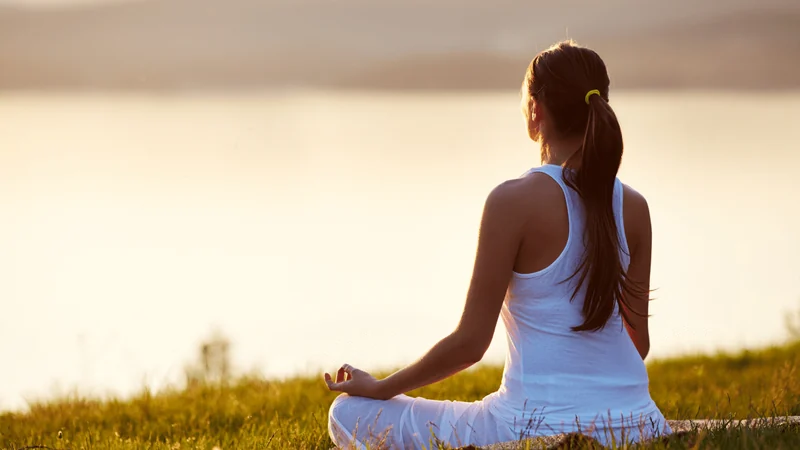
The NHS describes a simple exercise. Sit, stand or lie down, with loose clothing and your feet flat and about hip-width apart. Let your breath go deep into your belly without forcing it. Breathe in gently through your nose, counting from 1 to 5 (you may not reach 5 at first), then breathe out gently through your mouth, counting again if that helps.
Repeat for at least five minutes. If you feel light-headed, go back to normal breathing.
4. Talk to someone you trust
The WHO says connecting with others can lift your mood and help you feel less stressed, and the NHS suggests talking to friends, family, colleagues or a helpline. Choose someone who listens without fixing everything. Even a ten-minute phone call counts.
5. Break big jobs into small steps
The NHS suggests splitting big tasks into smaller steps, crediting yourself when you finish each one, and planning ahead with a to-do list. In a busy season, such as festival cooking or a house full of guests, write down the three things that must happen today and let the rest wait.
6. Cut non-essential screen time
ICMR-NIN advises minimising non-essential screen time, and the WHO advises limiting screens before bed. Try a screen-free hour after dinner, and turn off notifications you do not need.
7. Watch caffeine, alcohol and tobacco
The NHS notes that stress can change how much people drink and smoke. If several cups of chai or coffee keep you wired, drop the later ones. ICMR-NIN advises avoiding alcoholic drinks, and the WHO advises skipping alcohol in the hours before sleep. If you are drinking or smoking more than before, treat that as a sign to seek support.
8. Keep regular meals and drink enough water
Stress can change how much you eat. Try to keep regular meals built around dal, vegetables, roti or millets and curd. ICMR-NIN suggests buttermilk, tender coconut water or lemon water in place of soft drinks.
9. Try yoga, a few quiet minutes or a gratitude list
ICMR-NIN describes yoga as structured activity that includes breathing exercises and physical and mental relaxation. If you are new to it, learn from a qualified instructor and tell them about any health conditions. The NHS also suggests listing three things you are thankful for each day, however small. The WHO publishes an illustrated guide, Doing What Matters in Times of Stress, with self-help techniques that take a few minutes a day.
10. Share the load and say no to one thing
Stress often builds when one person carries the household, work and caring jobs. Ask family members to take specific tasks, and choose one request to turn down this week. This is practical advice rather than a research finding, but it addresses a common source of stress.
When stress needs more than self-help
The WHO advises seeking help from a trusted health-care provider if you have difficulty coping, and the NHS says to see a doctor if stress affects your daily life. Consider getting help if, for several weeks:
- you feel low, hopeless or numb on most days;
- worry, panic or racing thoughts are hard to switch off;
- you are sleeping or eating much less or more than usual;
- you are drinking or smoking more, or pulling away from people;
- you find it hard to do your job or care for your family.
Only a health professional can tell whether you are dealing with stress, anxiety, depression or something else. A family doctor is a good first call, and they can refer you to a counsellor, psychologist or psychiatrist if needed.
Where to get help in India
Tele-MANAS (14416). This is a free national mental health helpline run by the Government of India. It works 24 hours a day, and the Press Information Bureau reports that it is available in 20 languages. You can call to talk through stress, low mood or worry, and the service also offers guidance towards further care. There is also a Tele-MANAS mobile app.
In an emergency, call 112, India's single emergency number. Call it if you or someone you know may harm themselves or is in immediate danger. Stay with the person until help arrives.
Do not assume chest pain is stress. Warning signs of a heart attack include chest pain or discomfort, pain in the arms, jaw or back, difficulty breathing, nausea, light-headedness, cold sweat and turning pale. Fainting, sudden weakness on one side of the body or sudden trouble speaking are warning signs of a stroke. These need urgent medical help, not a breathing exercise.
Related guides: How anger affects the body and what you can do about it, 10 everyday Indian foods that fit a heart-friendly diet, 5 gentle desk-break exercises for back and neck aches at work.
Frequently asked questions
Can stress cause physical symptoms?
Yes. The NHS lists stomach problems, headaches, muscle pain, skin reactions and dizziness among the physical signs of stress. But do not assume a new or severe symptom is only stress. Get chest pain, breathlessness or fainting checked urgently.
How much exercise helps with stress?
The WHO says regular daily exercise can help, and that walking counts. ICMR-NIN's general target for adults is a minimum of 30 to 45 minutes of brisk activity. Start with what you can manage and build up slowly.
Do breathing exercises really work?
The NHS recommends short breathing exercises to help you feel calmer at any point in the day. They are a self-help skill, not a treatment for anxiety or depression. Stop if you feel light-headed.
Is it all right to drink chai or coffee when I am stressed?
In moderation, many people do. The WHO advises skipping caffeine in the hours before bed, so if caffeine leaves you jittery or affects your sleep, cut the later cups.
How do I know if it is stress or something more serious?
You cannot always tell on your own. The WHO says stress can cause or worsen anxiety and depression, and that symptoms which persist and interfere with daily life need attention. Speak to a doctor, or call Tele-MANAS on 14416.
Your next step: pick one habit from this list, such as a ten-minute walk after lunch, and try it for a week. If sitting at a desk is adding aches to the stress, our post on gentle desk-break exercises may help, and our guide to a heart-friendly Indian plate covers eating well on busy days.
Sources
- World Health Organization, "Stress" (questions and answers, 30 March 2026). https://www.who.int/news-room/questions-and-answers/item/stress. Read on 13 October 2026.
- NHS Every Mind Matters, "Stress". https://www.nhs.uk/every-mind-matters/mental-health-issues/stress/. Read on 13 October 2026.
- NHS, "Breathing exercises for stress". https://www.nhs.uk/mental-health/self-help/guides-tools-and-activities/breathing-exercises-for-stress/. Read on 13 October 2026.
- Press Information Bureau, Government of India, "Update on National Tele Mental Health Programme (NTMHP)" (Tele-MANAS, 14416, 4 April 2025). https://www.pib.gov.in/PressReleasePage.aspx?PRID=2118790. Read on 13 October 2026.
- ICMR-National Institute of Nutrition, "Dietary Guidelines for Indians" (2024 edition booklet). https://nin.res.in/downloads/DGI_Booklet_English_CMYK.pdf. Read on 13 October 2026.
- Ministry of Home Affairs, India, "Emergency Response Support System (ERSS)" (single emergency number 112). https://www.mha.gov.in/en/commoncontent/emergency-response-support-system-erss. Read on 13 October 2026.
This article is general information, not medical advice. Speak to a doctor or another qualified professional about your own health.
We may earn a commission if you buy through links on this page, at no extra cost to you. As an Amazon Associate I earn from qualifying purchases. How we earn