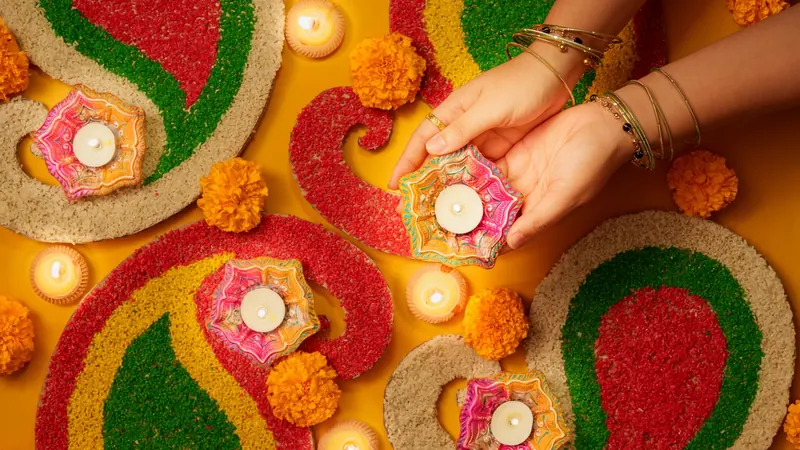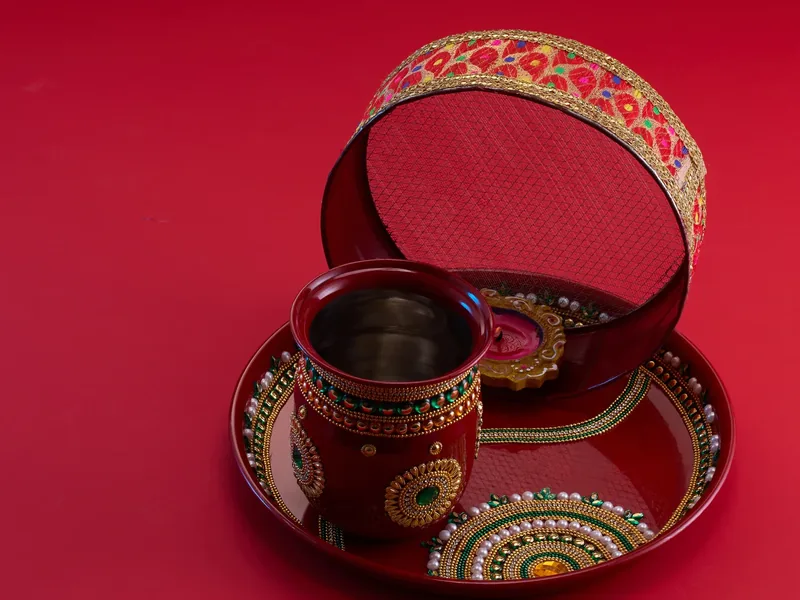
To open your Karwa Chauth fast you need a sieve (chalni), a karwa or lota of water, a lit diya, a thali with roli, rice and flowers, a sweet for the first bite, and something light to eat after it.
The order most families follow is: see the moon, offer water, look at your husband through the sieve, take the first sip of water from him, take the first bite, and then eat a light meal. Karwa Chauth is on Thursday 29 October 2026 in India, and the moon rises later in some cities than others, so look up yours below.
If you live outside India, the day can differ, so read the note near the end.
Tick items off as you gather them. Your progress is saved on this phone, you can print the list, and one tap sends it to the family WhatsApp group. Traditions vary by family and region, so follow your own family's way where it differs.
What to keep ready before the moon rises
Put everything on one tray an hour before moonrise, so nobody is searching for a matchbox while you wait.
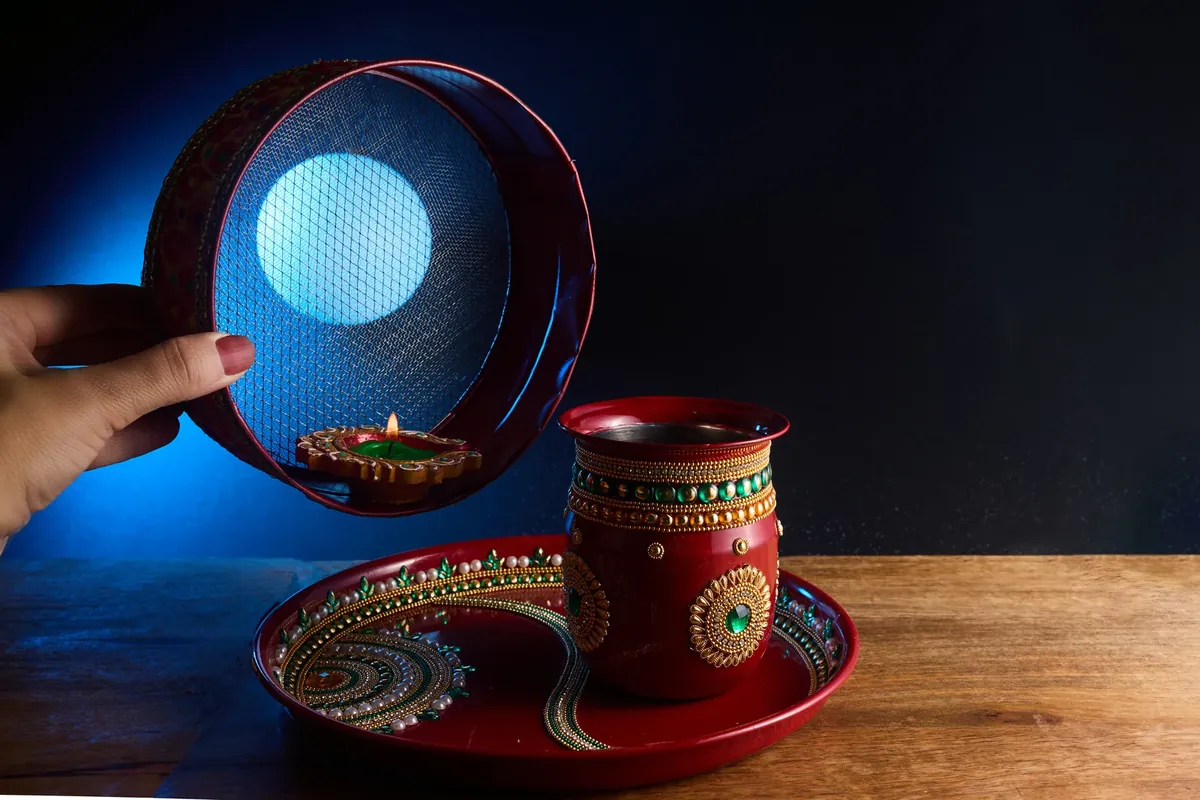
- Sieve or chalni (छलनी): one, to look at the moon and then at your husband.
- Karwa or lota (करवा): one pot filled with clean water, for the offering to the moon and for the first sip.
- Thali (थाली): one, with roli, whole rice (akshat), flowers and a small bowl of sweets. A decorated Karwa Chauth thali set is optional.
- Diya and matchbox (दीया, माचिस): one lit lamp, plus a spare diya and a lighter that works.
- Water for the husband to offer: a glass or the karwa itself, within easy reach.
- A sweet for the first bite: a small piece of ladoo, barfi or a spoon of kheer.
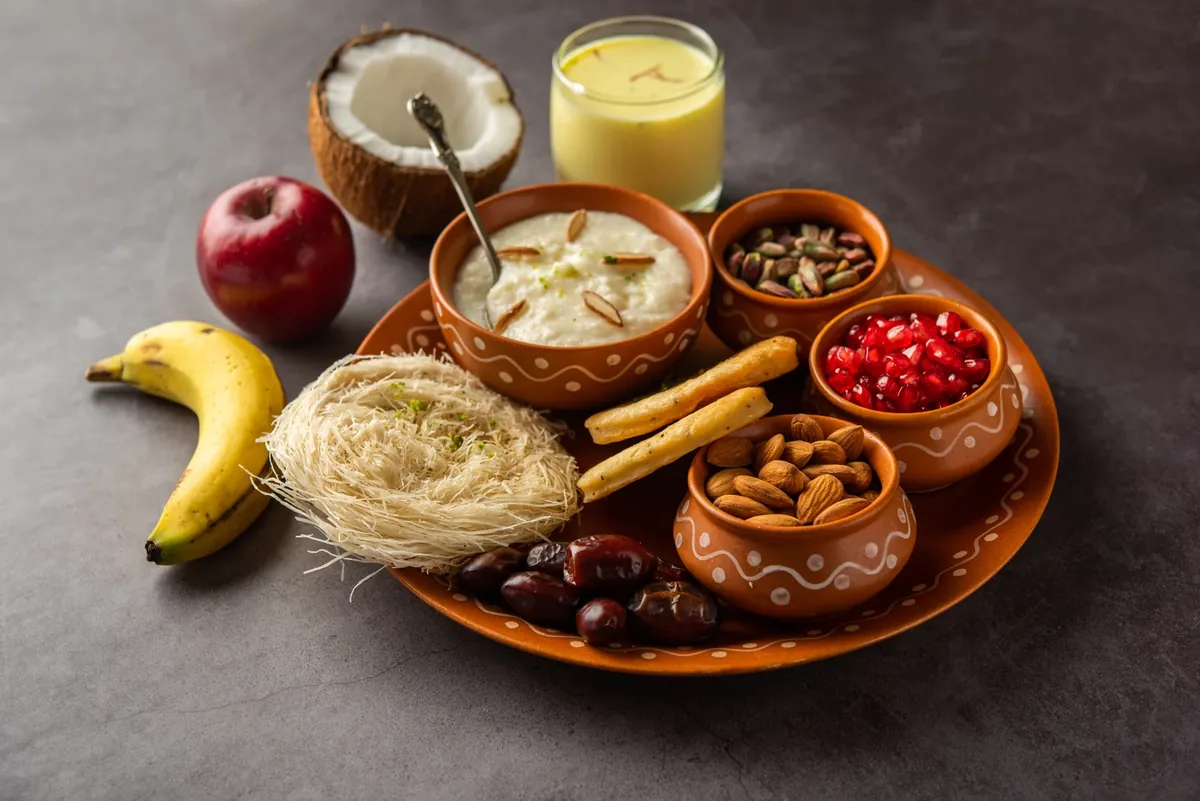
- Something light to eat straight after: dates, a banana or other fruit, or a few almonds.
- A phone or torch: to check moonrise, and to help you find the moon behind buildings and trees.
- A shawl or wrap: because you may stand outside on a terrace or balcony in the late October evening.
See ideas on Amazon.in
How to open the fast, step by step
Most North Indian families follow a sequence like this one. Some do the puja first and wait for the moon, some offer water to the moon before turning to the husband, and some do it after. Follow your family's order.
- Do the evening puja during the muhurat for your city (see the box above), with the Karwa Chauth katha if your family reads it.
- Wait for the moon. The custom is to open the fast after you have seen the moon and offered arghya (water) to it. Keep watching from a terrace, balcony or open window. If cloud or buildings hide it, see the section on a hidden moon below.
- Look at the moon through the sieve, with the diya held behind it so the light frames the moon.
- Offer water to the moon (arghya) from the karwa, in the order your family follows.
- Turn the sieve and look at your husband's face through it.
- Take the first sip of water from him. He gives you water from the karwa or a glass, and this opens the fast.
- Take the first bite from him: a sweet, a piece of fruit or a spoon of kheer.
- Touch the elders' feet and take their blessings, if they are with you.
- Eat a light meal first, and the full dinner a little later.
What should you eat first after the fast?
After a full day without food, and for many women without water as well, start gently. A sip of water, a date or a piece of fruit, and the first sweet are enough to begin with. Then wait ten to fifteen minutes before a proper meal, and let the meal be light: dal, rice or roti with a vegetable, a bowl of khichdi, or a small serving of kheer.
Heavy, very oily or very spicy food straight after a fast is the quickest way to feel unwell, so keep the pakoras and the sweets for the next day.
Drink water slowly through the night, because you will be dehydrated. If you are diabetic, pregnant, breastfeeding or have any medical condition, talk to your doctor before you fast, and ask what to eat and when to break it. A fast is never worth risking your health.
A simple tray for two people
If you are wondering how much to keep ready, this is a sensible amount for a couple. Adjust it for your family.
| Item | Amount for two | What it is for |
|---|---|---|
| Water in the karwa | One pot, about 500 ml | Offering to the moon and the first sip |
| Sweet | Two small pieces or two spoons of kheer | The first bite |
| Dates | Four to six | A gentle, quick source of energy after the fast |
| Fruit | One banana or a few slices of apple | Something light to follow the sweet |
| Almonds or nuts | A small handful | Something to chew on while dinner is warming |
| Diya and ghee or oil | One lamp, with a spare | Lighting the sieve and the thali |
Mistakes that spoil the evening
- Opening the fast by the clock too soon. The moonrise time is a guide, and the moon may appear a little later behind buildings, so give it a short while and keep looking. If it stays hidden, follow the panchang time and your elders' advice (see below).
- Gulping cold water. After a day without water, take slow sips of normal-temperature water first.
- Standing in the dark on a slippery terrace. Light the way, wear non-slip footwear and keep someone with you, especially if you feel weak.
- A lamp that blows out. Keep a spare diya, and shield the flame from the wind with the thali or your hand.
- Heavy first food. The fried sargi-style snacks and rich sweets are for tomorrow. Tonight starts with the date, the fruit and the sweet.
- No plan for the first-time faster. If this is your first Karwa Chauth, ask an elder to walk you through the order before the day.
If it is your first time fasting
Preparation matters more than willpower. Eat the sargi before sunrise with plenty of water, fruit and a light, slow-digesting food such as curd or a small plain roti, and go easy on oily parathas and salty or fried food, which make you thirsty (our sargi items list explains why).
Rest in the afternoon, avoid heavy work in the heat and keep your day light. If you feel dizzy, weak or unwell, sit down, tell someone, and follow your doctor's advice about breaking the fast. Most families will understand, and your health matters more than finishing the day.
What if the moon is hidden by clouds or buildings?
Many families wait a little longer and look from a different spot, such as a terrace. If the sky stays covered, many families go by the moonrise time on the panchang for their city and follow the advice of their elders or family priest. The practice varies, so ask before the day and not at ten at night.
What if your husband is away, or you are fasting alone?
Many couples open the fast over a video call, with the husband giving the blessing and the wife offering the water herself. Others keep a photo or a lamp in his place. If you are fasting for a partner who is not your husband yet, or on your own, follow whatever your family accepts. Check with an elder before the day so there is no confusion when the moon rises.

If you live outside India
The day and the moonrise time can differ from the Indian ones on this page. In North America the fast is kept on Wednesday 28 October, a day before India, because the rule is that the moon must rise while Chaturthi is running.
Elsewhere, such as the UK, the Gulf or Australia, confirm the day with your local temple. Our guide to Karwa Chauth abroad: which day, and moonrise by city has the details.
A day-before checklist
- Charge your phone and check the moonrise time for your city.
- Wash and fill the karwa, and put out the sieve, thali and diya.
- Prepare the sweet and the light meal, so you only have to heat them.
- Agree the plan with your husband and family: who offers the water, who handles the lamp, and where you will watch the moon.
- Pick your spot: a clear view east and away from tall buildings if you can.
Our Karwa Chauth 2026 date, puja vidhi and fasting rules covers the full day, and the sargi items list covers the meal before the fast begins.
Frequently asked questions
How do you open the Karwa Chauth fast?
After the moon is sighted through the sieve, offer water to the moon, look at your husband through the sieve, take the first sip of water from him, and then the first bite of a sweet. Eat a light meal first and the full dinner later.
What do you need to break the Karwa Chauth fast?
A sieve, a karwa or lota of water, a lit diya, a thali with roli, rice and flowers, a sweet, something light such as dates or fruit, and a torch or phone to find the moon.
What should you eat first after the Karwa Chauth fast?
Start with water, a date or fruit, and the first sweet, then wait a short while before a light meal. Avoid heavy, oily or spicy food straight after the fast.
What time does the moon rise on Karwa Chauth 2026?
It differs by city. According to Drik Panchang, moonrise on 29 October 2026 is 8:17 PM in New Delhi, 9:00 PM in Mumbai and 7:47 PM in Kolkata. Choose your city in the box above.
Can you drink water before the moon rises?
In the traditional nirjala fast, no water is taken until the fast is opened. Some families allow water or fruit, and anyone who is unwell, pregnant or has a medical condition should follow their doctor's advice. Follow your family's custom.
Your next step: put the tray together tomorrow evening, check your city's moonrise time, and agree the order with your husband. If you are also choosing something for the day, see our Karwa Chauth gift for wife and gift for husband guides.
We may earn a commission if you buy through links on this page, at no extra cost to you. As an Amazon Associate I earn from qualifying purchases. How we earn